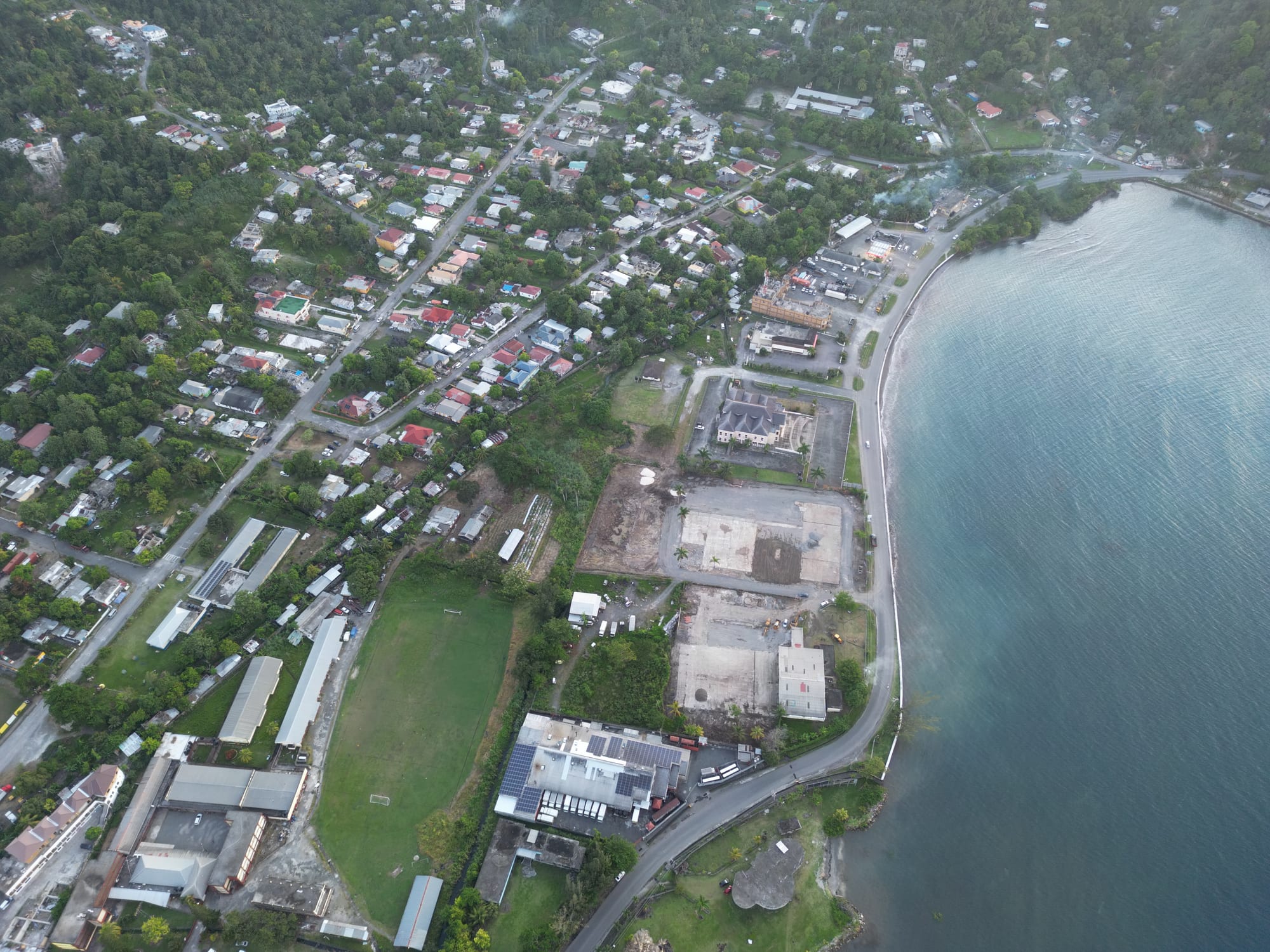
Aerial view of houses, warehouses and a football pitch among trees beside a curving coast road and calm bay

Jamaica

Port Antonio

Boundbrook, on the bay at Port Antonio, seen from the air. (Layneartz19 / Wikimedia Commons · CC BY-SA 4.0)

The capital of Portland parish on Jamaica's north-east coast, a harbour town of twin bays split by the Titchfield peninsula, about 100 km from Kingston. The banana trade made it rich in the late 19th century and brought wealthy American tourists on the banana boats; today it is a quiet, rainy, green town of coves, rivers and film locations below the Blue and John Crow Mountains.

Neighbourhoods

  • Town centre and the harbours
    • First-time visitors
    • Local life
    • Markets

    The compact town between the East and West Harbours, with the Portland Parish Church, the courthouse, the cenotaph square, the shopping centre and markets, and the marina. Most of the sights in town are within walking distance.

    Open in Maps
  • Titchfield peninsula
    • Historic district
    • Views

    The promontory separating the two harbours, where Fort George was begun in 1729, facing Navy Island.

    Open in Maps
  • The coast beyond town
    • Beaches
    • Quiet stays
    • Swimming

    The shore beyond the town, past the Folly ruins, to the coves, beaches and bays — the Blue Lagoon, Frenchman's Cove, Winnifred Beach and Boston Bay — where villas and small hotels are spread out along the road.

    Open in Maps

Things to do

Coves and beaches

  • Blue Lagoonattraction

    A cove whose deep blue colour comes from its depth of about 60 m, a filming location for Club Paradise and Cocktail, where visitors swim.

    Open in Maps
  • Frenchman's Covebeach

    A secluded beach where both film versions of Lord of the Flies were shot, as well as scenes of Cocktail and Knight and Day.

    Open in Maps
  • Winnifred Beachbeach

    A locally popular public beach, the subject of a long campaign to keep it open to all in the face of plans to develop and enclose the area.

    Open in Maps
  • Boston Beachbeach

    A beach at Boston Bay, where surfers catch the waves alongside local riders.

    Open in Maps

History in town

  • Folly ruinslandmark

    The ruins of Folly Mansion near the town, a backdrop to the Fugees' 'Fu-Gee-La' video.

    Open in Maps
  • Portland Parish Church and courthouselandmark

    Two well-preserved older public buildings in the town centre; the courthouse appeared in the film Club Paradise.

    Open in Maps
  • Navy Islandlandmark

    A small uninhabited island off the harbour, once owned by the actor Errol Flynn, who held parties there, and now closed and owned by the government.

    Open in Maps

Short trips from the town

  • Rio Grandeattraction

    One of Jamaica's largest rivers, named Big River by the Spanish, known for rafting, with hiking in its valley.

    Open in Maps
  • Moore Townattraction

    The easternmost Maroon settlement, founded in 1740 after the peace treaty between the British and the Windward Maroons, reached by road from Port Antonio.

    Open in Maps
  • Blue and John Crow Mountains National Parkpark

    The mountain national park behind the town, covering 4.5 per cent of Jamaica, a UNESCO World Heritage Site since 2015 for both its natural and its cultural value.

    Open in Maps

Eat and drink

Long-standing places and food districts in Port Antonio. Hours, ratings and directions come from your maps app, always current.

Port Antonio classics

  • Dickie's Best Kept Secretrestaurant

    A restaurant serving five-course meals of vegetarian food and seafood.

    Open in Maps
  • Anna Banana'srestaurant

    A restaurant serving Jamaican and international food.

    Open in Maps

Food districts and markets

  • Town centre marketsmarket

    Market stalls in the town centre around the St George's shopping centre, selling crafts and fresh tropical fruit.

    Open in Maps
  • Marina barsneighborhood

    Bars around the Errol Flynn Marina, including a poolside bar.

    Open in Maps

Experience Port Antonio

History

Under Spanish rule the harbour was known as Puerto de San Antonio. After the English conquest, Portland became a parish in 1723, named after the Duke of Portland, then governor, and Port Antonio was planned as a naval stronghold. From 1729 the colonial government built Fort George on the Titchfield peninsula between the East and West Harbours, to guard settlers against Spanish attack from the sea and against the Maroons in the mountains, who made peace with the British in 1740.

The town's great age came in the 1880s, when Lorenzo Dow Baker started the banana trade in Jamaica and promoted Port Antonio to wealthy American travellers, who arrived on the banana boats. At its height, more ships sailed each week from Port Antonio than from Liverpool. A railway was built from Kingston through Spanish Town and Bog Walk mainly to serve the banana trade, and the town became the island's third-largest port.

In 1946 the Hollywood actor Errol Flynn arrived when his yacht was driven ashore in bad weather; he bought Navy Island and hundreds of acres along the Portland coast, and the town became a retreat for film stars. Hollywood has used it ever since, from the films of the 1940s and 1950s to Club Paradise, Cocktail, The Mighty Quinn and No Time to Die.

Culture & Customs

Port Antonio's culture comes from the banana trade, the mountains and the screen. "Day-O (The Banana Boat Song)", Harry Belafonte's 1956 hit, was originally set at Boundbrook Wharf, where bananas are still loaded for Europe and the United States. The coast around town has been a film set for decades, from both versions of Lord of the Flies at Frenchman's Cove to Bond in No Time to Die, and the Fugees filmed the video for "Fu-Gee-La" at the Folly ruins and the cenotaph square. In 2024 J. Cole named a song after the town.

In the mountains behind the town live the Windward Maroons, descendants of people who escaped slavery and fought the British to a treaty in 1740. Moore Town, founded that year as New Nanny Town, and Charles Town keep a distinct identity and history, and the Blue and John Crow Mountains around them are a UNESCO World Heritage Site for their cultural as well as natural value.

The town itself is known for its friendliness and its distance from the resort crowds of the north coast; it has long been a hideaway for celebrities. Surfers ride the waves at Boston Bay, and rafting on the Rio Grande, one of the largest rivers in Jamaica, is among the parish's best-known outings.

Daily Life

Port Antonio had about 13,000 people in 1991, in a parish estimated at about 82,000. It is a working town as well as a resort: the island's third port ships bananas and coconuts, it is the bus hub for the north-east, and tourism is a major part of its economy. Portland is one of the rural areas of Jamaica, and the town is the market and transport centre for the villages along its coast and in the mountains.

The town sees far fewer tourists than the north-coast resorts, and its seclusion is much of its appeal. The railway to Kingston, built for the banana trade, no longer carries passengers, and the small Ken Jones Aerodrome west of town handled only about 8,500 passengers in 2001, so most people arrive by road. The coast east of town holds villas and small hotels, some of them retreats for wealthy visitors, alongside public beaches such as Winnifred, where local people have campaigned to keep access open in the face of development.

Food

Portland is banana and coconut country, and the markets in the town centre are piled with tropical fruit. The town's small restaurants serve Jamaican home cooking — ackee and saltfish, the national dish, with curry goat, brown-stew chicken, oxtail and rice and peas, rice cooked with coconut milk and kidney beans — and there are also places serving seafood and vegetarian meals, and Italian and international food. There is also a restaurant serving Caribbean food at the Blue Lagoon itself.

Jerk — chicken or pork seasoned with a spicy marinade of allspice (pimento) and Scotch bonnet pepper, traditionally cooked over pimento wood — is well known in the parish, where the Boston Jerk Centre is an area known for jerked chicken, fish and pork. Patties, festival (slightly sweet fried bread) and bammy (cassava flatbread) are the everyday companions to a meal.

To drink there is rum at bars around the marina and in town, along with Red Stripe beer, Ting grapefruit soda, fresh juices and sorrel at Christmas.

Planning tools

Budget

Port Antonio's villas, small hotels and guesthouses cover a wide range. Food in town is cheap; rafting trips, boat outings and taxis to the coves and rivers are the main extra costs, and a hire car makes the coast easier to explore.

Daily Budget Midrange
USD 150–320 (villa or small hotel, restaurant meals, a rafting trip, taxis or a hire car)
Daily Budget Shoestring
USD 55–95 (guesthouse room, local food, route taxis)

Carry Jamaican dollars for taxis, markets and small restaurants.

Best Time to Visit

Port Antonio is a very wet town, with rain in every month; the noticeably drier period runs from February to April, which is also the island's high season. The wetter months from May to November include the hurricane season.

Suggested Number of Days

Two or three days give time for the town and the nearest coves. Four or five allow for the river and the mountains as well, and visitors who come for the quiet often stay longer. The long drive from Kingston or Montego Bay is worth counting in.

First Visit
2–3 days
With Surroundings
4–5 days

Transportation

Port Antonio is a hub for buses in the north-east of the island, and route taxis and local taxis run along the coast. In town most sights are within walking or cycling distance. A hire car gives the most freedom for the coves, the river and the mountains.

Use licensed taxis with PPV or JUTA plates, and avoid driving the winding coast and mountain roads after dark.

Airport & Station Connections

Ken Jones Aerodrome, 10 km west of town, serves the area's resorts and local flights. Most visitors land at Norman Manley International Airport in Kingston, about 100 km away, and continue by taxi, hire car or bus; from Ocho Rios the road runs east along the coast. Passenger trains no longer run.

Walkability

The town centre is compact and easy to walk, with most of its sights close together around the two harbours. The coves and beaches to the east lie along a winding coast road with little room for walking, so taxis or a car are needed to reach them.

Safety

Jamaica has long had one of the higher homicide rates in the world, though the violence is overwhelmingly gang-related and concentrated in specific inner-city districts of Kingston and Montego Bay that visitors have no reason to enter, and the figures have fallen sharply: in 2025 the country recorded fewer than 700 murders for the first time in more than 30 years. Port Antonio is a quiet town, and the everyday concerns are petty theft, persistent vendors and drug offers, rip currents on exposed beaches. Hurricane Melissa struck the west of the island in October 2025.

Avoid walking isolated beaches or roads after dark, take care swimming where waves are strong, and be firm but friendly with hustlers. Check current official travel advice before travelling.

Climate

A trade-wind tropical rainforest climate, much wetter than Kingston on the other side of the mountains: about 3,000 mm of rain falls in an average year, and every month is wet. Temperatures barely change through the year.

Summer
warm, humid and wet, with average monthly temperatures of about 24°C and the risk of storms
Winter
about 24°C on average, and wet, though February to April is noticeably drier

Local Customs

Port Antonio is known for its friendliness. Everyday speech is Jamaican Patois. The Maroon communities of the mountains, at Moore Town and Charles Town, keep their own traditions and history, and church is central to life for many families.

Ask before photographing people, especially in the Maroon communities; keep beachwear for the beach.

Common Payment Methods

The currency is the Jamaican dollar (JMD). US dollars are accepted in some places aimed at visitors, often at a poor rate. Cards work in hotels and some restaurants; cash in Jamaican dollars is needed for route taxis, markets, and small restaurants.