💰 Budget
Nara is cheaper than Kyoto and has fewer hotels, since most visitors come for the day from Osaka or Kyoto. Temple and garden entries are modest and the park itself is free. Rates rise around the cherry blossom, the Omizutori rites in March and the autumn-leaf weeks.
- Daily Budget Midrange
- USD 130–250 (hotel or small ryokan, restaurant dinners, several temple and museum entries, trains)
- Daily Budget Shoestring
- USD 45–80 (guesthouse bed, noodle and konbini meals, local trains and buses, one or two temple entries)
Staying a night is what separates Nara from a day trip: the park is almost empty at dawn and after dusk, and rooms cost less than in Kyoto.
📅 Best Time to Visit
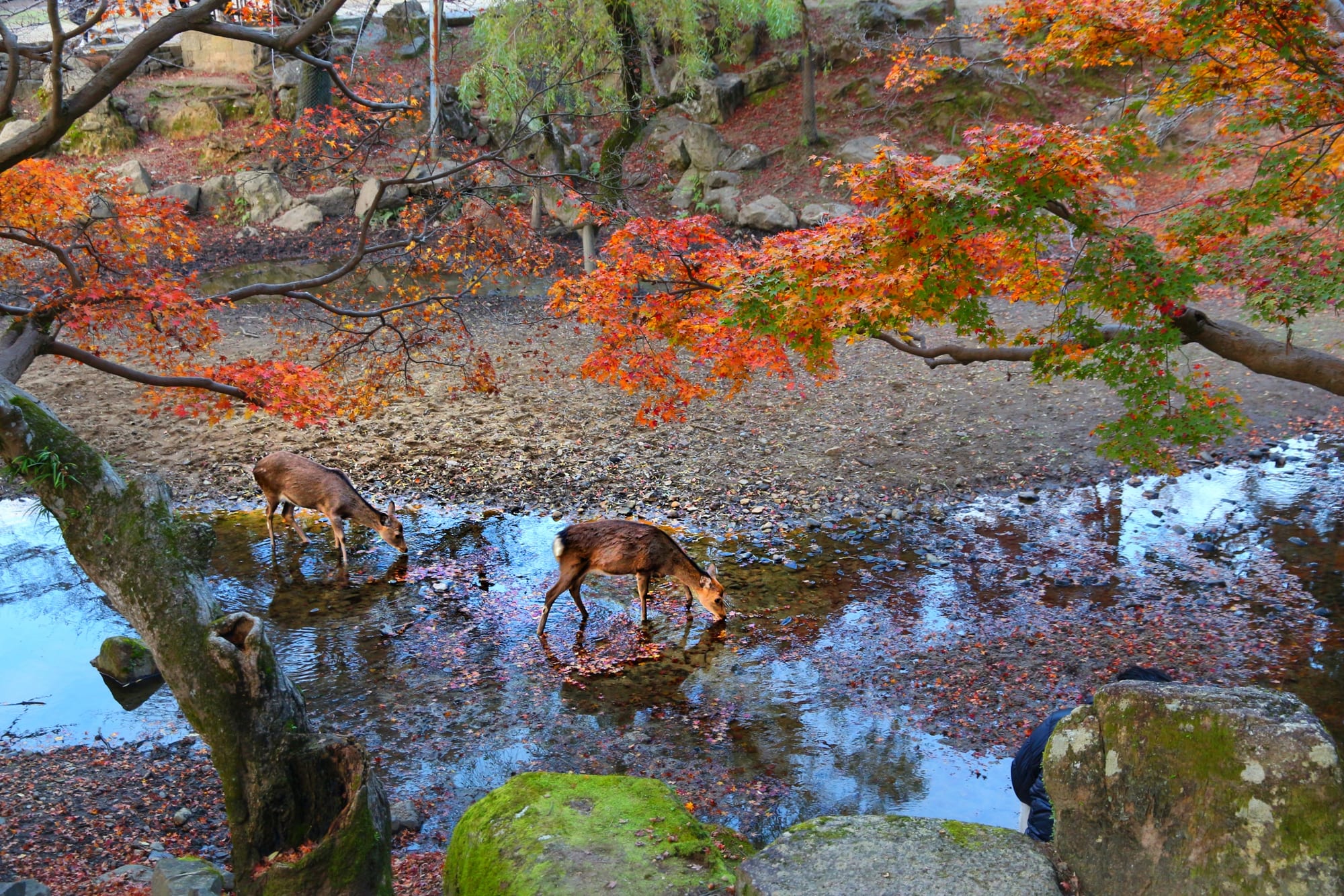
April for cherry blossom in the park and on Mount Yoshino, and mid-November for maple colour, are the finest times and the busiest. October and May are mild and calmer. Summer is hot and humid, though the lantern nights fall in August, and winter is cold and clear, with the Wakakusa hillside burning in January.
⏳ Suggested Number of Days
A full day covers the central temple district at a steady pace, and a second allows the western and southern parts of the city. Three or four days suit those going on into the surrounding plain and mountains. Staying overnight changes the experience more than extra hours do.
- First Visit
- 1–2 days
- With Surroundings
- 3–4 days
🚆 Transportation
Two stations serve the city: Kintetsu Nara, at the edge of the centre and a few minutes' walk from the park, and JR Nara, about a kilometre west. City buses loop around the park and out to the western temples, and an IC card works on all of them. Bicycles can be hired near both stations, and taxis wait at the ranks.
The park's temples are best linked on foot; keep buses for Nishinokyo, Heijo palace and Horyu-ji, which are too far to walk between.
🛬 Airport & Station Connections
Trains from Kyoto take about 35 minutes by Kintetsu limited express or 45 by JR, and from Osaka about 35 minutes from Namba or Tennoji. Kansai International Airport is roughly 90 minutes away by train with a change, or by direct airport bus. Many visitors arrive in the morning and leave in the late afternoon, which is why the park empties early.
🚶 Walkability
The centre is small and flat, and the whole circuit of Sarusawa Pond, Kofuku-ji, Todai-ji, Kasuga-taisha and Naramachi can be walked in a day, though it adds up to several kilometres on gravel paths and stone steps. The ground rises east of the park towards Wakakusa and the forest. The western temples and the palace site are too far apart to join on foot.
🛡️ Safety
Crime is very low and the streets are calm at night. The unusual risk here is the deer: they are wild animals, they butt, bite and kick when food is involved, and more than a hundred people have been injured in some years. Summer heat in the open park is the other common problem, and typhoons can pass in September.
Feed deer only the crackers sold in the park, hold nothing else in the hands, keep away from stags in the autumn rut and from does with fawns in spring, and carry water in summer. Check current official travel advice before travelling.
🌦️ Climate
An inland basin climate: humid subtropical, but hotter in summer and colder in winter than the coast, with cool nights in the hills. The rainy season runs through June and early July, and autumn is usually dry and settled.
- Summer
- hot and humid, commonly 31–35°C, with heavy air in the enclosed basin
- Winter
- cold for western Japan, about 1–9°C, with frost and occasional snow on the hills
🤝 Local Customs
The deer are treated as sacred messengers of the Kasuga deities, and it is customary to bow to them; many of them bow back, having learned that it brings crackers. Temple etiquette applies throughout the park — shoes off in halls, no photography where signs forbid it, quiet in the precincts.
Tipping is not practised. Paper bags, maps and tickets should be kept out of reach of the deer, food from shops is not eaten in the park, and litter is carried away because the deer swallow it.
💳 Common Payment Methods
The currency is the Japanese yen. Hotels, larger restaurants and shops take cards, but temple entrance desks, small cafés and craft shops in Naramachi are often cash only. Machines at convenience stores and the post office near the stations accept foreign cards.