💰 Budget
Oil money makes Aktau one of the more expensive Kazakh cities. Hotels are priced for business travellers and rooms are scarce when a conference or a rotation change fills the city, while canteens, bazaars and buses stay cheap. The large cost for most visitors is a 4x4 tour into the Mangystau desert with a driver and camping equipment.
- Daily Budget Midrange
- USD 90–180 (business hotel, restaurants, a share of a 4x4 desert tour)
- Daily Budget Shoestring
- USD 35–55 (hostel or simple hotel, canteen food, city buses and shared taxis)
Join a group tour to the desert to split the cost of the vehicle and driver, and book accommodation ahead in summer, when the beaches fill up.
📅 Best Time to Visit
April to early June and September to October for the desert, when driving and walking are comfortable and the light on the chalk is at its best. July and August are the beach months, hot on the coast and punishing inland. Winter is mild by Kazakh standards near the sea but grey, windy and bleak on the plateau.
⏳ Suggested Number of Days
The city itself needs a day or two. Most visitors add three or four for the desert, since the distances are long and much of the ground is covered by unpaved track. How far a tour goes, and whether it camps overnight, decides the total more than anything else.
- First Visit
- 1–2 days
- With Surroundings
- 4–6 days
🚆 Transportation
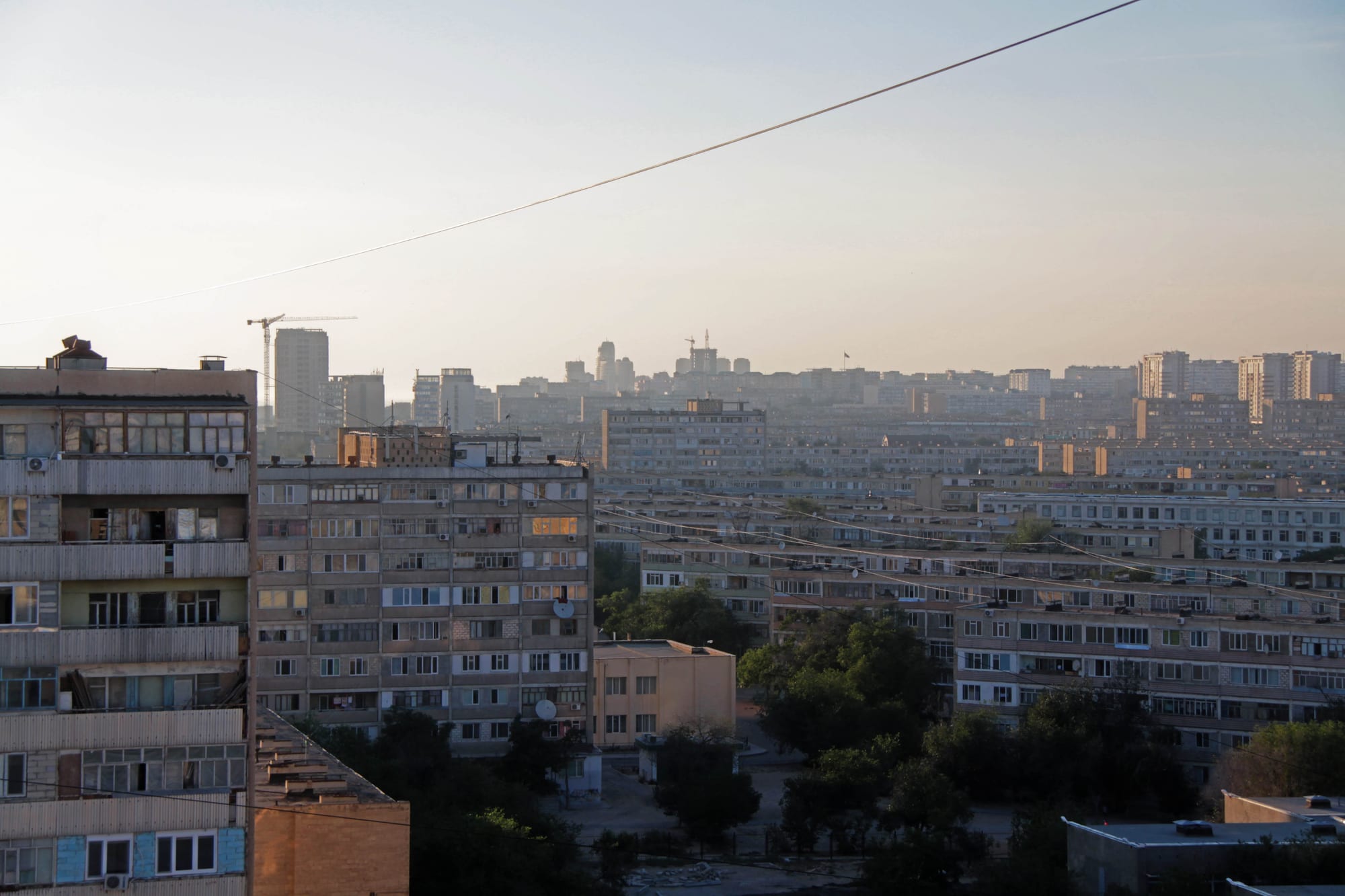
City buses and cheap taxis, usually booked through an app, cover the microdistricts, and the seafront is walkable. Because addresses use numbered districts rather than street names, giving a driver a landmark or a district and building number works better than an address. Everything outside the city requires a hired vehicle, and the desert requires a 4x4 with a driver who knows the tracks.
Do not take an ordinary hire car onto the Mangystau desert tracks; the surfaces are rough, the distances long and recovery is difficult.
🛬 Airport & Station Connections
Aktau International Airport lies about 21 kilometres north-west of the city and has flights to Astana, Almaty and a number of regional and international destinations; it is around half an hour from the centre by road. Trains run east and north across Kazakhstan, though journeys are long, and cargo and passenger ferries cross the Caspian to Azerbaijan and Turkmenistan from the port and from Kuryk down the coast, on schedules that depend on weather and cargo.
🚶 Walkability
The seafront and the older microdistricts are pleasant on foot, flat and close together. Elsewhere the city is spread out and laid out for vehicles, with long walks between districts, little shade and strong wind off the sea. The numbering system makes finding a specific building harder on foot than the distances suggest.
🛡️ Safety
Aktau is generally safe, with the usual cautions about taxis taken off the street and crowded places. The serious risks lie outside the city: heat, long distances without water, fuel or mobile signal, and vehicles breaking down on remote desert tracks. Labour protests have taken place in the region's oil towns.
Travel in the desert with an experienced local driver and ample water and fuel, avoid demonstrations, and dress modestly at the underground mosques and cemeteries. Check current official travel advice before travelling.
🌦️ Climate
Arid and windy, with the Caspian moderating the extremes a little. Rain is scarce in every season, dust storms occur, and the wind blows almost constantly along the coast.
- Summer
- hot and dry, commonly 30–35°C on the coast and hotter inland, with warm sea water
- Winter
- cool rather than severe on the coast, around or just below 0°C, with wind and occasional snow
🤝 Local Customs
Mangystau is strongly Kazakh, and clan identity and hospitality matter. Elders are greeted and served first, tea is poured for guests repeatedly, and shoes come off indoors. The pilgrimage sites are places of worship, not scenery: modest clothing, quiet behaviour and following the lead of pilgrims are expected, and some rooms are entered barefoot.
Ask before photographing people or at shrines, accept tea when it is offered, and remember that a guest arriving at a herding camp is expected to stay and eat.
💳 Common Payment Methods
The currency is the Kazakhstani tenge. Cards and Kazakh mobile payment apps are widely accepted in the city's hotels, shops and restaurants, but cash is needed at bazaars and for drivers, and there is no way to pay by card in the desert. Cash machines are common in the microdistricts.