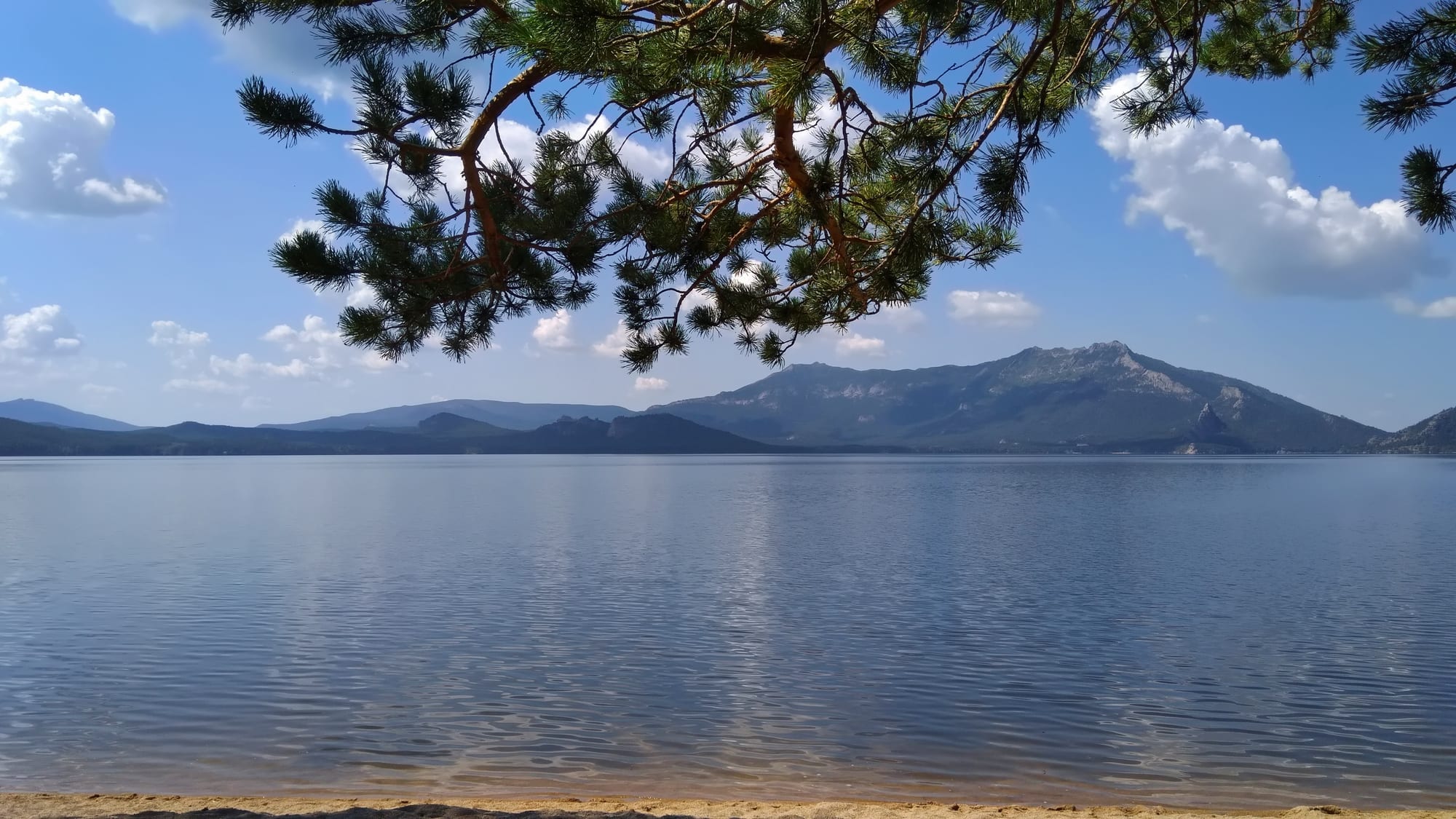
A still lake with a sandy shore in the foreground, pine branches overhead and wooded granite hills rising on the far side

Astana & the North, Kazakhstan

Burabay

Lake Auliekol at Burabay, with the Kokshetau hills and the Okzhetpes rock across the water. (Евгений Емельянов / Wikimedia Commons · CC BY-SA 4.0)

A resort village in Akmola Region, about 250 kilometres north of Astana, set between clear lakes and pine-covered granite hills at the edge of the steppe. Known in Russian as Borovoye, it grew around sanatoriums and holiday houses in the Soviet period and remains the country's best-known summer retreat, inside Burabay National Park.

Neighbourhoods

  • The village centre
    • First-time visitors
    • Close to the lake
    • Budget stays

    The old settlement of wooden and brick houses a short walk from the lake shore, with guesthouses, small hotels, cafés, souvenir rows and the buses in from Shchuchinsk. It is the cheapest base and the busiest part of the resort in July and August.

    Open in Maps
  • The sanatorium and resort strip
    • Families
    • Spa and sanatorium stays
    • Quiet and wooded

    Hotels, holiday complexes and Soviet-era sanatoriums stand among the pines along the lakes, many with their own beaches and treatment wings. Rooms here are quieter and more expensive than in the village, and most are a drive rather than a walk from the shops.

    Open in Maps
  • Shchuchinsk and the approach road
    • Transport connections
    • Everyday shops

    The small railway town about 20 kilometres south is the gateway to the lakes, with the station, bus links, supermarkets and cheaper year-round accommodation. The road between the two runs through pine forest past several lakes.

    Open in Maps

Things to do

Lakes, rocks and viewpoints

  • Burabay National Parkpark

    The protected area of pine and birch forest, granite outcrops and a string of lakes that surrounds the village, with marked paths, a visitor centre and an entry fee.

    Open in Maps
  • Okzhetpesviewpoint

    The bare granite rock rising straight from the shore of Lake Burabay, the symbol of the resort and the subject of a well-known Kazakh legend about an arrow that could not reach its top.

    Open in Maps
  • Zhumbaktaslandmark

    A mushroom-shaped rock island rising about 20 metres from the lake, also called the Sphinx, whose outline is said to change with the angle of view, giving it the name 'riddle stone'.

    Open in Maps
  • Lake Burabayattraction

    The main lake, historically called Auliekol, the 'holy lake', with sandy shores on its eastern side, rocky ones to the south and pine woods around, boat trips out to the rocks in summer and thick ice in winter.

    Open in Maps
  • Mount Kokshetrail

    At 947 metres the highest point of the Kokshetau Hills, also known as Kokshetau, climbed on walking and scrambling routes for a view over the whole basin.

    Open in Maps

Short trips from the village

  • Shchuchinskattraction

    The railway town south of the park, on its own lake, where trains from Astana and the north stop and most visitors change to a bus or taxi.

    Open in Maps
  • Kokshetauattraction

    The regional capital about 65 kilometres north-west, founded in 1824 as a Russian military fortress, standing on the shore of Lake Kopa with museums, a city park and its own hills and lakes nearby.

    Open in Maps

Seasonal events

  • Summer seasonJuly and August

    The village is at its fullest in high summer, when the beaches, boat hire, horse rides and lakeside stalls all operate and Astana families fill the sanatoriums for weekends.

  • Nauryzlate March

    The spring new year is marked with concerts, yurts and nauryz kozhe in the village and the surrounding district, at the end of the long snow season.

Eat and drink

Long-standing places and food districts in Burabay. Hours, ratings and directions come from your maps app, always current.

Burabay classics

  • Lakeside cafés and shashlyk stallsneighborhood

    Simple open-air places along the shore road grill shashlyk and serve lagman, manty and tea through the summer; many close outside the season.

    Open in Maps
  • Smoked lake fishmarket

    Stalls in the village and along the approach roads sell smoked and dried fish from the Burabay lakes, alongside kurt, honey and pine nuts from the forest.

    Open in Maps
  • Sanatorium dining roomsrestaurant

    Most resort hotels and sanatoriums feed their guests in large dining rooms with set Russian and Kazakh menus — often the only hot food available in the depths of winter.

    Open in Maps

Experience Burabay

History

The lakes and hills were known to Kazakh nomads of the Middle Horde long before any settlement stood here, and the rocks carry names and legends — Okzhetpes, "the arrow will not reach it", and Zhumbaktas, the riddle stone — attached to stories of Abylai Khan, the 18th-century ruler whose forces are said to have camped in these hills. The name Burabay is traced to bor, "pine forest", though local legend ties it instead to a bura, a male camel that warned people of danger.

The Russian village of Borovoye grew here in the second half of the 19th century, among settlers moving into the forested pocket of the northern steppe, and doctors soon took an interest in the air and the kumys cure. The forests around the lake were made a state forestry in 1898; in 1920 Burabay was nationalised and declared a spa resort of national importance, and under Soviet rule the area developed into an all-union resort of rest houses, pioneer camps and clinics for tuberculosis and respiratory illness. From 1941 to 1943 scientists of the Soviet Academy of Sciences were evacuated here, and the surrounding district, like the rest of northern Kazakhstan, received deportees.

Burabay National Park was created in 2000 out of the earlier protected forest, and from the 2000s the resort was rebuilt for a new market, with modern hotels, a promenade and a planned resort zone between Shchuchinsk and the lakes. The new capital 250 kilometres away supplied the visitors, and the road from Astana was upgraded to carry them. Growth has brought the familiar tension between building and protection in a small area of forest that tens of thousands of people visit each summer.

Culture & Customs

Burabay's identity is that of a holiday place, and much of the local culture is about receiving guests: sanatorium seasons, summer lets, boatmen, horse owners, market stalls and the memory of Soviet-era holidays that older Kazakhstanis still recall with affection. Russian is the language of the street, Kazakh is increasingly heard, and the village's population mixes Slavic settler families with Kazakh residents of the surrounding district.

The landscape carries legends, and guides tell them constantly. Okzhetpes is tied to a story of a captive girl who set an impossible test for her suitors; Zhumbaktas is said to show a young woman, an old woman or a sphinx depending on where the viewer stands; the hill of Kokshetau, the "blue mountain", appears in songs about Abylai Khan. Ribbons tied at springs and viewpoints show the older practice of treating such places as sacred, a habit shared with other holy sites across the steppe.

Kazakh custom shapes hospitality here as elsewhere in the north: tea poured half a cup at a time and refilled, dastarkhan tables loaded before guests sit down, and elders served first. Horses are part of daily life as well as the tourist trade, and kymyz, fermented mare's milk, is sold along the roads in summer — once prescribed by the sanatoriums as treatment, now drunk as a national restorative.

Daily Life

Fewer than five thousand people live in the village of Burabay itself, with the nearby town of Shchuchinsk several times larger and the wider Burabay district spread across farming villages. Almost everything turns on the resort: hotels, sanatoriums, cafés, boat and horse hire, souvenir selling, national park work, building and maintenance. Many families also keep gardens, livestock and summer rooms let to visitors.

The year divides sharply. From late June to the end of August the village is crowded, prices rise and everyone works; in the shoulder seasons trade slows to sanatorium guests and weekend visitors from the capital; in winter the population that remains lives quietly between heated houses, the school, the shops and the frozen lakes, with a short burst of activity over the new year holidays. Seasonal work and low winter wages push younger residents towards Astana and Kokshetau.

Local concerns are those of a protected area under pressure: construction close to the shore, traffic and parking in summer, water quality and the level of the lakes, rubbish left by day visitors, and forest fire risk in dry years. The national park regulates building and access, and arguments about where that line should fall are a permanent feature of village life.

Food

Eating at Burabay is straightforward holiday food. Shashlyk — skewered mutton, beef or chicken grilled over coals — is the smell of the shore road in summer, served with flatbread, raw onion and tomato salad. Kazakh and Uyghur staples fill the cafés: lagman, hand-pulled noodles in a spiced meat and vegetable sauce; manty, large steamed dumplings; samsa baked in a tandoor; and plov. For gatherings there is beshbarmak, boiled meat with squares of pasta in onion broth, the dish that marks any occasion worth marking in northern Kazakhstan.

The lakes and the forest supply the local specialities. Smoked and dried fish from the surrounding waters is sold from stalls and roadside tables, along with pine nuts, forest berries and honey from the district's hives. Slavic settler cooking is equally ordinary here: pelmeni, borscht, salted cucumbers, potatoes with dill and dark bread, and pancakes with sour cream.

Dairy from the steppe is the thing visitors are urged to try. Kymyz, fermented mare's milk, is sold in summer at roadside yurts along the Astana road and near the lakes, where sanatoriums once prescribed a kumys course; shubat, made from camel's milk, appears less often. Kurt, hard salted balls of dried sour milk, and irimshik, sweet dried curd, are sold at every stall, and tea with milk and baursak follows almost every meal.

Planning tools

Budget

Burabay is cheap by the standards of the capital, except at peak times: resort hotels and sanatoriums raise their rates sharply for July and August weekends, when demand from Astana is heaviest. Village guesthouses and rooms in Shchuchinsk cost far less, and national park entry, boat hire and horse rides are small extras.

Daily Budget Midrange
USD 80–160 (resort hotel or sanatorium room, meals included or in restaurants, a car or driver from Astana)
Daily Budget Shoestring
USD 30–50 (village guesthouse or a room in Shchuchinsk, self-catering and café meals, buses)

Book well ahead for summer weekends and public holidays; midweek stays are cheaper and the lake paths far quieter.

Best Time to Visit

Late June to early September for swimming, boats and walking, with the water at its warmest in July and August. September brings autumn colour in the birch woods and far fewer people. Winter is severe but the resort stays open for skiing, skating and sanatorium stays, with the lakes frozen hard from around December to April.

Suggested Number of Days

A night or two is enough for the lake shore and one or two of the walks. Three days suit a stay that includes the quieter lakes and the nearby towns, or a sanatorium booking. Weather decides a great deal: rain or deep cold shortens most visits.

First Visit
1–2 days
With Surroundings
3 days

Transportation

Shared taxis, minibuses and tour vehicles run from Astana, and trains stop at Shchuchinsk about 20 kilometres away, from which buses and taxis reach the village. There is no meaningful public transport inside the park, so visitors walk, cycle, hire a boat or use taxis and organised excursions to reach the further lakes and viewpoints.

Agree a taxi price before setting off, and arrange the return journey in advance outside the summer season, when vehicles are scarce after dark.

Airport & Station Connections

Most visitors come from Astana, roughly 250 kilometres and three to four hours away by road on a good highway, by hired car, shared taxi or tourist minibus. Trains from Astana, Petropavl and Kokshetau stop at Shchuchinsk, and Nursultan Nazarbayev International Airport in the capital is the nearest airport with scheduled flights.

Walkability

The village itself is small and easily walked, and a surfaced path runs along part of the lake shore towards the main rocks. Beyond that, distances between lakes and trailheads are measured in kilometres along roads with little shade, so most people combine walking with a car, bicycle or excursion. Forest paths are rough, and snow and ice cover them for much of the year.

Safety

Burabay is a quiet resort with little crime beyond occasional theft from beaches and unlocked rooms. The real risks are outdoor ones: cold and wind in winter, sudden summer storms on the water, ticks in the forest in spring and early summer, and drowning, which claims lives on the lakes most years.

Swim only from the recognised beaches, check for ticks after walking in long grass or woodland, carry water on the hill paths, and dress for severe cold from November to March. Check current official travel advice before travelling.

Climate

A continental climate slightly softened by the forest and the lakes, which keep the air a little cooler in summer and marginally milder than the open steppe in winter. Snow lies for about five months and the lakes freeze solid.

Summer
warm — usually in the low to mid-20s°C by day in July, with cool nights, mosquitoes near the water and occasional thunderstorms
Winter
cold and snowy — January averages near -15°C, with frozen lakes, long-lying snow and much colder nights

Local Customs

Russian is the common language and Kazakh is widely spoken, and the village mixes long-settled local families with holidaymakers from Astana. Hospitality follows Kazakh form: tea served at once, poured a little at a time, and food pressed on guests. Litter, fires and picking plants are restricted inside the national park, and some rocks and springs are treated as sacred places where visitors tie ribbons and behave quietly.

Keep to marked paths and take rubbish away, ask before photographing people at the beaches or sanatoriums, and note that alcohol sales are restricted to certain hours.

Common Payment Methods

The currency is the Kazakhstani tenge. Cards and phone transfers are accepted in hotels, larger cafés and supermarkets, but market stalls, boat operators, horse rides and some guesthouses want cash. ATMs are in the village and in Shchuchinsk, and can run out at busy weekends.