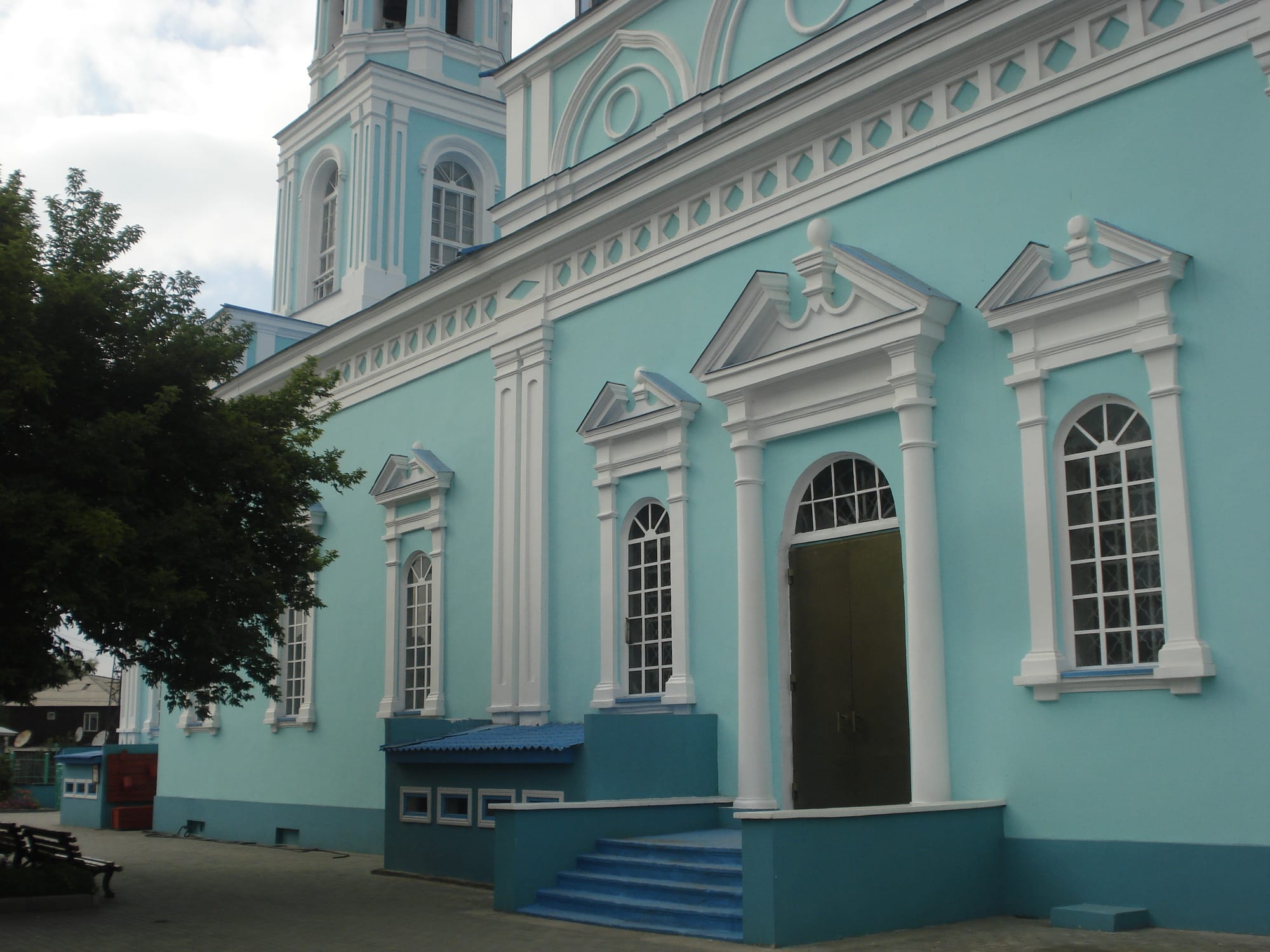
The pale blue and white wall of Semey's Orthodox cathedral, with arched windows, white pilasters and a bell tower behind trees

East Kazakhstan & the Altai, Kazakhstan

Semey

The Orthodox cathedral of the Resurrection in Semey. (Kairat Cher / Wikimedia Commons · CC BY 3.0)

A city of more than 300,000 people on the Irtysh in north-eastern Kazakhstan, founded as the Russian fort of Semipalatinsk in 1718 and renamed Semey in 2007. A merchant and exile town where Dostoevsky served as a soldier and the poet Abai is revered, it is also the place most associated with the Soviet nuclear tests carried out on the steppe to the west.

Neighbourhoods

  • The old centre
    • First-time visitors
    • Historic district
    • Museums

    The grid of streets on the right bank near the river, where the merchant city grew — brick and wooden houses, the museums devoted to Abai and to Dostoevsky, churches, mosques and the main shopping streets. Most of what a visitor comes for is within walking distance here.

    Open in Maps
  • The riverside
    • Walks
    • Parks
    • Quiet and residential

    Embankments, beaches and parkland along the Irtysh, with the long suspension bridge overhead and views of the pine forest on the far bank. It is where the city walks in the evening and swims in high summer.

    Open in Maps
  • Zhana Semey
    • Local life
    • Quiet and residential

    The 'new Semey' on the left bank, a separate district of housing, railway yards and industry linked to the centre by the bridges. It is residential rather than scenic and gives a picture of everyday life away from the historic streets.

    Open in Maps
  • The northern microdistricts
    • Local life
    • Shopping
    • Close to public transport

    Soviet-built blocks laid out from the 1960s on the northern edge of the city, with markets, shopping centres and bus routes into the centre, where a large part of the population lives.

    Open in Maps

Things to do

Landmarks in the city

  • Semey Bridgelandmark

    The suspension bridge over the Irtysh, built between 1998 and 2001, with a main span of 750 metres; local people call it the New Bridge, and it is the city's most recognisable structure.

    Open in Maps
  • The Irtyshattraction

    The great Siberian river that divides the city, used for swimming and fishing in summer and frozen solid for months in winter.

    Open in Maps

The nuclear legacy

  • Semipalatinsk Test Siteattraction

    The steppe area west of the city where 456 nuclear tests were carried out between 1949 and 1989, 116 of them atmospheric; much of it remains restricted and can only be entered with official permission.

    Open in Maps
  • Kurchatovattraction

    The town built to run the test programme, once a closed city known by its postal code Semipalatinsk-21, now a small place on the Irtysh where the National Nuclear Center's institutes work; the ground around it is restricted and any visit needs official permission.

    Open in Maps

Getting around

  • Semey Airporttransit hub

    The city's airport, about 10 kilometres south-west of the centre and named after Abai, with flights to Astana and Almaty.

    Open in Maps

Seasonal events

  • Nauryzlate March

    The spring new year, celebrated with yurts, wrestling, concerts and bowls of nauryz kozhe in the squares and parks.

  • Abai DaysAugust

    Readings, concerts and ceremonies marking the birth of the poet Abai Kunanbayev, held in the city and at his memorial complex in the hills to the south.

  • Day of remembrance of the test site's closure29 August

    The anniversary of the closure of the Semipalatinsk test site in 1991, marked with ceremonies for the victims of the tests and as an international day against nuclear testing.

  • Victory Day9 May

    Wreath-laying at the war memorials followed by concerts and family gatherings in the parks.

Eat and drink

Long-standing places and food districts in Semey. Hours, ratings and directions come from your maps app, always current.

Semey classics

  • Beshbarmak and steppe meatrestaurant

    Boiled mutton or horsemeat with sheets of pasta and onion broth, with kazy sausage and sorpa broth, is the meal for guests; Semey is also known across the country for its sausage and meat processing.

    Open in Maps
  • Tatar bakingrestaurant

    The city's old Tatar community left behind belyashi, fried pastries filled with meat, samsa and chak-chak, fried dough bound with honey, sold in cafés and bakeries in the centre.

    Open in Maps

Markets

  • The city bazaarsmarket

    Horsemeat and kazy, dairy and kurt, honey from the Altai, smoked river fish, melons in late summer and Korean-style salads fill the covered markets.

    Open in Maps

Experience Semey

History

Semey began in 1718 as Semipalatinsk, a Russian fort on the Irtysh built during the campaign to secure the river against the Dzungars. The name came from the ruins of a Buddhist monastery complex nearby, understood as 'seven chambers'. The fort flooded repeatedly and was moved 18 kilometres upstream to drier ground in 1778, growing into a customs post and trading town, because the Irtysh carried goods north into Siberia while caravan routes ran south towards Central Asia and China. Tatar merchants settled and built mosques, Russian merchants built brick warehouses, and Kazakh clans of the Middle Horde traded livestock at its markets.

Empire also used the town as a place of exile. Fyodor Dostoevsky was sent here as a private soldier after his Siberian prison sentence and lived in the town from 1854 to 1859, and was a friend of the Kazakh ethnographer Shoqan Walikhanov, whom he met on the way there. In the hills to the south, Abai Kunanbayev, the poet and translator regarded as the founder of modern Kazakh written literature, was born in 1845; Semipalatinsk was where he read, argued and published. In 1917 the town became a centre of the Alash Orda, the Kazakh autonomist movement suppressed after the Bolshevik victory.

The Soviet period brought industry — meat packing, textiles, a river port — and then the decision that shaped the city's modern reputation: from 1949 the Semipalatinsk Test Site on the steppe to the west was used for 456 nuclear tests, atmospheric at first and later underground, until protests led by the Nevada–Semipalatinsk movement helped close it in 1991. The city was renamed Semey in 2007, and in 2022 became the capital of the new Abai Region.

Culture & Customs

Semey calls itself a cultural capital, and the claim rests on literature. Abai's poems and his prose 'Words of Edification' are learnt in every Kazakh school, and the city keeps his memory in museums, monuments and the annual commemorations held in August. Two other writers deepen the association: his nephew Shakarim Kudaiberdiev, and Mukhtar Auezov, whose novel about Abai is a national epic. The Dostoevsky museum, in the house connected with the writer's years of exile, marks the other literary tradition the city claims.

Its population has long been mixed. Kazakhs form the majority, with Russians, Tatars, Ukrainians and Germans among the older communities; the Tatar quarter's nineteenth-century mosques and the Orthodox cathedral stand a short distance apart, and the city has a reputation for religious learning as well as literary learning.

The nuclear tests are part of local identity in a way that is hard to overstate. Families across the region carry illnesses attributed to fallout, the anti-test movement of 1989 began here, and 29 August — the date the site was closed — is marked each year and has been adopted internationally as a day against nuclear testing. Monuments in the city address the subject directly. Otherwise manners are those of the steppe: guests are fed first and generously, tea is endless, age is respected, and hospitality is offered to strangers as a matter of course.

Daily Life

More than 300,000 people live in Semey, which makes it one of Kazakhstan's larger cities and, since 2022, the capital of Abai Region. It is spread widely on both banks of the Irtysh, with the historic centre on one side and Zhana Semey and the railway districts on the other, connected by the suspension bridge and the older crossings.

The economy runs on food processing — the city's meat and sausage products are known nationally — along with textiles, building materials, transport and a large education and medical sector, including a long-established medical university whose work on the health effects of radiation is internationally known. Administration has added jobs since the region was created. Wages are modest and many young people leave for Astana and Almaty.

Daily life is unhurried and centred on family, the markets and the river. Heating runs for half the year, buses fill in the mornings, and in summer the city moves to the beaches, the pine forest across the water and the dachas. Health remains the region's defining public issue, alongside the condition of housing and roads inherited from the Soviet decades; the closure of the test site is now a generation in the past, but its consequences are still treated as current business rather than history.

Food

Semey's table is Kazakh with a strong Tatar and Russian overlay. Beshbarmak — mutton or horsemeat boiled and served on wide sheets of pasta with onion broth — is the dish of hospitality, preceded by kazy, a sausage made from horse rib meat, and accompanied by sorpa, the broth drunk from bowls. Kuyrdak, offal fried with onion and potato, and horse meat in many forms are everyday foods rather than delicacies, and the city's meat-processing plants have made its sausage a souvenir carried to other regions.

Tatar merchants left a baking tradition: belyashi, round fried pastries stuffed with meat, samsa baked in the oven, and chak-chak, small pieces of fried dough stuck together with honey and served at celebrations. Russian cooking adds pelmeni, borscht, pirozhki and preserved vegetables, and the bazaars sell Korean salads made by families deported here in the 1930s.

Dairy is central. Kurt, hard salted curd balls, is eaten as a snack; irimshik and suzbe appear on the table with tea; and kymyz and shubat, fermented mare's and camel's milk, are drunk in summer and treated as restorative. Tea, black and usually with milk, is poured constantly and served with baursak and Altai honey brought down from the mountains to the east. River fish from the Irtysh, fried or smoked, rounds out a kitchen built on meat and milk.

Planning tools

Budget

Semey is one of the cheaper cities in Kazakhstan. Hotels are modest and plentiful, canteens and bazaars keep eating costs very low, and city transport is inexpensive. The costs that add up are taxis between the city's scattered districts and hired cars for the long drives to Kurchatov or to the Abai memorial complex in the hills.

Daily Budget Midrange
USD 65–130 (mid-range hotel or comfortable guesthouse, restaurants, a driver for the steppe)
Daily Budget Shoestring
USD 25–45 (simple hotel or guesthouse, canteen food, buses and trains)

Anything connected with the former test site must be arranged in advance through official channels; it cannot be visited on a whim.

Best Time to Visit

May to September. Late spring and early summer are green and mild, July and August are hot and dry with swimming in the Irtysh and the Abai commemorations, and September is clear and comfortable for the museums and the steppe. Winter is long and severe, with hard frosts and wind, though the museums stay open and the city is quiet.

Suggested Number of Days

The museums and the historic streets fill a day or two. Three or four days allow for the hills and steppe around the city, which involve long drives, and for a slower look at the river and the forest.

First Visit
1–2 days
With Surroundings
3–4 days

Transportation

Buses and minibuses cover the city and cross the bridges to Zhana Semey, and taxis booked through apps are cheap and quick. The centre itself is walkable, but the districts are far apart. Trains and intercity buses run to Oskemen, Astana, Almaty and Pavlodar, and the road to Oskemen takes about three hours.

Distances to the steppe sites are long and services sparse — hire a car with a driver rather than relying on public transport.

Airport & Station Connections

Semey Airport lies about 10 kilometres south-west of the centre, with flights to Astana and Almaty. The city is on the railway between Astana, Oskemen and the Russian border, and night trains are a common way to arrive. By road, Oskemen is roughly 200 kilometres east and Pavlodar several hours to the north-west.

Walkability

The historic centre is flat, gridded and easily covered on foot, and the museums, churches and mosques sit within a few blocks of each other near the river. Beyond it the city spreads over a large area on both banks, and crossing the Irtysh or reaching the northern districts means a bus or taxi. Winter ice and summer dust are the main discomforts.

Safety

Semey is generally safe, with little crime that touches visitors; ordinary care in markets and on buses is enough. The serious hazards are the climate — severe winter cold, summer heat on the open steppe — and the former test site to the west, where contaminated ground remains and entry without authorisation is both dangerous and forbidden.

Do not attempt to enter the former test site or its restricted zones except on an authorised visit, carry water and fuel on steppe drives, and dress for extreme cold in winter. Check current official travel advice before travelling.

Climate

Sharply continental and dry, with very cold winters, hot summers and a short spring and autumn. Wind off the steppe is constant, rainfall is low, and the Irtysh freezes for several months.

Summer
hot and dry — daytime temperatures are usually 25–32°C in July, cooling quickly after dark
Winter
severe — daytime temperatures stay well below freezing in January, often near -15°C, with strong winds and drifting snow

Local Customs

Kazakh and Russian are both heard constantly, and Semey takes particular pride in Kazakh language and literature because of its association with Abai; a Kazakh greeting is appreciated. Hospitality follows the steppe pattern — tea poured a little at a time and refilled, bread on the table, elders served first — and shoes are removed in homes. The nuclear tests affected families across the region and are spoken about seriously rather than as a curiosity.

Ask before photographing people, cover the head and remove shoes in mosques, dress modestly at memorials, and treat the subject of the tests with care.

Common Payment Methods

The currency is the Kazakhstani tenge. Cards and local mobile payment are accepted in hotels, shops and most cafés in the city, and ATMs are easy to find in the centre. Cash is needed at bazaars, in villages and with drivers once the city is left behind.