💰 Budget
Nyeri is markedly cheaper than Nairobi. Guesthouses, local cafés and matatus cost little, and mid-range hotels in and around the town are modest in price. The expensive part of a stay is what lies outside it: entry to the Aberdare or Mount Kenya national parks, a 4x4 with a driver, and the forest lodges.
- Daily Budget Midrange
- USD 90–180 (mid-range hotel, restaurant meals, a hired car or taxi)
- Daily Budget Shoestring
- USD 30–55 (guesthouse, local cafés, matatus)
Park entry and a vehicle for the Aberdares are the largest single costs and are best budgeted separately from the town stay.
📅 Best Time to Visit
January and February and the long dry spell from June to early October are the clearest and best for the mountains, though June to August is cold and often overcast. The long rains from March to May turn the forest tracks to mud, and the shorter rains fall around November.
⏳ Suggested Number of Days
The town itself takes a day. Three or four make sense for anyone using it as a base for the Aberdares, the western approaches to Mount Kenya and the farming country around, since each of those needs most of a day and a vehicle.
- First Visit
- 1 day
- With Surroundings
- 3–4 days
🚆 Transportation
Matatus and larger buses run constantly between Nyeri, Nairobi, Nanyuki, Karatina and the surrounding market centres, leaving the town's stages when they fill. Boda-boda motorcycle taxis handle short local trips, including the steep lanes off the ridge. There is no rail service, and the forest parks need a hired vehicle, ideally a 4x4.
Roads into the Aberdares are rough and can be impassable after heavy rain, so a high-clearance vehicle with a driver who knows them is worth the cost.
🛬 Airport & Station Connections
Nyeri lies about 150 kilometres north of Nairobi, roughly three hours by road through Thika and Karatina on generally good tarmac, and matatus and coaches run the route through the day. Nanyuki, about an hour to the north-east, has the nearest airfield with scheduled flights from Nairobi's Wilson Airport, and small airstrips at Mweiga and Nyaribo serve light aircraft.
🚶 Walkability
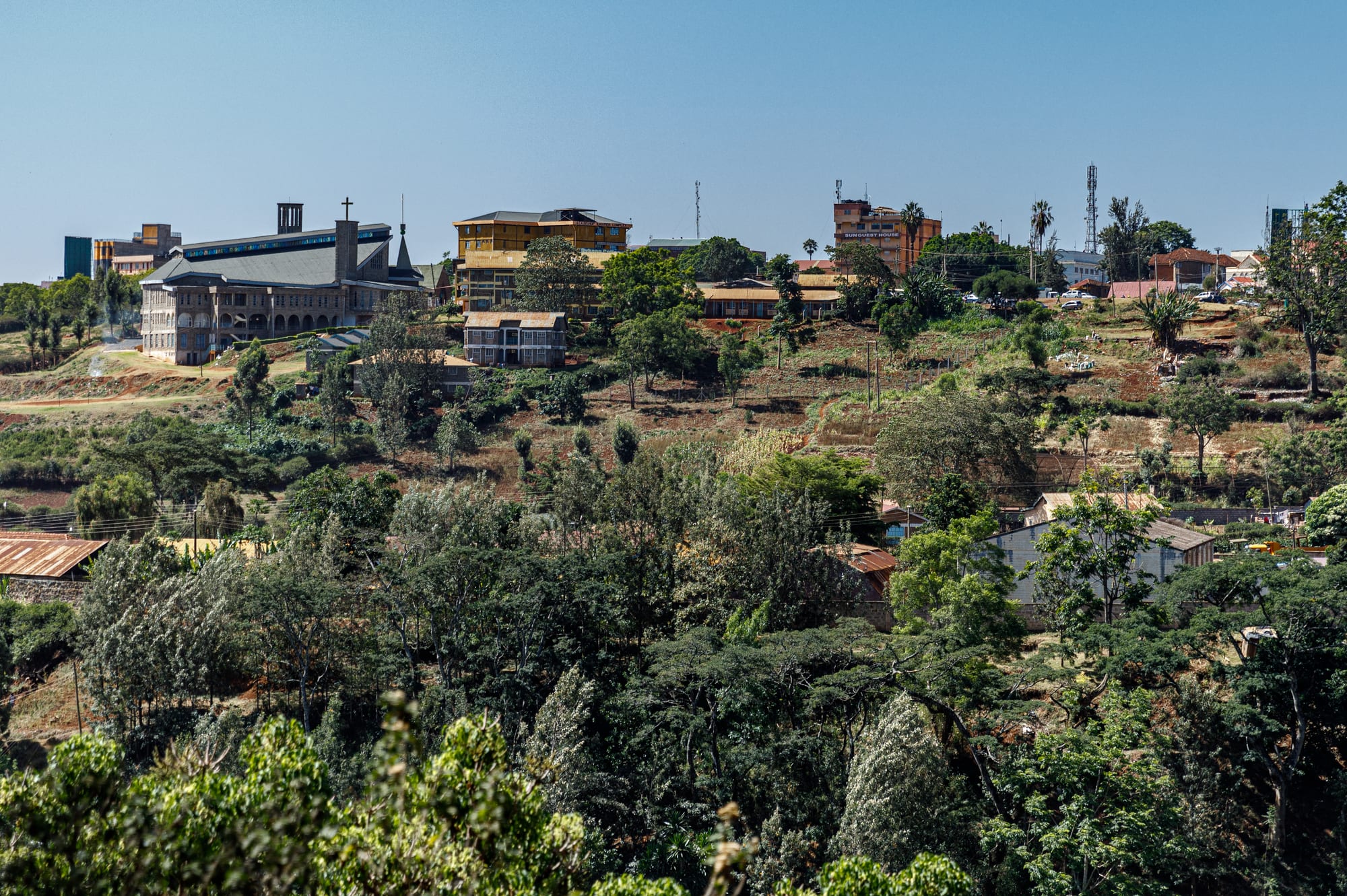
The centre is small and easily walked, with the market, banks, cafés and matatu stages within a few blocks. The town is built on ridges, so streets running off the main road climb and drop steeply, and the outlying residential areas and the road out to the parks are too far to walk comfortably. Pavements thin out beyond the centre.
🛡️ Safety
Nyeri and the highland towns are generally calm, with far less street crime than the capital, though ordinary petty theft occurs around the market and bus stages. The greater risks are on the road, where matatu and lorry traffic on the Nairobi highway is heavy, and in the mountains, where cold, altitude and wildlife call for a guide.
Avoid the northeastern counties and the immediate Somali border, take care in Nairobi's central and eastern districts and after dark, use hotel or app-based transport, and take malaria precautions outside the highlands. Walk in the Aberdares and on Mount Kenya with a guide, and allow for cold nights at altitude. Check current official travel advice before travelling.
🌦️ Climate
Cool and green, the climate of the highlands rather than of equatorial Africa. Days are mild and often bright in the morning with cloud building over the Aberdares by afternoon, and nights are cold enough for a jacket all year. Rain comes in two seasons, heaviest from March to May.
- Summer
- January to March is the warmest and driest spell, about 22–26°C by day
- Winter
- June to August is cold and overcast, often falling to 8–10°C at night
🤝 Local Customs
This is Kikuyu country, and Gĩkũyũ is heard as much as Swahili, though English is widely understood. Greetings are unhurried and elders are addressed first. Church life is central, Sunday mornings are busy, and dress in town is neat and conservative.
Tipping is not expected in small cafés and a rounding-up is enough elsewhere. Permission should be asked before photographing people, homes or farms, and drinking is done in bars rather than on the street.
💳 Common Payment Methods
The currency is the Kenyan shilling, and M-Pesa mobile money is used for nearly everything, including matatu fares and market purchases. Banks and ATMs are on the main street, cards work in hotels and supermarkets but rarely in smaller places, and cash in small notes is useful outside the town.