💰 Budget
Savannakhet is cheap and sees few enough visitors that prices stay local. Guesthouses in the old quarter, market meals and shared songthaews cost very little; the main extra costs are a rented motorbike or a car and driver to reach the stupa, the forest and the Khmer ruins, and hotels along the bridge road aimed at business travellers.
- Daily Budget Midrange
- USD 40–90 (comfortable hotel, restaurant dinners, a driver for trips out of town)
- Daily Budget Shoestring
- USD 15–30 (guesthouse room, market and noodle-shop meals, songthaews or a rented bicycle)
Cash machines are easy to find in the centre, and Thai baht are widely understood near the bridge, but small places still want kip.
📅 Best Time to Visit
November to February is the pleasant season, dry and warm, and February brings the pilgrimage festival at That Ing Hang. March to May is punishing in the lowland heat. The rains from June to October are heavy but usually fall in the afternoon, and the countryside is at its greenest.
⏳ Suggested Number of Days
A day or two covers the old quarter, the riverfront and the museums at a slow pace. An extra day allows trips into the surrounding province, and many people stop here for a night while crossing between Thailand and Vietnam.
- First Visit
- 1–2 days
- With Surroundings
- 2–3 days
🚆 Transportation
The old quarter is small enough to walk, and bicycles are rented at guesthouses. Jumbos and tuk-tuks cover the distance to the market, the bus station and the bridge, with fares agreed in advance. Songthaews and buses leave from stations on the edge of town for the province, for Pakse and Vientiane along Route 13, and east along Route 9 to the Vietnamese border.
The bus station and the bridge are several kilometres from the old quarter, so allow time and a tuk-tuk fare for departures.
🛬 Airport & Station Connections
Savannakhet Airport sits on the edge of the city and handles a small number of flights. Most people arrive by road: buses run along Route 13 from Pakse in the south and from Vientiane in the north, while international services cross the Second Thai–Lao Friendship Bridge from Mukdahan in a few minutes and run east along Route 9 to Dong Ha and Hue in Vietnam.
🚶 Walkability
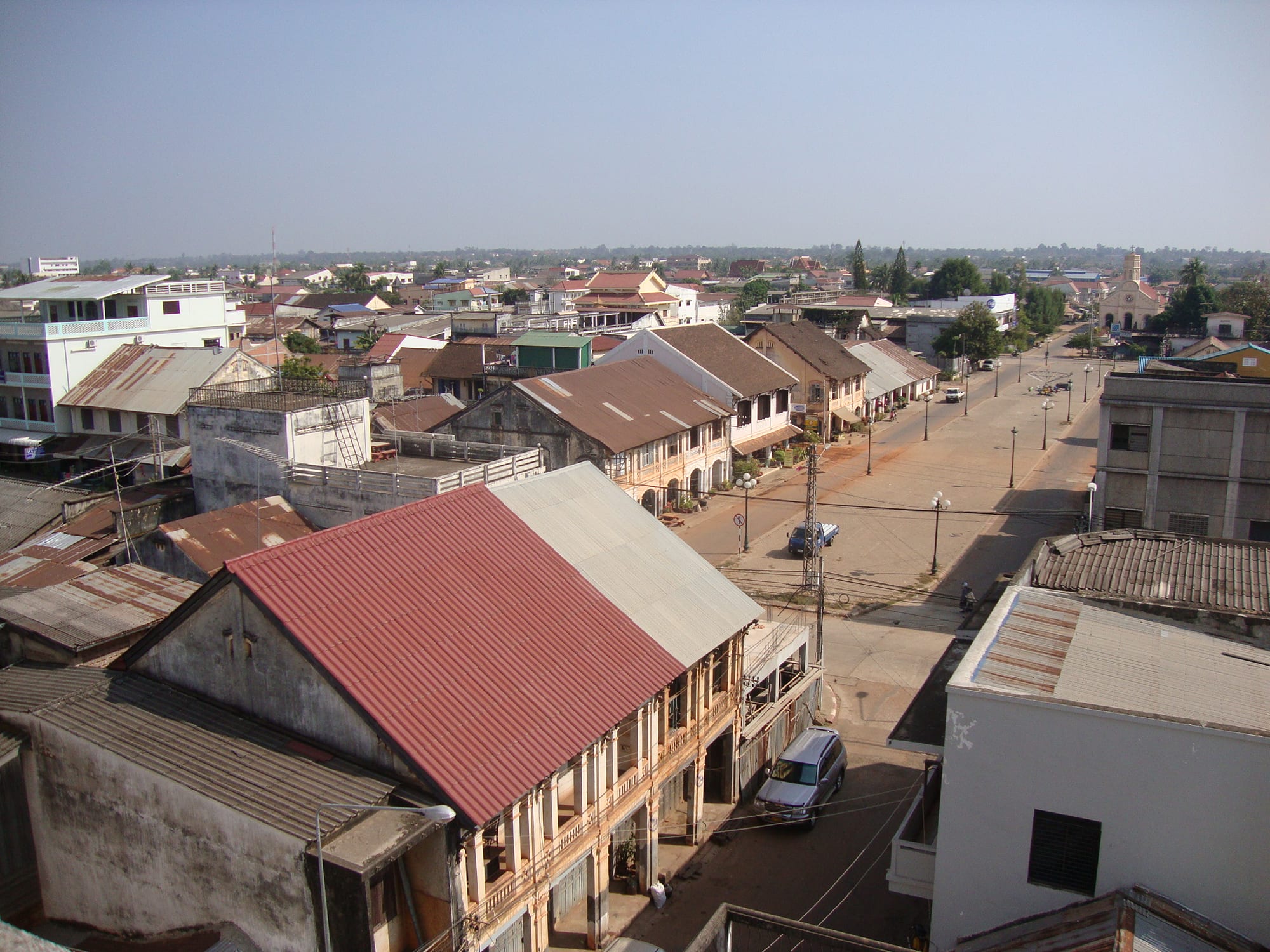
The old quarter is flat, quiet and easily walked; the square, the church, the riverfront and most guesthouses are within ten minutes of each other, and traffic is light by Lao standards. Beyond it the town spreads out, pavements give way to dust or mud, and the market, bus station and bridge are too far to walk comfortably in the heat.
🛡️ Safety
The town is calm and crime against visitors is rare, mostly opportunist theft. The practical risks are road accidents, especially on rented motorbikes and on the busy Route 9 corridor, the Mekong's currents, and unexploded ordnance, which remains a hazard in rural parts of Savannakhet province that the Ho Chi Minh Trail crossed and the bombing followed.
Keep to paths, tracks and cleared ground in the countryside and never handle metal objects found in fields or forest, ride carefully after dark, and lock valuables away. Check current official travel advice before travelling.
🌦️ Climate
A tropical climate with a hot dry season, a wet monsoon and a short cooler spell. Rain falls mainly from May to October, often in heavy afternoon storms, and the Mekong rises through those months before dropping back and exposing sandbanks.
- Summer
- very hot before the rains, with March to May days often 33–38°C, then humid and wet from June to October
- Winter
- dry and warm, generally 18–32°C from November to February, with cool early mornings
🤝 Local Customs
Manners are Lao Buddhist and unhurried: greetings with the nop, palms together at the chest, low voices, and patience rather than complaint when something takes time.
Shoulders and knees should be covered in temples and at the stupa, shoes left outside halls and homes; women do not touch monks or hand things to them directly, heads are not touched, and permission is asked before photographing people or ceremonies. Tipping is not expected, though rounding up a bill is welcome.
💳 Common Payment Methods
The currency is the Lao kip, and cash rules. Thai baht circulate near the bridge and US dollars are taken for some hotel bills, but small shops, markets and tuk-tuks want kip. Cards work in larger hotels only; cash machines in the centre have limits per withdrawal, so it pays to draw money before heading into the province.