💰 Budget
Ambalavao is inexpensive. Guesthouses and hotely meals cost very little, the craft workshops charge nothing or next to nothing to look round, and the real costs are the reserve entry and guide at Anja, the park fees, guides and porters for Andringitra, and the hired car with driver that most visitors use on the RN7.
- Daily Budget Midrange
- USD 55–150 (hotel or lodge, park fees and guides, a car with driver)
- Daily Budget Shoestring
- USD 20–35 (guesthouse, hotely meals, taxi-brousse)
Draw cash in Fianarantsoa before arriving; banking here is limited and the reserves, guides and porters are paid in ariary.
📅 Best Time to Visit
April to November, the dry months, when the RN7 and the track to Andringitra are in their best state and the trekking season on the massif is open, roughly April to October. Nights are cold in June and July, and the high plateaus can see frost. The summer rains green the valley but make the mountain tracks difficult.
⏳ Suggested Number of Days
The town and its workshops need no more than a day, and market days are the reason to time a stop. Three to five days suit anyone adding the community reserve nearby and a trek in the mountains to the south, which takes several days in itself.
- First Visit
- 1 day
- With Surroundings
- 3–5 days
🚆 Transportation
The town is small and walked end to end in twenty minutes. Bush taxis stop on the main street on their way between Fianarantsoa and the south, and most visitors pass through in a hired car with driver. Andringitra is reached by rough track that needs a 4x4, arranged in the town or through a park operator, and shared vehicles run to Anja.
Arrange the 4x4 and the guides for Andringitra in advance, as the track is slow and the trailhead is a long way from the road.
🛬 Airport & Station Connections
Ambalavao lies on the RN7 about 55 kilometres south of Fianarantsoa, an hour or so by road, and the same road continues south towards Ihosy, Ranohira and Toliara. Bush taxis run from Fianarantsoa through the day. The town has its own airport, Ambalavao Airport, but there is no railway; the nearest station is the terminus in Fianarantsoa.
🚶 Walkability
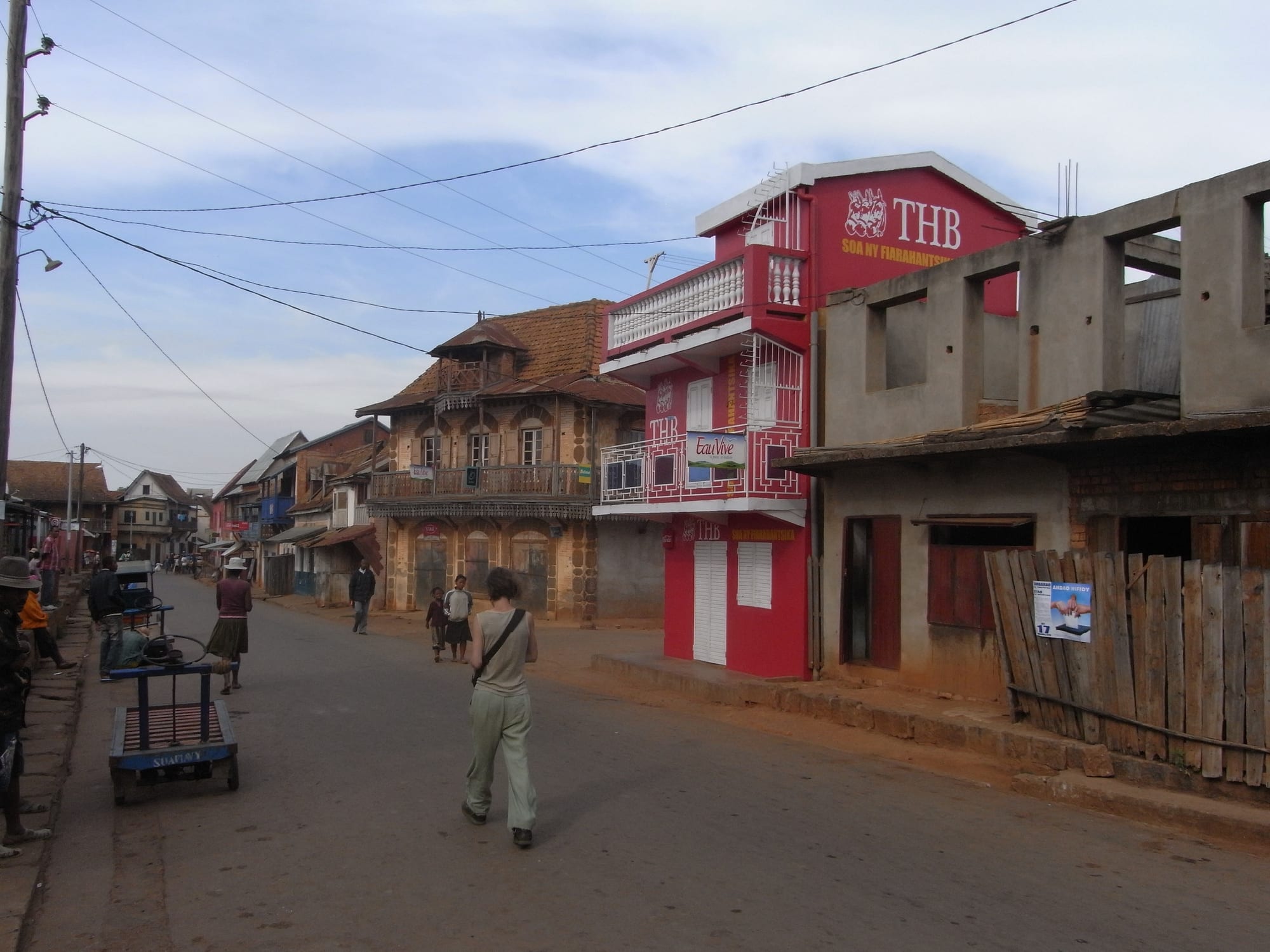
Flat, compact and easily walked: the main street, the workshops and the market ground are all within a few minutes of each other. Traffic on the RN7 runs through the middle of town, pavements are uneven, and walks out to the domes and the rice fields start where the houses end.
🛡️ Safety
The town is calm, with pickpocketing around the market and the bush-taxi stop the usual risk, particularly on cattle days when large sums change hands. South of here the countryside is less secure: cattle-raiding dahalo gangs are active towards Ihosy, and road robberies have occurred after dark. The mountains to the south are cold and exposed, and trekking there needs a guide.
Madagascar has a long history of political unrest — mass protests in September 2025 were followed by a military takeover and a change of government, so demonstrations can disrupt movement in the capital. Travel between towns in daylight, keep valuables out of sight on market days, and take a guide and warm clothing into Andringitra. Check current official travel advice before travelling.
🌦️ Climate
Highland climate, a little warmer and drier than Fianarantsoa to the north. Being in the southern hemisphere, the warm wet season runs from December to February and the cool dry season from June to August, when nights are cold and the days clear.
- Summer
- warm and wet, roughly 16–28°C, with afternoon storms from December to February
- Winter
- mild by day and cold at night, roughly 7–23°C, with dry, bright weather
🤝 Local Customs
Betsileo custom shapes life here: family tombs are built with great care, famadihana, the rewrapping of ancestors, is held every five to seven years, and silk lamba like those woven in the town are used as burial shrouds. Zebu are wealth and are treated with respect at the market. Fady, local taboos, vary between villages and are explained by guides.
Ask before photographing people, cattle traders or tombs, dress modestly in a church-going town, and follow local guidance at the reserves and on the rock.
💳 Common Payment Methods
The currency is the Malagasy ariary, and this is a cash town: markets, workshops, guesthouses, guides and reserve fees all expect notes. Banking facilities are limited and cash machines unreliable, so money is normally drawn in Fianarantsoa. Cards are of little use outside the occasional lodge.