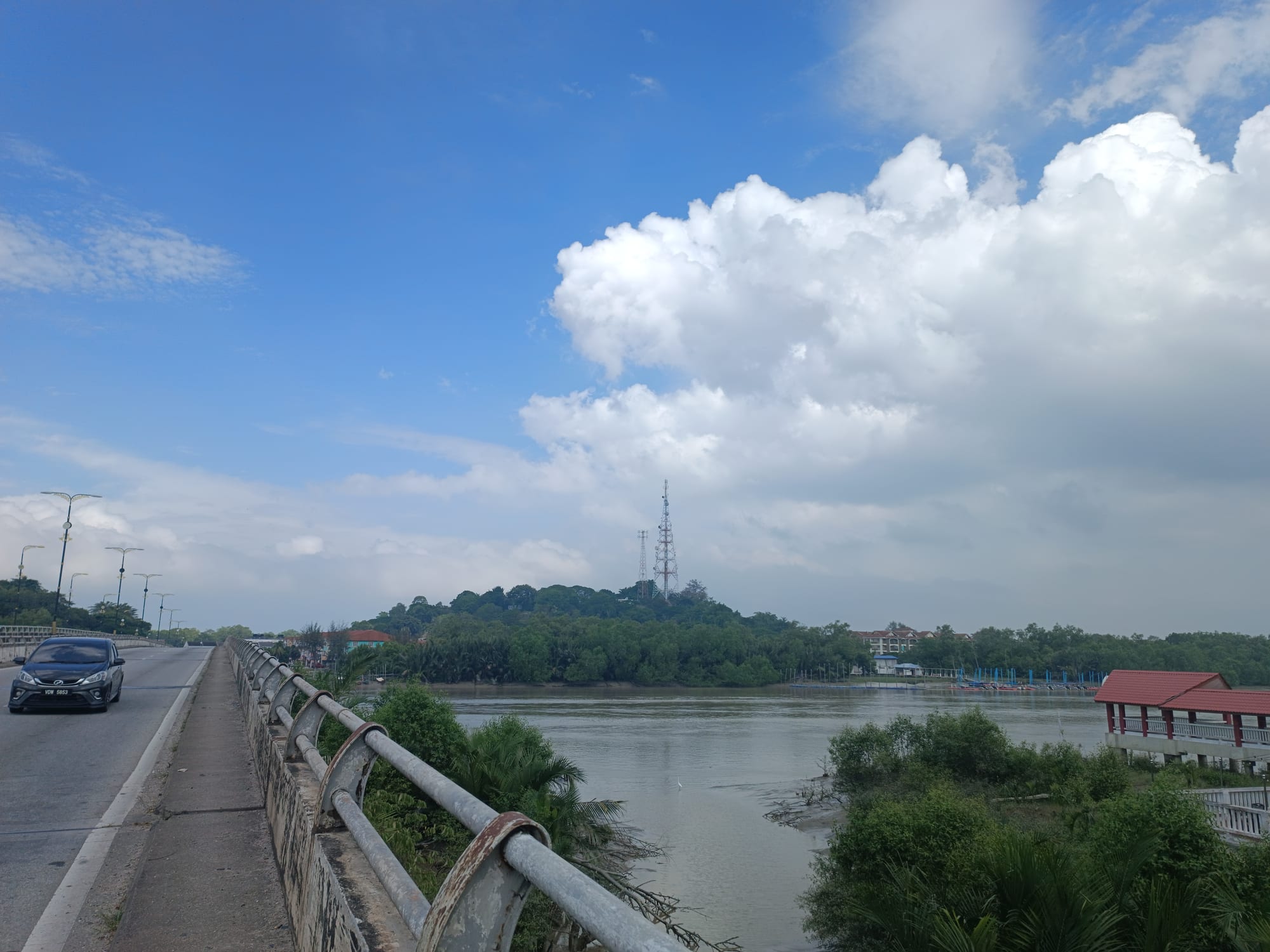
A wide brown river running past mangrove-lined banks, with a low wooded hill and a lattice tower beyond it under piled white cloud

Kuala Lumpur & the Central Peninsula, Malaysia

Kuala Selangor

The Selangor river at Kuala Selangor, with the wooded rise of Bukit Melawati beyond. (*angys* / Wikimedia Commons · CC BY-SA 4.0)

A small town on Selangor's west coast where the Selangor river meets the Strait of Malacca, about an hour and a half from Kuala Lumpur. Once a royal and fortified centre of the Selangor sultanate, it is now known for the hilltop fort at Bukit Melawati, the mangrove nature park and evening boat trips to see fireflies upriver.

Neighbourhoods

  • The town centre and Bukit Melawati
    • First-time visitors
    • History
    • Walking

    A few streets of shophouses, a market and small hotels below the wooded hill that holds the old fort, the lighthouse and the royal graves. Nearly everything in the town is within a short walk of the foot of the hill.

    Open in Maps
  • Pasir Penambang
    • Best for food
    • Seafood
    • Riverfront

    A Chinese fishing settlement across the bridge on the north bank of the river, built on stilts along the water. Jetties, dried-seafood shops and a row of large seafood restaurants facing the river make it the place most visitors eat.

    Open in Maps
  • Kampung Kuantan and the upriver villages
    • Wildlife
    • Quiet and residential
    • Evenings

    Malay villages about seven kilometres inland along the Selangor river, among mangroves, oil palm and orchards. Boats leave from the jetties here after dark for the firefly colonies in the berembang trees.

    Open in Maps
  • The coast at Bukit Melawati's foot
    • Beaches
    • Sunsets
    • Photography

    Mudflats, mangroves and fishing jetties stretch north and south along the shore of the strait, with the shallow tidal flats at Sasaran used for reflection photography at low tide. It is a working coast rather than a resort one.

    Open in Maps

Things to do

The hill and the town

  • Bukit Melawatilandmark

    The low hill above the town, fortified by the Selangor sultanate and later held by Dutch forces, with old cannon, the remains of the fort walls, royal graves and silvered leaf monkeys along the road up.

    Open in Maps
  • Altingsburg Lighthouselandmark

    The white lighthouse on the summit of Bukit Melawati, built by the Dutch in 1794 and still working, looking out over the river mouth and the strait.

    Open in Maps
  • Kuala Selangor Nature Parkpark

    A reserve of mangrove, secondary forest and brackish lakes at the foot of the hill, with a mangrove walkway, trails around the lake, watchtowers and a long list of resident and migratory birds.

    Open in Maps

The river and the coast

  • Firefly boat trips at Kampung Kuantanattraction

    Small boats take visitors upriver after dark to mangrove trees where fireflies flash in unison, a display for which rivers in Malaysia are known.

    Open in Maps
  • Pasir Penambang jettyattraction

    The fishing wharf across the river, where boats unload the catch beside shops selling dried fish, prawn crackers and salted eggs.

    Open in Maps
  • Sasaran mudflatsbeach

    Broad tidal flats a short drive south of the town, walked at low tide for the mirror-like reflections and the fishing boats stranded on the mud.

    Open in Maps

Short trips from the town

  • Sekinchanneighborhood

    A rice-growing and fishing town about 25 kilometres north, with some of the country's highest-yielding paddy fields and a busy fishing jetty.

    Open in Maps
  • Sultan Salahuddin Abdul Aziz Mosquelandmark

    The blue-domed state mosque at Shah Alam, inland towards the capital, the largest mosque in Malaysia and among the largest in Southeast Asia.

    Open in Maps

Seasonal events

  • Hari Raya Aidilfitrivaries with the Islamic calendar

    The end of Ramadan, preceded by a village bazaar of festive food and followed by open houses; many shops close for several days.

  • Chinese New YearJanuary or February

    Lion dances, temple offerings and family reunion dinners in Pasir Penambang and the town's Chinese shophouse streets, with many restaurants shut for the first days.

  • Paddy harvest at Sekinchanaround the rice harvests

    The fields north of the town turn gold before each harvest, drawing weekend visitors to the paddy roads and the drying yards.

Eat and drink

Long-standing places and food districts in Kuala Selangor. Hours, ratings and directions come from your maps app, always current.

Seafood and local food

  • Pasir Penambang seafood restaurantsneighborhood

    A row of large restaurants on stilts over the river serving crab, prawns, steamed fish and clams, with dried-seafood shops alongside.

    Open in Maps
  • Kuala Selangor town coffee shopsneighborhood

    Chinese kopitiam and Malay stalls around the town centre doing breakfast noodles, nasi lemak and kopi, and mee udang, a prawn noodle soup the district is known for.

    Open in Maps
  • Pasar Kuala Selangormarket

    The town market for fish landed on the coast, vegetables and tropical fruit, with cooked-food stalls at the edges in the morning.

    Open in Maps

Experience Kuala Selangor

History

The mouth of the Selangor river was the seat of power in the state long before Kuala Lumpur existed. The Selangor sultanate, founded in 1766 by a Bugis line from Sulawesi, fortified the hill at Bukit Melawati above the river mouth, from where it could control the trade coming down from the tin country inland. The Dutch, who were fighting Selangor over the tin trade with Malacca, stormed the fort in 1784 and renamed it Fort Altingburg after Willem Arnold Alting, governor-general of the Dutch East Indies; Sultan Ibrahim Shah recaptured it in 1785, though the name stuck to the lighthouse the Dutch built on the summit in 1794.

Kuala Selangor remained a royal centre through the 19th century, and its rulers and their families are buried in the graves on the hill. The Selangor Civil War of the 1860s and 1870s, fought over tin revenues among chiefs and their Chinese allies, drew in British forces and ended with the sultan accepting a British Resident in 1874. Power then moved inland and upriver: the state capital shifted to Kuala Lumpur in 1880 and later to Shah Alam, and the coastal town was left to fishing, rice and rubber.

Chinese settlers established the fishing village of Pasir Penambang on the north bank, and Malay villages spread upriver at Kampung Kuantan and beyond. The firefly colonies on the river, long known locally, were later developed as an attraction and are now the town's best-known draw, along with the nature park created in the mangroves at the foot of the hill.

Culture & Customs

The town divides along the river. The south bank is Malay and Muslim, with kampung houses, mosques and the royal associations of the hill; the north bank at Pasir Penambang is Chinese, built on stilts over the mud, with temples, dried-seafood shops and the seafood restaurants that fill at weekends. Indian families and estate communities live in the wider district. Each community keeps its own festivals, and open houses at Hari Raya and Chinese New Year are the moments they mix.

The royal past is still felt. The graves of Selangor sultans on Bukit Melawati are treated as a sacred site rather than a viewpoint, and visitors are expected to dress and behave accordingly. The old fort, the cannon and the lighthouse give the town a historical identity out of proportion to its size, and local guides are practised at telling the Dutch siege story.

Wildlife has become part of local culture too. The silvered leaf monkeys on the hill, with their bright orange infants, are a fixture of any visit; the nature park draws birdwatchers in the northern winter when migratory waders arrive on the mudflats; and the firefly boatmen, many of them from families that have worked the river for generations, row rather than motor in the viewing stretch to keep the noise down. Conservation of the mangroves, on which the fireflies depend, is a recurring local issue.

Daily Life

Kuala Selangor is the largest town and the administrative centre of a district that spreads through fishing villages, rice country and oil-palm estates on the coastal plain. Most people live in single-storey houses and shophouses rather than flats, and the pace is slow compared with the Klang Valley an hour away.

Fishing, aquaculture, rice, oil palm and fruit farming underpin the local economy, with government offices, schools and small businesses in the town and tourism providing seasonal income through boat trips, restaurants and homestays. Many working-age residents commute to Klang, Shah Alam or Kuala Lumpur, or have moved there.

The day begins before dawn at the fish jetties and the market, quietens in the heat, and comes alive again in the evening, when the seafood restaurants fill and boats prepare for the firefly runs. Weekends bring cars from the capital. Local concerns are the state of the mangroves, river pollution, erosion on the coast and the balance between tourism and the fireflies it comes to see.

Food

Seafood defines the town's cooking, most of it eaten at Pasir Penambang, where restaurants over the water serve crab in chilli or salted-egg sauce, prawns fried with butter, steamed fish with ginger and soy, clams in spicy gravy and squid with sambal. Dried and salted products — prawn crackers, salted fish, shrimp paste and salted duck eggs — are sold from the same street and taken home by the boxful.

The district's own dish is mee udang, fresh river or sea prawns served in a noodle soup with a sweet-sour prawn broth, eaten at roadside stalls and coffee shops along the coast road. Malay kitchens grill the day's catch as ikan bakar with sambal belacan and ulam, and cook masak lemak, curries in coconut gravy, with fish and cassava shoots.

The town's other reliable pleasures are simple: breakfast noodles and kaya toast with kopi in the kopitiam, nasi lemak wrapped in banana leaf from a morning stall, rice with a choice of curries at lunch, and cendol or ais kacang in the heat. Local fruit — mangosteen, rambutan, durian and coconut — is sold from roadside stands in season, and the rice country to the north supplies much of what is eaten on the plate.

Planning tools

Budget

Kuala Selangor is cheap. Rooms are simple hotels and homestays rather than resorts, meals at town coffee shops cost very little, and the main expenses are a seafood dinner at Pasir Penambang and the boat fare for a firefly trip, which is charged per boat.

Daily Budget Midrange
USD 55–110 (town hotel, seafood dinners, a hire car or Grab, a firefly boat)
Daily Budget Shoestring
USD 20–35 (budget room or homestay, coffee-shop meals, buses)

Many people visit as a day and evening trip from Kuala Lumpur; share a boat with others to split the firefly fare, and carry cash for the boats and stalls.

Best Time to Visit

The town can be visited all year. Fireflies are seen throughout the year but show best on dark, dry, windless nights well away from a full moon, and trips are cancelled in heavy rain. Rain is heaviest around April and from October to November. Weekends and school holidays bring crowds from the capital to the hill and the seafood restaurants.

Suggested Number of Days

An afternoon and an evening cover the town, the hill and a boat trip, so most visitors come for a single night or not even that. Two days suit birdwatching, the coast and the rice country to the north.

First Visit
1 day
With Surroundings
2 days

Transportation

Most visitors drive or come on a tour from Kuala Lumpur. Buses run to the town from Klang and from the capital, but services thin out in the evening, which is awkward for a firefly trip that ends after dark. Grab works in the town, though cars can be scarce late; the sights outside the centre are several kilometres apart.

Arrange the return trip before evening if coming without a car, since buses stop early and ride-hailing can be slow to appear after dark.

Airport & Station Connections

The town is about 55 kilometres north-west of Kuala Lumpur, roughly an hour and a quarter to an hour and a half by car on the expressway and coastal roads, and about 40 kilometres from Shah Alam. Buses run from Klang, which is on the Komuter rail line from the capital. Kuala Lumpur International Airport is about two hours away by road.

Walkability

The town centre is small and flat and easily covered on foot, and the road up Bukit Melawati is a walk of about twenty minutes in the shade, though a shuttle tram also runs. Pasir Penambang is across a bridge, a long walk or a short drive, and the nature park entrance is close to the hill. Everything else, including the firefly jetties, needs wheels.

Safety

The town is quiet and crime is rare. The practical hazards are the silvered leaf monkeys and macaques on Bukit Melawati, which snatch food and bags and can bite; boats on the river after dark, where life jackets should be worn; soft mud and a fast incoming tide on the coastal flats; and mosquitoes at dusk in the mangroves.

Carry no visible food on the hill, wear a life jacket on the river and use insect repellent at dusk. Check the latest advice before booking any island or dive trip off eastern Sabah, wear bags on the traffic-free side, dress modestly around mosques and in the religious east-coast states, and note that drug trafficking carries a mandatory death penalty. Check current official travel advice before travelling.

Climate

Equatorial and humid all year, hot by day with heavy thunderstorms in the late afternoon and evening. The coast gets a sea breeze; the mangroves are humid and still. The wettest periods are around April and from October to November, when storms can cancel boat trips.

Summer
hot and humid, about 24–33°C, with afternoon and evening storms
Winter
much the same, about 23–32°C, with heavier rain in November and December

Local Customs

This is a conservative small town, Malay on one side of the river and largely Chinese in Pasir Penambang, and dress away from the beach areas is modest. On firefly trips operators ask for quiet, no flash photography and no touching the mangrove branches, since light and noise disturb the display.

Keep torches and phone screens off on the river, dress modestly in the town and around the royal graves on the hill, and ask before photographing people at work on the jetties.

Common Payment Methods

The currency is the Malaysian ringgit (MYR), written RM. Larger restaurants and hotels take cards and QR payments, but boat operators, stalls, the market and small shops are cash businesses. ATMs are in the town centre; there are none at the firefly jetties.