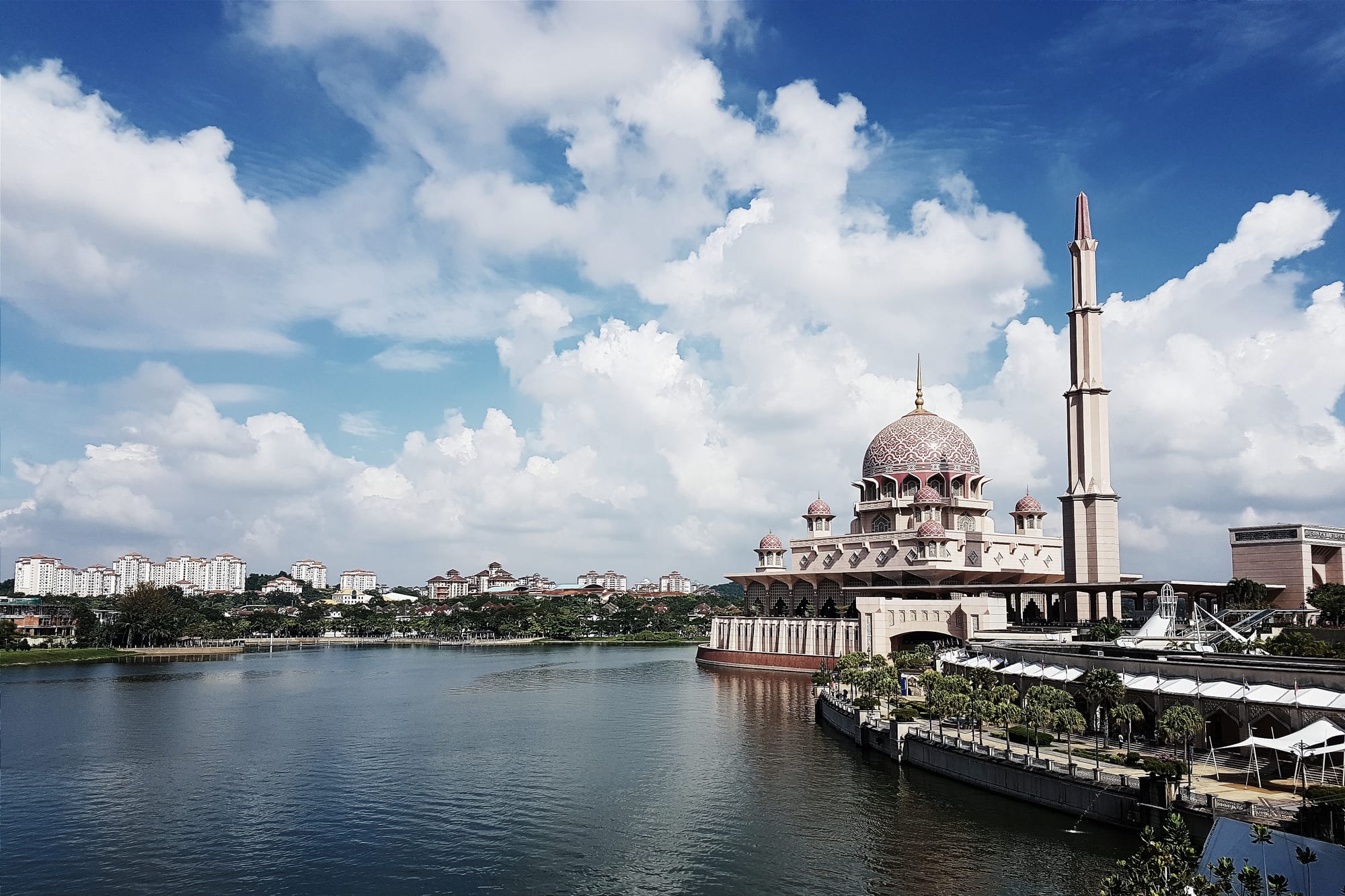
A domed pink mosque with a tall minaret on the edge of a wide lake under white clouds, apartment blocks on the far shore

Malaysia

Kuala Lumpur & the Central Peninsula

The Putra Mosque on the shore of Putrajaya Lake. (Lxphotography / Wikimedia Commons · CC BY-SA 4.0)

The heart of Peninsular Malaysia's west coast — the capital Kuala Lumpur, the government city of Putrajaya, the populous state of Selangor that surrounds them, and Negeri Sembilan to the south, whose Minangkabau heritage sets it apart. It is the country's economic and political core.

Explore Kuala Lumpur & the Central Peninsula

History

The Klang Valley was long a thinly settled river country under the Selangor sultanate, whose royal centre was at Klang and Kuala Selangor. Kuala Lumpur, "muddy confluence", began in the late 1850s as a tin-mining camp where the Gombak meets the Klang river, opened by Chinese miners working for a Selangor chief. Under the Hakka leader Yap Ah Loy it survived fires, floods and a civil war among Selangor's nobles, and after Britain placed a Resident in Selangor the town became the state capital in 1880.

British planners rebuilt it in brick, the railway arrived, and in 1896 it became the capital of the Federated Malay States; the Moorish-style Sultan Abdul Samad Building went up facing the padang now called Merdeka Square. Rubber estates spread across Selangor and brought Tamil labourers. To the south, Negeri Sembilan — "nine states" — had grown from a confederation of Minangkabau settlements founded by migrants from Sumatra, whose chiefs elected a common ruler; it too came under British protection in the late 19th century.

Independence was proclaimed in Kuala Lumpur's Merdeka Stadium on 31 August 1957. The 1969 riots broke out in the city, and in 1974 Kuala Lumpur was carved out of Selangor as a federal territory, with Shah Alam becoming the new state capital in 1978. The Petronas Twin Towers, finished in the late 1990s, symbolised the boom years, and the government moved its ministries to the new city of Putrajaya, a federal territory since 2001.

Culture & Customs

Kuala Lumpur is the most mixed place in the country: Malay, Chinese and Indian residents, migrants from Indonesia, Bangladesh and Nepal, and professionals from every state. Malay, English, Cantonese and Tamil are all heard, and Malaysian English — Manglish, with its "lah" and borrowed words — is the city's shared idiom. Kampung Baru keeps a Malay village atmosphere under the towers, Brickfields is Little India, and Petaling Street the old Chinatown.

Festivals are citywide. Thaipusam brings huge crowds of Hindu devotees to the Batu Caves, some carrying kavadi, decorated frames balanced on the shoulders; Chinese New Year lights up Chinatown and the temples; and Hari Raya Aidilfitri turns into open houses where friends of every background are fed.

Negeri Sembilan has a distinct identity. Its Malays keep the adat perpatih, a Minangkabau customary law that traces descent and ancestral land through women, although its role today is mostly in inheritance and ceremony. The state's ruler, the Yang di-Pertuan Besar, is chosen by the territorial chiefs, and the curved, buffalo-horn roofs of Minangkabau architecture appear on palaces and government buildings from Seri Menanti to Seremban.

Daily Life

This is Malaysia's economic engine. Selangor is the most populous state, with roughly 7 million people, and Kuala Lumpur has about 2 million within its federal territory boundaries; with Petaling Jaya, Shah Alam, Subang Jaya, Klang and Kajang, the Klang Valley conurbation holds around 9 million. Putrajaya has over 100,000 residents, mostly civil servants and their families, and Negeri Sembilan about 1.2 million, with Seremban the main town.

The economy runs on finance, government, services, retail, manufacturing, the port of Port Klang — one of the busiest in the region — and a growing data-centre industry. Commutes are long and traffic heavy despite the expanding rail lines, and many residents live in condominium towers or suburban terraced houses.

The day starts with nasi lemak or roti canai, often eaten at a mamak stall; lunch is a quick food-court meal, and the evening is for the mall, the night market or late mamak sessions watching football. Rising living costs, housing prices and floods are the everyday concerns.

Food

The Klang Valley eats from every kitchen at once. Kuala Lumpur's hawker streets — Jalan Alor, Petaling Street, the stalls of Kampung Baru — serve Hokkien mee in the city's own style, thick yellow noodles braised in dark soy sauce with pork and squid, wantan mee, curry laksa and claypot chicken rice, while Brickfields has banana-leaf rice, thosai and teh tarik.

Several dishes are tied to particular towns. Klang is known for bak kut teh, a herbal pork-rib soup eaten for breakfast; Kajang for its satay, grilled skewered meat with peanut sauce; and Petaling Jaya and Kuala Lumpur for the late-night mamak menu of roti canai, murtabak and mee goreng mamak.

Negeri Sembilan's Minangkabau cooking is known for its heat. The signature is masak lemak cili api, meat or fish cooked in a yellow coconut gravy with turmeric and bird's-eye chillies, and the state is also known for rendang and lemang, glutinous rice cooked in bamboo. Seremban's siew pau, flaky baked buns filled with sweet roast pork, are sold from the town's bakeries. Drinks are teh tarik, kopi and fresh fruit juices, with craft beer bars in the city.

Attractions & Natural Wonders

Kuala Lumpur's sights are spread across the centre. The Petronas Twin Towers and KLCC Park, the KL Tower and the new Merdeka 118 tower dominate the skyline; Merdeka Square has the Sultan Abdul Samad Building and the old colonial clubhouse; and the National Mosque, the Islamic Arts Museum and the Perdana Botanical Garden lie close together. Petaling Street's Chinatown, the Central Market, the Sri Mahamariamman Temple and Jalan Alor's evening food street fill the older quarters.

Just north of the city in Selangor, the Batu Caves rise from the plain, with a golden statue of Murugan at the foot of 272 rainbow-painted steps leading up to the main temple cavern. Shah Alam has the blue-domed Sultan Salahuddin Abdul Aziz Mosque, and Kuala Selangor offers the Bukit Melawati fort and firefly boat trips on the Selangor river. Sepang has the motor-racing circuit.

Putrajaya's lake is lined with monumental architecture: the pink Putra Mosque, the Perdana Putra prime minister's office and a string of modern bridges. Negeri Sembilan's Seremban has its Minangkabau-style state buildings and museum, the royal town of Seri Menanti has the old wooden palace of Istana Lama, and Port Dickson has long, calm beaches on the Strait of Malacca.

Cities in Kuala Lumpur & the Central Peninsula

Planning basics

Budget

Kuala Lumpur is the most expensive place on the peninsula for rooms, bars and restaurants, but still cheap by international capital standards: hawker and mamak food costs little, the rail network is inexpensive and good hotels are good value. Seremban, Port Dickson and the Selangor towns cost less, and beach hotels at Port Dickson fill and rise in price at weekends.

Daily Budget Midrange
USD 75–160 (city hotel, restaurant dinners, Grab rides, museum entries)
Daily Budget Shoestring
USD 25–45 (hostel, hawker and mamak meals, MRT, LRT and buses)

Use the MRT, LRT and Komuter lines rather than taxis, eat at food courts and mamak stalls, and visit Port Dickson on weekdays.

Safety

The region is generally safe. The main problems are bag-snatching by motorcyclists, pickpockets in crowded markets and on trains, unlicensed taxi touts at transport hubs, card skimming, and flash floods during heavy storms. Pavements can be broken or missing, and crossing busy roads is a real hazard.

Walk facing traffic with bags on the inside, use Grab or official taxis, and keep away from drains in heavy rain. Check current official travel advice before travelling.

Climate

Equatorial and humid, with little change through the year. The Klang Valley is shielded by the Titiwangsa range from the worst of both monsoons but gets frequent heavy afternoon thunderstorms, wettest around April and from October to November, when flash floods can hit parts of Kuala Lumpur. Negeri Sembilan is slightly drier.

Summer
hot and humid, 24–34°C, with late-afternoon storms
Winter
much the same, 23–33°C, with heavier rain in November and December

Transportation

Kuala Lumpur International Airport at Sepang is the country's main gateway, linked to KL Sentral by the KLIA Ekspres train in about half an hour. The Klang Valley has a large network of MRT, LRT, monorail and Komuter lines, including a Komuter line to the Batu Caves. Putrajaya is reached by the KLIA Transit train or MRT, Seremban by Komuter or ETS train, and Port Dickson by bus or car in about an hour and a half.

Buy a stored-value card for the rail lines, use Grab at night, and avoid driving in rush-hour traffic.

Best Time to Visit

Any time of year works for a city region like this. June to August and December to February are a little drier. Thaipusam, usually in late January or early February, draws huge crowds to the Batu Caves; Chinese New Year and Hari Raya empty the city as people go home to their villages. Haze from regional fires can affect air quality in some years, mainly August to October.