History
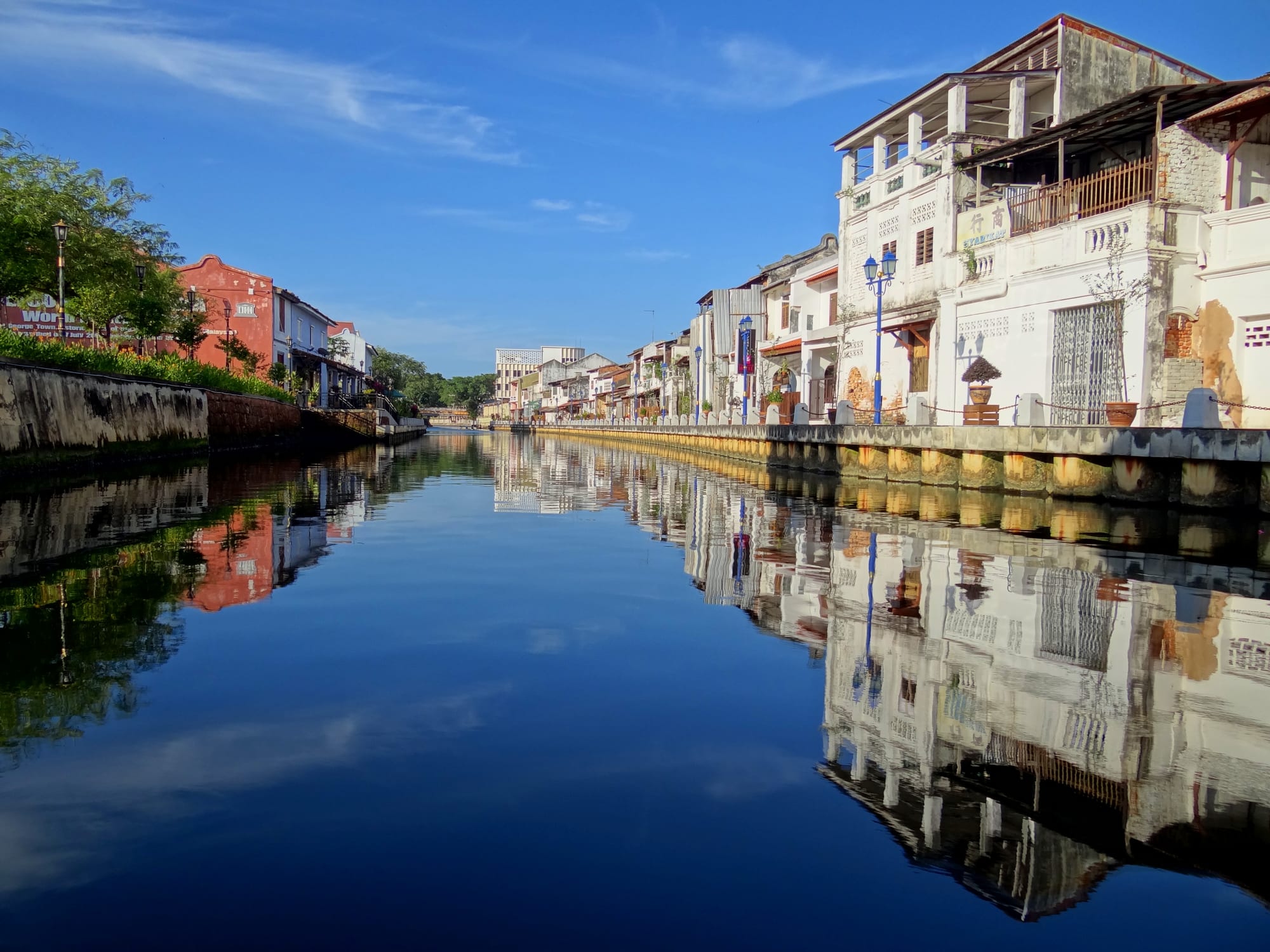
Malacca was founded around 1400 by Parameswara, a prince from Sumatra, and within decades became the greatest port of Southeast Asia, controlling the strait between the Indian Ocean and the South China Sea. Its rulers converted to Islam, sent envoys to Ming China — the fleets of Zheng He called here — and built the court culture, the laws and the Malay literary tradition that later sultanates copied. The legends of the warrior Hang Tuah belong to this age.
The Portuguese took the city in 1511 and built the fortress of A Famosa; the Dutch captured it in 1641 and ruled until the Anglo-Dutch Treaty of 1824 handed it to Britain, which joined it to Penang and Singapore in the Straits Settlements. By then its trade had drifted away to Singapore. The Malacca royal line, meanwhile, had fled south and founded the sultanate of Johor, which ruled both sides of the strait and the Riau islands for centuries.
Modern Johor was shaped in the 19th century by its temenggongs, who invited Chinese planters to open pepper and gambier estates under the kangchu system. Abu Bakar moved the capital to Johor Bahru in 1866, became sultan in 1886, built a Western-style administration and kept Johor independent until it accepted a British adviser in 1914. The causeway to Singapore opened in 1924, and in 1942 Japanese troops advanced down Johor to cross it. Since independence Johor has grown into an industrial state tied closely to Singapore's economy.