💰 Budget
Muar is cheap by Malaysian standards and far cheaper than Johor Bahru or Malacca. Hotels are small and modest, meals in coffee shops and at stalls cost very little, and the sights — the waterfront, the mosque, the old streets — are free. The main costs are transport, since a car makes the town and its surroundings much easier.
- Daily Budget Midrange
- USD 70–130 (hotel or a heritage stay, restaurant meals, taxis or a hire car)
- Daily Budget Shoestring
- USD 20–35 (guesthouse or budget hotel, hawker food, local buses)
Eat where the locals eat — the town's reputation rests on stalls and coffee shops, not restaurants — and keep cash for them.
📅 Best Time to Visit
The town can be visited all year. It sits on the sheltered west coast, so it escapes the north-east monsoon that batters Johor's other shore, though rain is frequent in every month and heaviest around April and May and again between October and December. Weekdays are quieter than weekends, when visitors come from Malacca and Johor Bahru to eat.
⏳ Suggested Number of Days
A day covers the old town, the riverfront and a long lunch. Two or three allow the coast, the mountain inland and the villages along the river. Many people stop here for a few hours between Malacca and Johor Bahru.
- First Visit
- 1 day
- With Surroundings
- 2–3 days
🚆 Transportation
The old town is walkable, but the rest of Muar is spread along the roads inland and a car, a motorbike or ride-hailing is needed for the newer districts, the coast and the mountain. Local and express buses use the terminal near the riverfront, taxis wait there, and small boats cross the river to the far bank.
Parking in the old town is metered and tight on weekday mornings; the streets beyond Jalan Petrie are easier.
🛬 Airport & Station Connections
Muar lies on the old trunk road between Malacca and Johor Bahru, about 50 kilometres south-east of Malacca and roughly 150 kilometres north-west of Johor Bahru, with the North–South Expressway passing a short drive inland at Tangkak and Pagoh. Express buses run from Kuala Lumpur, Malacca, Johor Bahru and Singapore. The nearest airports are Senai, outside Johor Bahru, and Malacca's small airport; Kuala Lumpur is around three hours by road.
🚶 Walkability
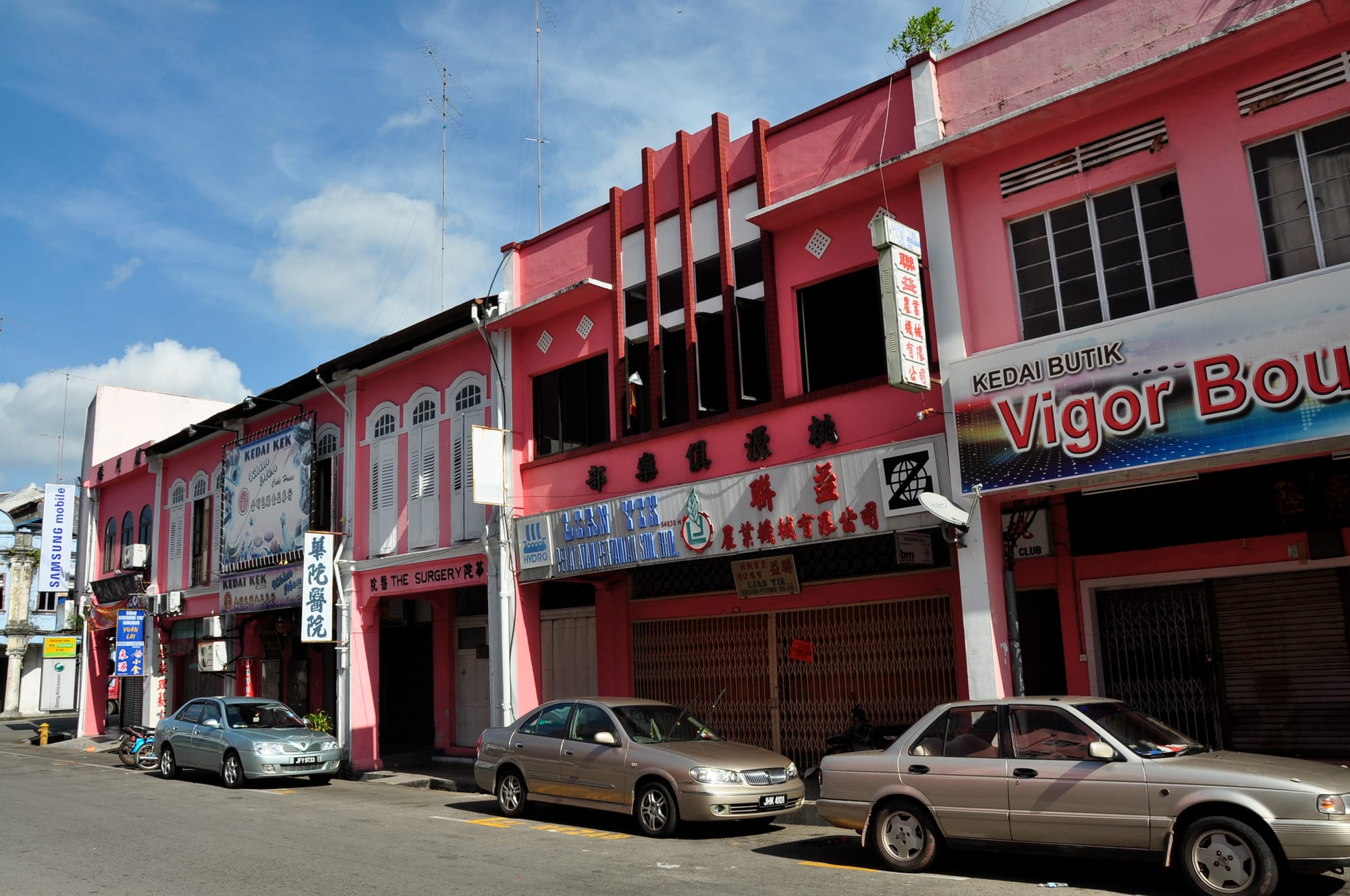
The old town is one of the most walkable in Johor: a flat grid of shophouse streets between the mosque, the market and the riverfront promenade, with covered five-foot ways giving shade and most of the landmarks within a kilometre. Beyond the grid the roads widen, pavements become patchy, and the heat makes walking uncomfortable by midday.
🛡️ Safety
A quiet town with little crime beyond occasional bag-snatching and theft from parked vehicles. Traffic is the main everyday risk, particularly motorcycles on the narrow old-town streets, and the Muar River has strong currents and steep banks that make swimming a bad idea. Heavy rain can flood low-lying streets near the river.
Watch for motorcycles when stepping off a five-foot way, and keep bags on the side away from the road. The specific caution is eastern Sabah: the UK government advises against all but essential travel to all islands and dive sites off the coast of eastern Sabah, from Sandakan to Tawau, because of the threat of kidnapping; mainland Sabah is not included in that warning. Check current official travel advice before travelling.
🌦️ Climate
Hot, humid and rainy all year, with no dry season. The Sumatran land mass across the strait shelters this coast from the worst of the north-east monsoon, so the wettest spells come instead in the transitional months around April and May and from October to December. Mornings are usually clear and thunderstorms build in the afternoon.
- Summer
- hot and humid, about 24–33°C, with afternoon thunderstorms
- Winter
- similar temperatures, about 23–32°C, with rain spread through the month and occasional flooding near the river
🤝 Local Customs
Muar is a Malay-majority town with a large and long-settled Chinese community, and its status as Johor's royal town gives the sultanate a visible place in public life. Modest dress is expected, particularly near the mosque, where shoes come off and robes are lent at the door. Friday midday prayers pause the working day, and shops in the old town close early by big-city standards.
Tipping is not expected; use the right hand to give and receive, and ask before photographing people in coffee shops or at the market.
💳 Common Payment Methods
The currency is the Malaysian ringgit. Cash machines are easy to find in the old town and along Jalan Bakri, and hotels and larger restaurants take cards, but the stalls, coffee shops and market that make up most of the eating here prefer cash, and QR payment apps are common among them.