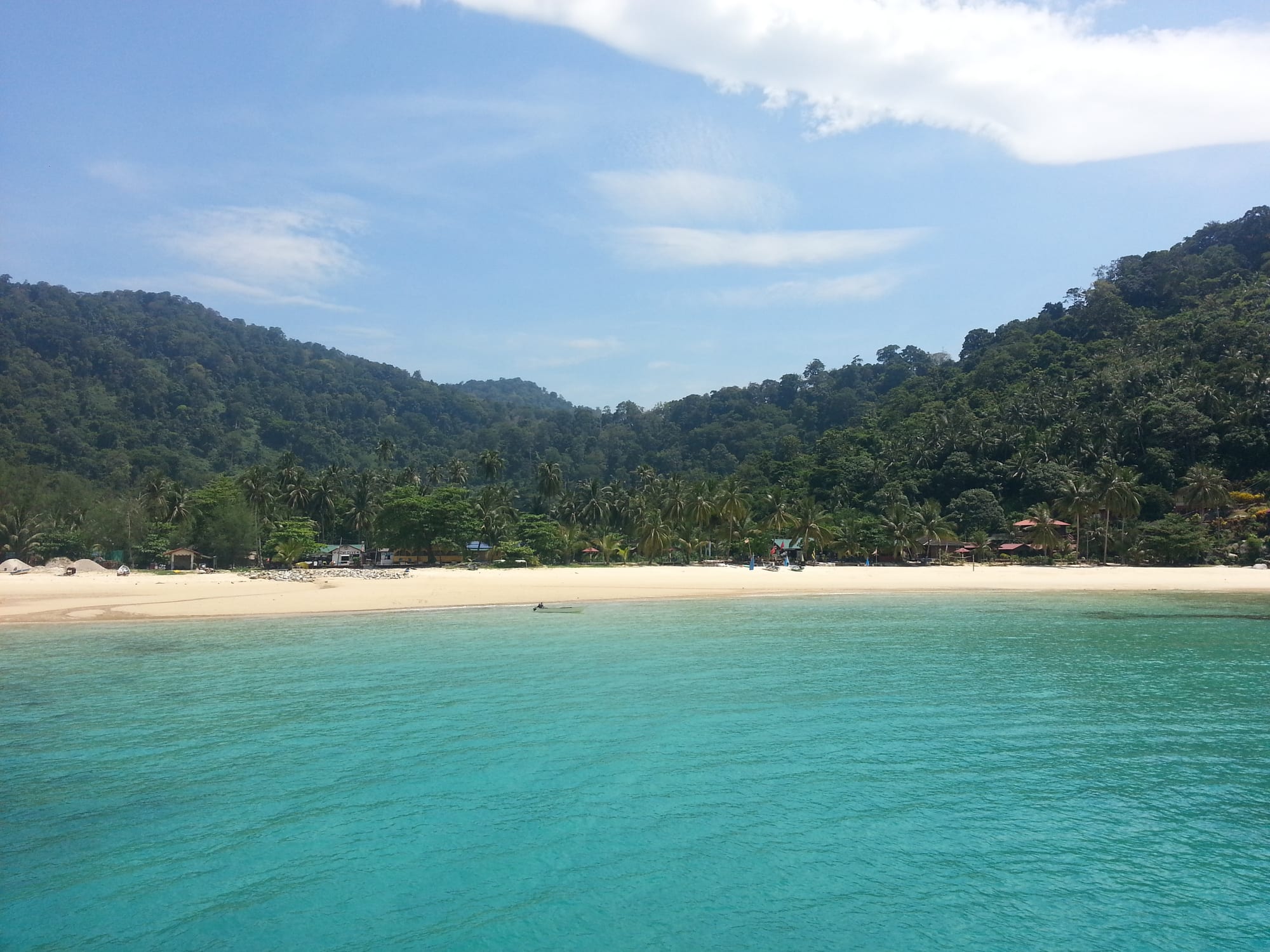
A curving white sand beach with turquoise shallows, palm trees and low village buildings below steep jungle-covered hills

The East Coast, Malaysia

Tioman Island

The beach and village at Salang on the north-west coast of Tioman. (Yousha Bin Younus / Wikimedia Commons · CC BY 3.0)

A mountainous, forested island in the South China Sea off the coast of Pahang, reached by ferry from Mersing or Tanjung Gemok. Villages strung along its west and east coasts live on fishing and visitors, with duty-free shops at Tekek, coral reefs offshore and rainforest trails crossing the interior.

Neighbourhoods

  • Kampung Tekek
    • First-time visitors
    • Shops and services
    • Close to transport

    The island's main village and administrative centre, halfway up the west coast, with the ferry jetty, the airstrip, a clinic, a mosque, shops, cash machines and the duty-free outlets. It is the most practical base and the least scenic of the beaches, but everything else on the island connects through it.

    Open in Maps
  • Air Batang (ABC)
    • Budget stays
    • Beaches
    • Snorkelling

    A long, narrow strip of chalets, small restaurants and dive shops just north of Tekek, linked by a concrete footpath along the shore. It has a relaxed, low-key feel, reef within swimming distance at the northern end, and enough places to eat to make a stay easy.

    Open in Maps
  • Salang
    • Diving
    • Nightlife
    • Backpackers

    The furthest village up the west coast, set around a sheltered bay with pale sand and a small islet offshore. It is the island's diving and going-out centre, busier in the evening than anywhere else on Tioman, and the usual departure point for the reefs to the north.

    Open in Maps
  • Juara
    • Seclusion
    • Surfing
    • Quiet and residential

    The one substantial village on the east coast, reached by a steep road over the mountains from Tekek or by boat around the island. Two long, open beaches face the sea, the water is rougher, the pace slower, and a volunteer turtle conservation project works from the village.

    Open in Maps
  • Genting and Paya
    • Families
    • Resorts
    • Weekend visitors

    Villages on the south-west coast, popular with Malaysian and Singaporean weekenders and largely made up of mid-range resorts and chalet rows behind the beach. Paya has calm, shallow water; Genting is the larger settlement, with a working fishing community alongside the holiday accommodation.

    Open in Maps

Things to do

Beaches and villages

  • Salang beachbeach

    A crescent of sand at the island's north-western tip with clear shallow water, a jetty and coral around the islet just offshore.

    Open in Maps
  • Air Batang beachbeach

    A long shoreline of small sandy stretches and rocky sections north of Tekek, fringed with chalets and easy reef snorkelling.

    Open in Maps
  • Juara beachesbeach

    Two wide, open bays on the exposed east coast, with the island's only real surf in the monsoon months and far fewer visitors.

    Open in Maps
  • Kampung Mukutneighborhood

    A small fishing village on the southern coast beneath the island's granite spires, reached by boat and barely touched by development.

    Open in Maps

Diving and snorkelling

  • Renggis Islandattraction

    A small island off the west coast with shallow coral, turtles and reef fish, used for training dives and easy snorkelling.

    Open in Maps
  • Tulai Islandattraction

    A small island off Tioman, also called Coral Island, known for its white sand beach and clear water, and a common stop on boat trips.

    Open in Maps
  • Labas and Sepoiattraction

    Small rocky islands off Tioman with swim-throughs and boulder formations, among the area's best-known dive sites.

    Open in Maps
  • Tioman Island Marine Parkattraction

    The waters around Tioman and eight neighbouring islands are protected as a marine park of coral reef, seagrass bed and mangrove; its office stands beside the beach at Tekek, with easy snorkelling in front.

    Open in Maps

Walks, waterfalls and viewpoints

  • Asah Waterfallattraction

    A waterfall in the south of the island, near Mukut, its pool set beneath a cliff face and reached by boat and a short walk.

    Open in Maps
  • The Tekek to Juara trailtrail

    A steep paved and stepped path across the island's forested spine, taking a couple of hours and passing macaques, monitor lizards and hornbills.

    Open in Maps
  • Gunung Kajangviewpoint

    The island's main granite mountain, often wrapped in cloud, climbed only with a guide on a long, rough trail.

    Open in Maps

Short trips from the island

  • Mersingtransit hub

    The mainland fishing town in Johor where most ferries to Tioman start, with a jetty, markets and onward buses.

    Open in Maps
  • Endau-Rompin National Parkpark

    A large protected rainforest straddling the Johor-Pahang border inland from the coast, the second-largest national park in Peninsular Malaysia, with rivers, waterfalls and marked trails.

    Open in Maps

Eat and drink

Long-standing places and food districts in Tioman Island. Hours, ratings and directions come from your maps app, always current.

Island eating

  • Tekek's village restaurants and shopsneighborhood

    The largest choice on the island: Malay rice-and-curry shops, Chinese seafood kitchens, a bakery or two, small supermarkets and the duty-free outlets.

    Open in Maps
  • Air Batang's chalet kitchensneighborhood

    A string of open-sided restaurants along the shore path serving fried rice and noodles, curries, grilled fish and traveller breakfasts, many with tables on the sand.

    Open in Maps
  • Salang's beachfront restaurants and barsneighborhood

    The island's liveliest eating and drinking, with seafood barbecues, dive-shop cafés and the few bars that stay open late.

    Open in Maps
  • Juara's warungsneighborhood

    Simple village kitchens on the east coast cooking Malay home food — rice with fish, sambal and vegetables — for a small number of visitors.

    Open in Maps

Seafood and snacks

  • Evening seafood grillsmarket

    Restaurants in several villages set out the day's catch of fish, squid and prawns to be grilled with butter, garlic or chilli and served with rice.

    Open in Maps
  • Keropok lekor stallsmarket

    Fried fish sausage, the east coast's standard snack, sold from roadside and jetty stalls with a sweet chilli dip.

    Open in Maps

Experience Tioman Island

History

Tioman has been a landmark for sailors far longer than it has been a holiday island. Its granite peaks, visible from well out to sea, and its fresh water and timber made it a navigation point for Austronesian fishermen for thousands of years, and over the past millennium Chinese, Arab and European trading ships bound for Champa called here; porcelain shards still turn up on its beaches. Malay legend explains its shape as a dragon princess who broke her flight to Singapore here and chose to stay, and the island's name is bound up with that story.

Settlement was small and coastal: fishing villages at Tekek, Genting, Mukut and Juara, part of the sultanate of Pahang, growing coconuts, fishing and trading with Mersing on the mainland. There was no road around the island then and there still is not; the sea was always the connection between villages.

The island is popularly linked with the fictional Bali Hai of the 1958 film South Pacific, though whether any footage was really shot here is disputed, and the Second World War left wrecks in its waters, including the British warships Repulse and Prince of Wales. Backpackers followed through the 1970s and 1980s, chalets spread along the west coast, the surrounding waters were gazetted as a marine park, and duty-free status was granted to encourage visitors. Tourism, and arguments over how much of it the island can take, have shaped Tioman ever since.

Culture & Customs

The island's permanent residents are Malay and Muslim, and its seven villages function as villages rather than resorts: a mosque, a school, a jetty, a shop, boats drawn up on the sand. Pahang Malay is spoken, with a local vocabulary, and family networks tie the villages to Mersing and to the mainland coast. Fishing calendars, the tides and Friday prayers still set the rhythm for many households, even in places where most income now comes from visitors.

Visitors bring a second, looser culture to the west coast, strongest at Salang and Air Batang, where dive staff, chalet workers and travellers create an informal, largely English-speaking scene from March to October. Tioman's duty-free status means alcohol is available in a way it is not on the Terengganu and Kelantan coast to the north, but it is confined to restaurants, bars and shops, and modest behaviour is expected in the villages themselves. During Ramadan, eating and drinking in public in daylight is avoided.

Conservation is a strong local theme. The marine park restricts fishing and anchoring, a turtle hatchery at Juara protects nests and releases hatchlings, and volunteer groups run reef surveys and beach clean-ups. Plastic waste, coral damage and the strain that new building puts on water and drainage are argued over on the island as much as anywhere.

Daily Life

A few thousand people live on Tioman year-round, spread across villages on the west, south and east coasts, with Tekek the administrative centre and the place with the clinic, the school, the police station, the mosque and the shops. The population rises sharply in the open season with staff from the mainland, and falls away entirely when the monsoon closes the chalets.

Fishing and tourism carry the economy between them. Boats work the waters around the island and sell into Mersing as well as to local kitchens; chalets, dive schools, sea taxis and the duty-free shops provide most of the cash income. Fuel, building materials, bottled water and most food come across by ferry and barge, which is why prices are higher than on the mainland. Electricity, water supply and waste disposal are constant practical difficulties, and power cuts are not unusual.

Days begin early, with boats leaving for dive sites and supply runs; by evening the paths fill briefly as people walk between restaurants, and villages are quiet soon after. From November life turns inward — most businesses board up, many seasonal workers leave, ferries become unreliable, and the villages spend the wet months repairing boats and buildings. Development pressure, jobs for young islanders and the condition of the reefs are the recurring concerns.

Food

Tioman eats what the sea provides and what the ferry brings. Restaurants line the beach paths at Air Batang, Salang and Tekek, and their menus overlap: nasi goreng and mee goreng, fried rice and noodles; nasi campur, a plate of rice with a choice of curries, fried fish, vegetables and sambal, sold from village shops at lunch time; roti canai with dhal or curry in the morning; and grilled chicken or fish with rice in the evening.

Seafood is the centrepiece. The day's catch — snapper, grouper, barracuda, squid and prawns — is laid out on ice in the late afternoon, priced by weight and cooked over charcoal, often with butter and garlic, or in a sweet-sour chilli sambal. Chinese-run kitchens at Tekek and Genting add steamed fish with ginger and soy, and fried squid with salted egg. From the east coast of the peninsula come keropok lekor, chewy fish sausage fried and eaten with chilli dip, and the rice-flour and coconut cakes known as kuih.

Drinks are simple: fresh coconuts, fruit shakes, iced Milo, teh tarik and, because Tioman is duty-free, beer and spirits that cost less than on the mainland. Small shops sell instant noodles, biscuits and water, and the duty-free outlets at Tekek and one or two of the jetties draw day visitors of their own.

Planning tools

Budget

Tioman is cheap by island standards but more expensive than the mainland, since almost everything arrives by boat. Accommodation runs from basic fan chalets at Air Batang and Juara to resorts at Genting, Paya and Lanting. Ferry tickets, the marine park fee and diving are the main fixed costs, and the duty-free status makes alcohol and some goods cheaper here than elsewhere in Malaysia.

Daily Budget Midrange
USD 60–130 (resort or air-conditioned chalet, seafood dinners, sea taxis, a day of diving)
Daily Budget Shoestring
USD 25–50 (fan chalet, village and warung meals, snorkelling trip, walking between beaches)

Draw cash on the mainland or at Tekek; machines elsewhere on the island are unreliable and many chalets and restaurants take cash only.

Best Time to Visit

March to October, with the calmest crossings and clearest water for diving between about April and August. The north-east monsoon, roughly November to February, brings heavy rain and rough seas: most resorts and chalets close, ferry services are reduced or suspended, and the island largely shuts down. School holidays and long weekends fill the west-coast villages.

Suggested Number of Days

Three or four days is enough for the beaches, a boat trip and a walk across the island. Divers and anyone wanting to see both coasts should allow a week. Ferry timings usually consume much of the arrival and departure days.

First Visit
3–4 days
With Surroundings
5–7 days

Transportation

There is no road around the island. A paved road crosses the mountains between Tekek and Juara, served by taxis and vans, and short concrete paths link neighbouring west-coast villages. Everything else is done by sea taxi: small boats run between the jetties on demand and are the normal way to move from one beach to another. Bicycles and a few motorbikes are used within villages.

Fix the price of a sea taxi before boarding, and remember that boats largely stop after dark, so plan evening meals within walking distance.

Airport & Station Connections

Ferries run to Tioman from Mersing in Johor and from Tanjung Gemok in Pahang, both several hours by road from Kuala Lumpur or Singapore; the crossing takes a couple of hours and calls at several village jetties. Sailings depend on the tide and the season and are cut back or stopped during the monsoon. Tioman Airport sits beside Tekek, but it has had no scheduled commercial flights in recent years.

Walkability

Within a village, everything is on foot: Air Batang, Salang and Tekek are each a single path along the shore. Between villages it varies — Tekek to Air Batang is a short walk over a headland, but reaching Juara means a steep two-hour jungle trail or a vehicle over the pass. There are no pavements and little lighting; a torch is worth carrying.

Safety

Crime is rare and the island feels safe. The hazards are practical: strong currents and boat traffic off some beaches, sharp coral, sandflies and mosquitoes, slippery jungle trails, and monitor lizards and macaques around villages, which take food if it is left out. Medical care is limited to small clinics, with serious cases evacuated to the mainland.

Wear a life jacket on boat transfers, do not swim alone off the exposed east coast, and carry insect repellent and a basic first-aid kit. Check the latest advice before booking any island or dive trip off eastern Sabah, wear bags on the traffic-free side, dress modestly around mosques and in the religious east-coast states, and note that drug trafficking carries a mandatory death penalty. Check current official travel advice before travelling.

Climate

Hot and humid all year, with warm sea temperatures and forested slopes that catch afternoon cloud. The season that matters is the north-east monsoon, which brings the rain, the swell and the closure of most businesses.

Summer
hot and humid, generally 26–33°C from March to October, with calm seas and short heavy showers
Winter
the monsoon from about November to February brings persistent rain, wind and rough crossings; temperatures stay around 24–30°C

Local Customs

The island's villages are Malay and Muslim, and Pahang's norms apply once off the sand: shoulders and knees covered in the villages, around the mosque and on the boats, and no public displays of affection. Tioman is duty-free, so alcohol is sold in shops and served in some restaurants and bars, but it is drunk discreetly and not in village areas. Tipping is not expected.

Ask before photographing villagers, take rubbish back to the mainland, and do not touch, stand on or collect coral, shells or turtles, which are protected within the marine park.

Common Payment Methods

The currency is the Malaysian ringgit. Cash machines exist at Tekek and one or two resorts but cannot be relied on, and card payment works only at larger hotels and dive centres. Most visitors bring enough ringgit for the whole stay from Mersing, Kuala Lumpur or Singapore.