💰 Budget
Rosso is cheap, and there is little to spend money on beyond a simple room and meals. Accommodation is basic, with a handful of small hotels and auberges used mainly by traders and by travellers waiting for the crossing. The costs that mount are transport and the fees involved in moving a vehicle across the river.
- Daily Budget Midrange
- USD 60–140 (best hotel in town, restaurant meals, a hired car with driver)
- Daily Budget Shoestring
- USD 20–35 (auberge, market food, bush taxis)
Bring cash from Nouakchott or Saint-Louis; money changers work at the crossing but cash machines are few and unreliable.
📅 Best Time to Visit
November to February is the most comfortable time, dry and warm, with the river plain still green after the floods and the rice harvest in. April to June is very hot, and July to September brings the rains, heavy heat and mosquitoes along the water.
⏳ Suggested Number of Days
Most people pass through Rosso rather than stay, and the town itself is quickly seen. Longer stays make sense only for the wetlands and rice country nearby, which need a vehicle.
- First Visit
- Half a day to a day
- With Surroundings
- 2 days
🚆 Transportation
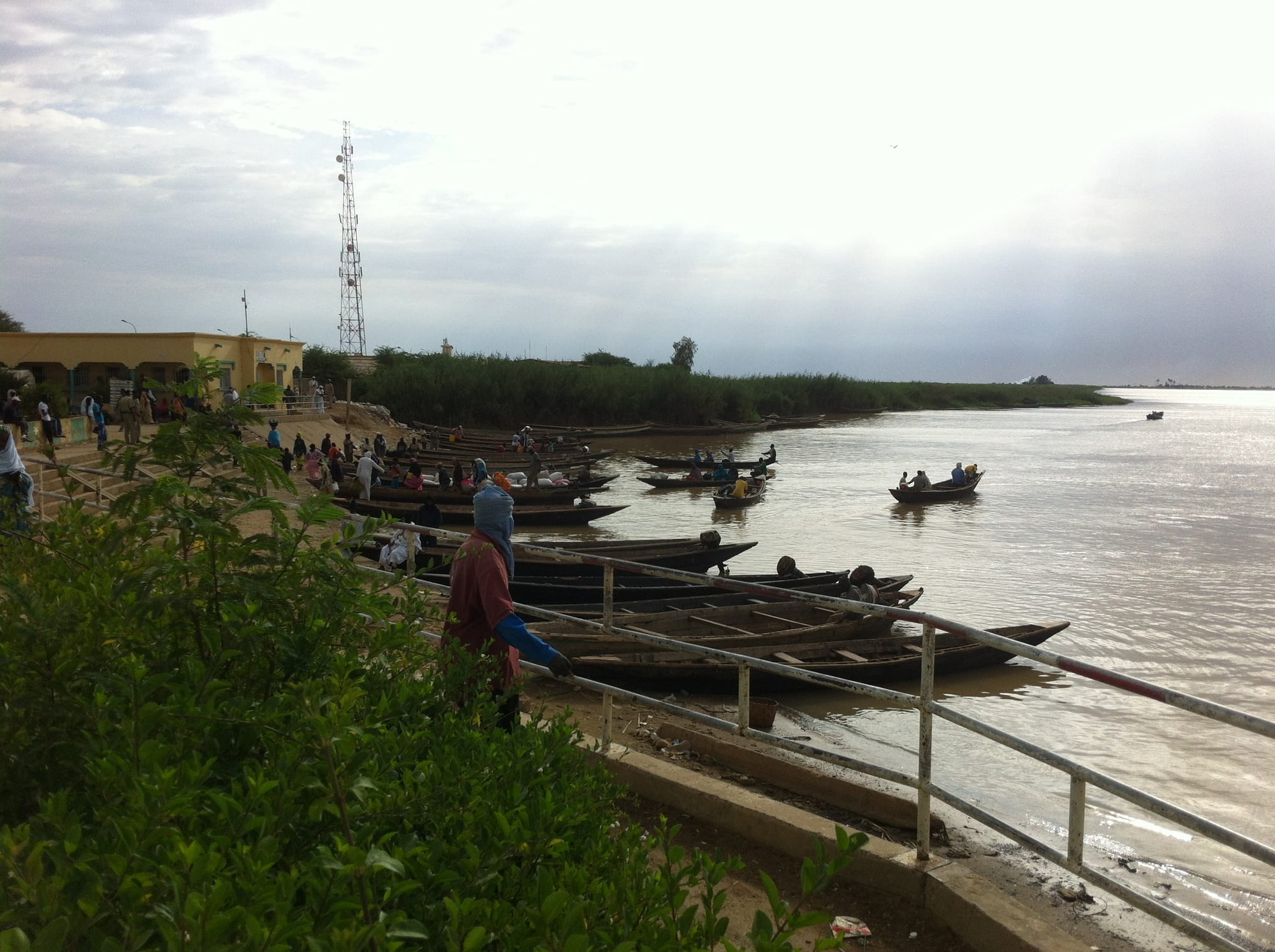
Bush taxis and minibuses run north along the paved highway to Nouakchott and east along the river. Within the town, shared taxis and carts cover the short distances between the market, the ferry and the outer quarters. The ferry and pirogues make the river crossing.
Use the official ferry and the formal border posts rather than an unofficial pirogue crossing, and expect the process to take time.
🛬 Airport & Station Connections
Rosso lies about 200 kilometres south of Nouakchott on a paved road, roughly three hours by bush taxi or bus, and directly opposite Rosso in Senegal, from where Saint-Louis is about 100 kilometres further south. Most nationalities need a visa for Mauritania and, since the e-visa system began in January 2025, apply for it online before travelling rather than at the border; rules change, so they are worth confirming shortly beforehand. The nearest airports are at Nouakchott and Saint-Louis.
🚶 Walkability
The town is small and flat, and the market, the offices and the ferry landing are all within a walk of one another on sandy, unshaded streets. Heat, dust and lorry traffic around the crossing are the main discomforts; anything beyond the centre is better reached by shared taxi.
🛡️ Safety
Rosso is calm, but the border crossing draws hustlers, fixers and pickpockets, and unofficial 'helpers' at the ferry commonly ask for money for services that are free. Petty theft in the queues and around the market is the main risk. The road to Nouakchott is dangerous after dark, and mosquitoes near the river carry malaria.
Keep to the paved road near the northern border, avoid lonely beaches at night, and travel off-road only with a local driver. Check current official travel advice before travelling.
🌦️ Climate
Sahelian and hot, less tempered by the sea than the coast further north. A short rainy season falls between July and September, when the river rises and the plain floods; the rest of the year is dry, with harmattan dust in winter.
- Summer
- very hot, often 35–45°C, humid and stormy from July to September
- Winter
- warm and dry, about 28–33°C by day, with cool nights
🤝 Local Customs
Dress is modest on both sides of the river, and local people wear the Mauritanian daraa and malahfa or Senegalese boubous. Greetings are long, the right hand is used for eating and handing things over, and tea poured three times follows a meal or a conversation. Alcohol is illegal in Mauritania. The legacy of slavery, criminalised in 2007, and the expulsions of 1989 across this river remain sensitive subjects.
Do not photograph the border posts, the ferry, officials or the police, and ask before photographing people in the market.
💳 Common Payment Methods
The Mauritanian ouguiya (MRU) is used on this bank and the West African CFA franc on the Senegalese side; money changers at the crossing deal in both, as well as euros. Everything is paid in cash, cards are not accepted, and cash machines are scarce, so it is normal to arrive with enough money for the stay.