💰 Budget
Costs are high for what is available, because nearly everything is imported and the island has only a small number of hotels and dive lodges. Rooms and boat trips are the main expenses; local shops, market food and shared taxis are cheap. The US dollar is used, and diving or a guided boat trip to Nan Madol drives most visitors' daily spending.
- Daily Budget Midrange
- USD 160–350 (dive lodge with meals, boat dives, guides and a hired vehicle)
- Daily Budget Shoestring
- USD 70–120 (guesthouse room, store and market food, shared taxis)
Diving, boat trips and a guide for Nan Madol are best arranged through accommodation before arrival, since operators are few and depend on the tides and the weather.
📅 Best Time to Visit
Rain falls in every month, so there is no dry season, but roughly December to April is drier and calmer and suits boat trips and diving best. The reef-pass surf works best with the northern winter swell, and the wettest, stormiest months tend to fall between July and November.
⏳ Suggested Number of Days
Three or four days covers the island at an unhurried pace. Diving, boat trips to the outer atolls or a stay in another state need five to seven. Rain, tides and the thin flight schedule all shift the number.
- First Visit
- 3–4 days
- With Surroundings
- 5–7 days
🚆 Transportation
A single ring road circles the island, partly sealed and rough in places, with spurs into the interior. There is no public transport; shared taxis run in and around Kolonia for a flat fare, and hotels arrange cars and drivers. Boats do the rest — the lagoon, Nan Madol and the atolls are all reached by water.
Four-wheel drive helps on the interior tracks, and a guide is needed for the forest trails and for Nan Madol, which sits on private and customary land.
🛬 Airport & Station Connections
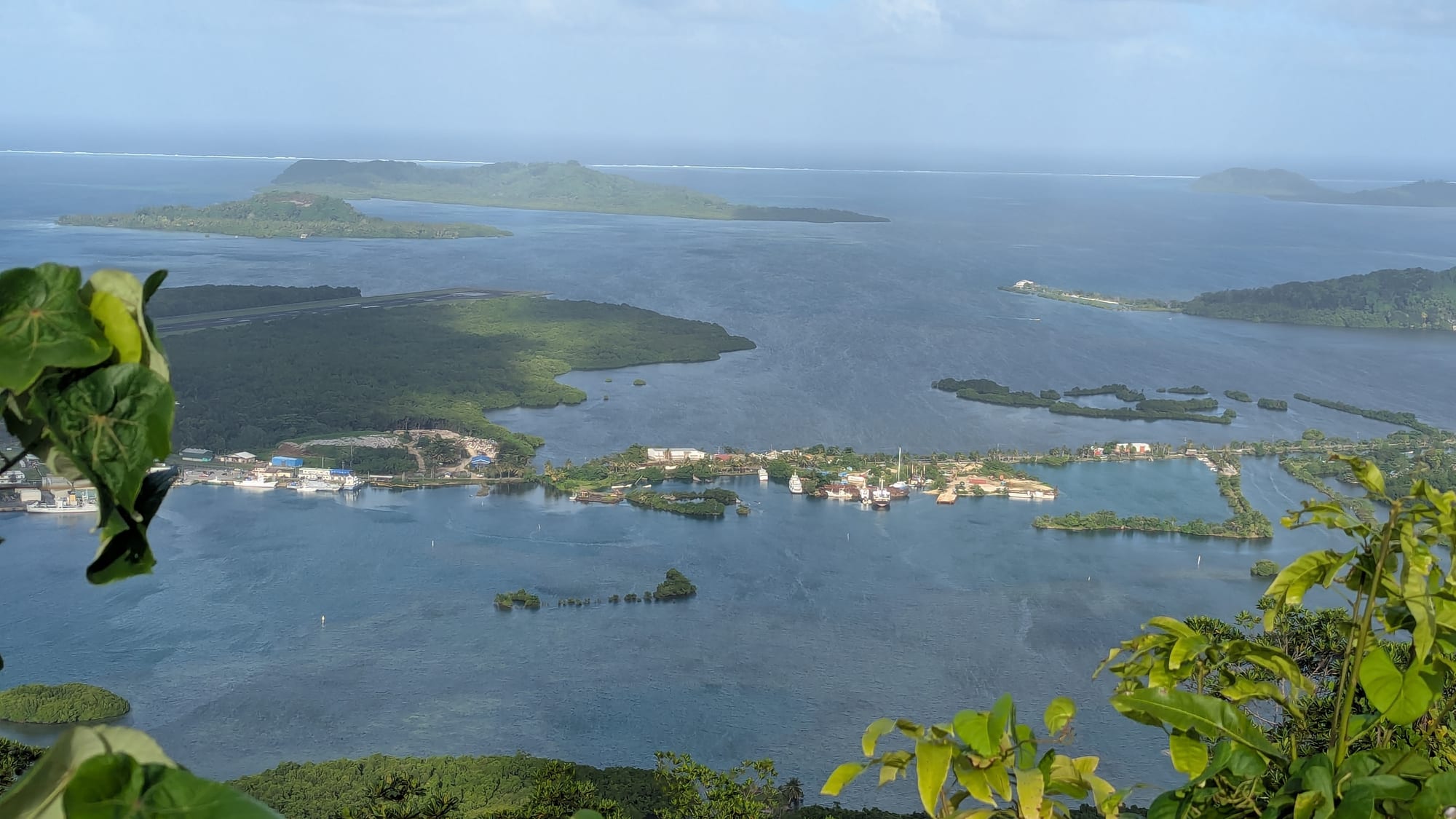
Pohnpei International Airport sits on the islet of Deketik, reached by a causeway a couple of miles from Kolonia, ten minutes or so by road. United Airlines' Island Hopper service calls a few times a week on the route between Guam and Honolulu, and there are connections to the other Micronesian states. There are no scheduled passenger ferries for visitors.
Leave wide margins around connections, as weather and mechanical delays on the Island Hopper are common.
🚶 Walkability
Kolonia is small enough to cross on foot in twenty minutes, and its shops, offices and restaurants are all within a few streets, though pavements are patchy and rain is frequent. Everything beyond the town needs a vehicle or a boat: distances along the ring road are long, there is little shade and the shoulders are narrow.
🛡️ Safety
Serious crime is uncommon and visitors are generally left alone, with occasional alcohol-related trouble late at night. The practical risks matter more: medical care is limited and serious cases are flown to Guam or Hawaii, roads and forest tracks are slippery in rain, currents run strongly through the reef passes, and the island lies within the typhoon belt.
Much land, reef and shoreline is held by families or clans, so ask before entering, swimming from or photographing a site, and take a guide for waterfalls and ridge walks. Check current official travel advice before travelling.
🌦️ Climate
Hot, humid and wet all year, only a few degrees north of the equator, with little seasonal change in temperature. The coast is wet and the mountainous interior far wetter, receiving some of the heaviest rainfall measured anywhere; heavy afternoon downpours are normal and clear.
- Summer
- hot and humid, with daytime temperatures in the mid-80s°F and heavy showers on most days
- Winter
- much the same, in the mid-80s°F by day, with slightly drier and breezier conditions from about December to April
🤝 Local Customs
Pohnpei keeps a strong chiefly system: each municipality has a nahnmwarki and a ladder of traditional titles, and title feasts with yams, pigs and kava are the great social occasions. People lower their heads and bodies when passing elders or chiefs, speech to titled people is formal, and modesty in dress is expected — women swim in shorts or a wraparound cloth rather than a swimsuit.
Tipping is not customary. Ask before photographing people, houses or feasts, cover thighs and shoulders away from hotel beaches, and accept a cup of sakau with both hands if it is offered.
💳 Common Payment Methods
The currency is the US dollar. This is largely a cash economy: some hotels and dive operators take cards, but most shops, taxis, markets and guides do not. Kolonia has bank branches and ATMs, which occasionally run out of notes, and there is nothing of the kind outside town.