💰 Budget
Marrakech is Morocco's most expensive destination, with luxury riads, designer hotels and restaurants priced for foreign visitors, but the cheap city underneath is intact: hostels and simple riads, food stalls on the square, shared taxis and buses. Prices rise steeply around New Year, Easter and the film festival.
- Daily Budget Midrange
- USD 95–260 (riad with a courtyard pool, restaurant dinners, museum and palace entries, taxis or a driver for the valleys)
- Daily Budget Shoestring
- USD 30–60 (hostel or basic riad, Jemaa el-Fnaa stalls, buses and shared taxis)
Bargaining is expected in the souks and for unmetered taxis; agreeing the price before a purchase, a ride or a guided walk avoids most disputes.
📅 Best Time to Visit
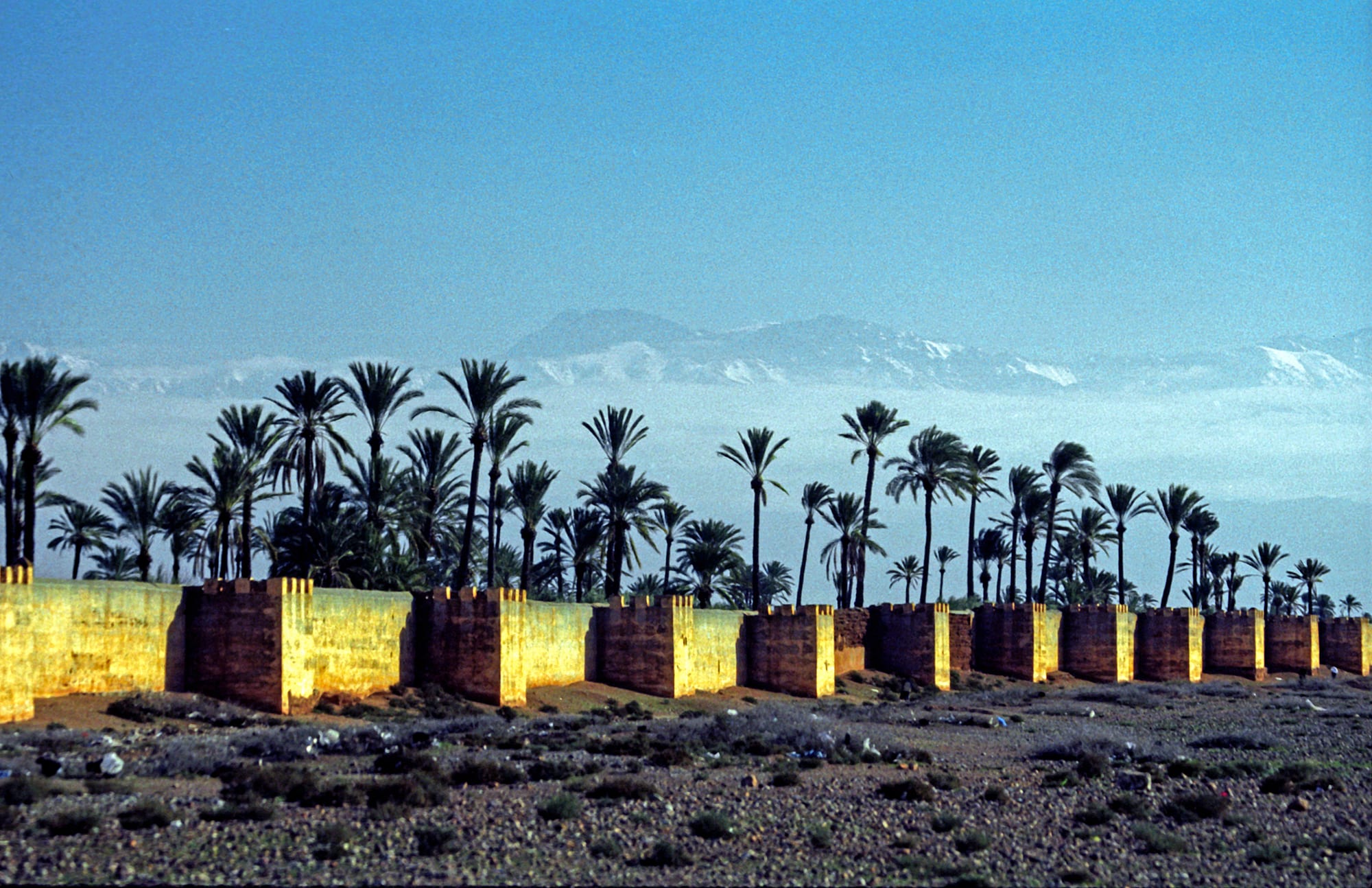
March to May and October to November are the most comfortable, with warm days, cool evenings and the Atlas still green. Winter is sunny, busy and cold at night, with snow on the mountains within sight of the city. July and August are very hot on the plain, and the medina empties in the middle of the day.
⏳ Suggested Number of Days
Three days is the usual length for the walled city and the gardens, as the medina is dense and tiring and distances inside it are slow. Five or six suit anyone adding the mountains, the valleys or the coast. Summer heat and Ramadan hours both slow the pace.
- First Visit
- 3 days
- With Surroundings
- 5–6 days
🚆 Transportation
The medina is walked, with handcarts, mopeds and the occasional donkey sharing its lanes; cars can reach only the main streets. Small beige petits taxis link the medina with Gueliz, Hivernage and the Palmeraie, city buses cover the wider area, and horse-drawn calèches make circuits of the walls. Grands taxis and minibuses leave for the mountain valleys from stands near the walls.
Petits taxis frequently do not use the meter for visitors, so the fare is best agreed before setting off; drivers to the Atlas valleys are usually hired for the whole day.
🛬 Airport & Station Connections
Marrakech-Menara airport lies about 3 kilometres south-west of the city centre, a short taxi ride away, and handles flights from across Europe and the Arab world. Trains from Casablanca take about two and a half to three hours and arrive at a station in Gueliz, with services from Rabat, Tangier and Fez; coaches run to Essaouira, Agadir and the Atlas towns. Many visitors arrive on a hire car or an arranged transfer.
🚶 Walkability
The medina is walkable and best seen on foot, but its lanes are narrow, unevenly paved and confusing, and mopeds move fast through the crowds. Jemaa el-Fnaa to the Saadian Tombs or the Ben Youssef Madrasa is fifteen to twenty-five minutes. Gueliz and Hivernage are a long walk or a short taxi ride away, and the summer heat makes midday walking hard.
🛡️ Safety
Marrakech is generally safe but its medina is known for aggressive touts, false guides, henna and snake-charmer scams around Jemaa el-Fnaa, and moped bag-snatching. Unsolicited directions often end in a demand for payment or a shop. Summer heat on the plain is dangerous, and traffic around the walls is chaotic.
Official guides booked through a riad or a licensed agency are the safe choice, bags are best kept across the body in medinas, and the cannabis-growing Ketama area of the Rif is best avoided. Check current official travel advice before travelling.
🌦️ Climate
Semi-arid, with very hot summers and mild, sunny winters with cold nights. The mountains a few kilometres south hold snow for much of the winter, and rain is scarce and falls mostly between November and March.
- Summer
- very hot and dry, often 38–45°C by day, with warm nights and a dusty wind off the plain
- Winter
- sunny days of about 17–20°C with near-freezing nights, and snow on the High Atlas in view of the city
🤝 Local Customs
Dress is more conservative in the medina than in Gueliz, and covered shoulders and knees attract less attention; the city is used to visitors but the old quarters are residential. Non-Muslims may not enter working mosques, including the Koutoubia. Photographing performers, water sellers or stall holders in Jemaa el-Fnaa is expected to be paid for, and bargaining in the souks is normal and good-humoured.
Tipping is customary — small change for café waiters, parking attendants and porters, around 10 per cent in restaurants; alcohol is served in licensed hotels, riads and restaurants rather than sold openly; during Ramadan, eating, drinking or smoking in the street during daylight is best avoided.
💳 Common Payment Methods
The Moroccan dirham is the currency and cannot easily be obtained abroad, so most visitors withdraw or change money on arrival. Cards work in hotels, larger restaurants and shops in Gueliz; the souks, stalls, taxis and small cafés are cash only, and small notes are useful for bargaining and tips. ATMs are plentiful around Jemaa el-Fnaa and Avenue Mohammed V.