💰 Budget
A day trip from Marrakech is inexpensive beyond the cost of transport, and food at the station is cheap. Ski hire, a lift pass and a lesson are the main winter outlays, and hotel and refuge rooms are modest in price but few, so weekend beds go early. A car or a hired driver is the usual way in and back.
- Daily Budget Midrange
- USD 85–190 (hotel or chalet room, restaurant meals, hired skis and a lift pass or a guide for the day)
- Daily Budget Shoestring
- USD 25–55 (refuge or dormitory bed, café meals, a shared taxi up from the Ourika valley)
Agree the price of a car or driver from Marrakech before setting off, and carry cash — the station has no reliable banking.
📅 Best Time to Visit
Winter, from roughly January to March, is the ski season in years with enough snow, and cover varies a great deal from one winter to the next. Late spring and autumn suit walking, with warm days and cold nights, while summer brings flocks to the plateau and Moroccan families escaping the heat of Marrakech. Weekends and school holidays are much busier than weekdays.
⏳ Suggested Number of Days
Most people come up from Marrakech for the day and go back the same evening. A night at the station suits skiers wanting an early start and walkers who need the cool of the morning; two or three days allow the plateau and the valleys below to be combined.
- First Visit
- 1 day
- With Surroundings
- 2–3 days
🚆 Transportation
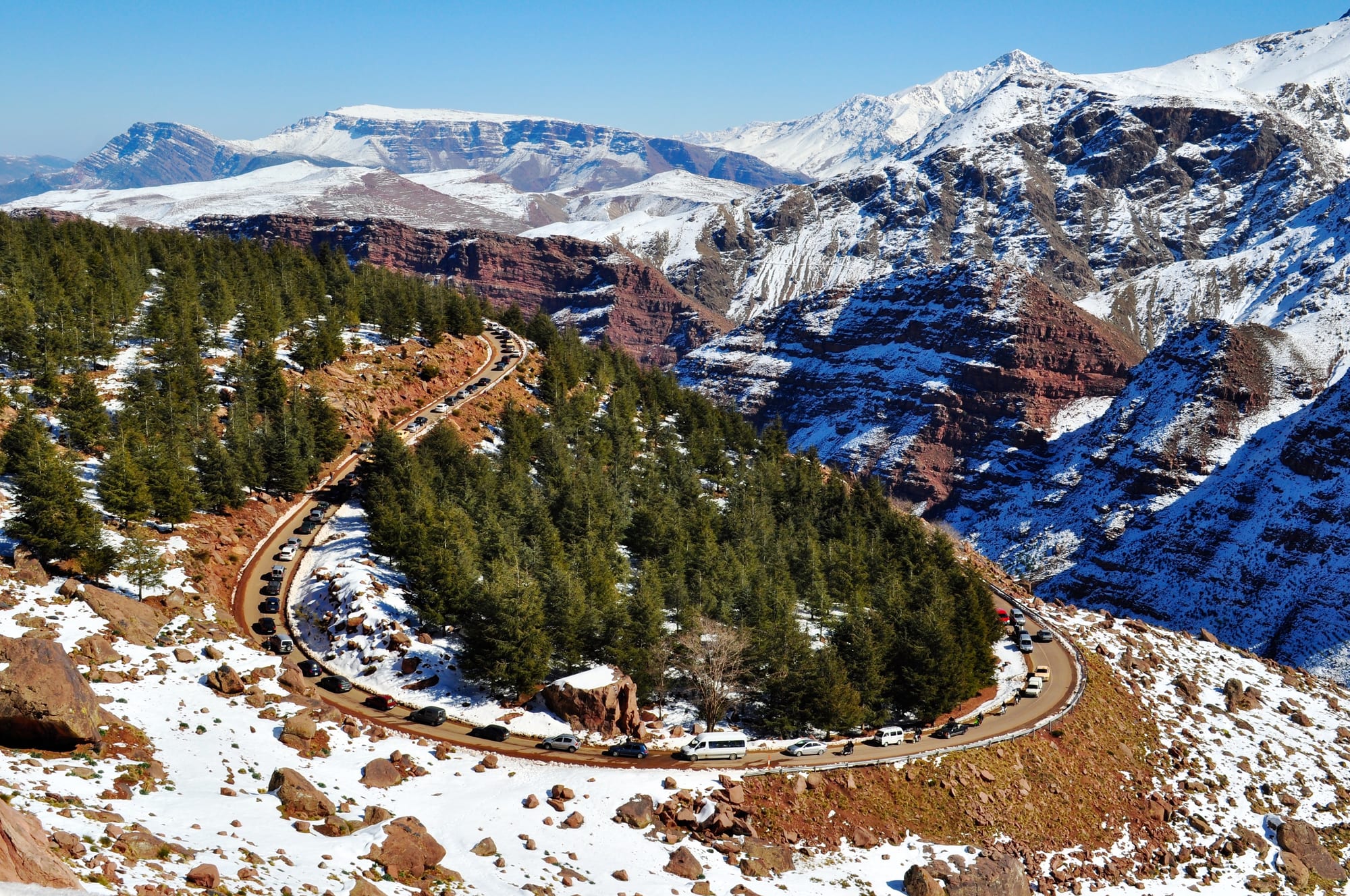
There is no scheduled bus. Visitors drive, hire a car with a driver in Marrakech, or take a grand taxi as far as the Ourika valley and negotiate the climb from there. The mountain road is narrow, steep and exposed, with ice and snow in winter, and the station itself is small enough to cross on foot.
Snow chains or a four-wheel drive may be needed after a fall of snow, and driving back down after dark on an icy road is best avoided.
🛬 Airport & Station Connections
Marrakech is about 80 km away, roughly an hour and a half to two hours by car through the Ourika valley, and Marrakech Menara Airport is the nearest airport. Many visitors come on an organised day excursion; there is no railway or public bus service to the plateau.
🚶 Walkability
The station is a short strip that can be walked end to end in minutes, but it stands above 2,600 metres, so even gentle slopes feel steep until the body adjusts. Surfaces are stone, gravel and, in winter, packed snow and ice. Walking the plateau and the peaks above needs proper footwear and care with the weather.
🛡️ Safety
The dangers are the mountain and the road rather than crime. Altitude, cold, wind and fast-changing weather catch people out in any season, the sun is strong on snow and at height, and the access road ices up in winter. Ski runs are patrolled unevenly, and hired equipment is of variable quality.
Use official guides booked through a riad or a licensed agency, keep bags across the body in medinas, and avoid the cannabis-growing Ketama area of the Rif. Check current official travel advice before travelling.
🌦️ Climate
A high mountain climate, far colder than Marrakech in every season. Precipitation falls mainly between November and April, as snow on the plateau, and clear, bright, dry days are common in between. Nights are cold all year and the wind is often strong on the open ground.
- Summer
- mild by day, roughly 18–24°C, with cold nights near or below 5°C and occasional afternoon storms
- Winter
- cold — daytime highs usually around 0–6°C, nights often between -5 and -10°C, with snow lying on the plateau in good years
🤝 Local Customs
The plateau belongs to Amazigh villages that have shared its pasture for generations, and the agdal rules about when grazing opens are still respected. Tamazight is the first language of most people working here, with Arabic and French used alongside it. Dress modestly away from the slopes, greet people before asking for anything, and ask before photographing shepherds, families or flocks.
Tip guides, ski instructors and the men who hold the mules; do not walk or drive across fenced or closed pasture; alcohol is not part of local life and is scarce here.
💳 Common Payment Methods
The currency is the Moroccan dirham, and the plateau runs on cash. Ski hire, cafés, lift tickets, guides and most rooms are paid in notes, cash machines are unreliable or absent, and cards are accepted by only a few hotels, so bring enough money up from Marrakech.