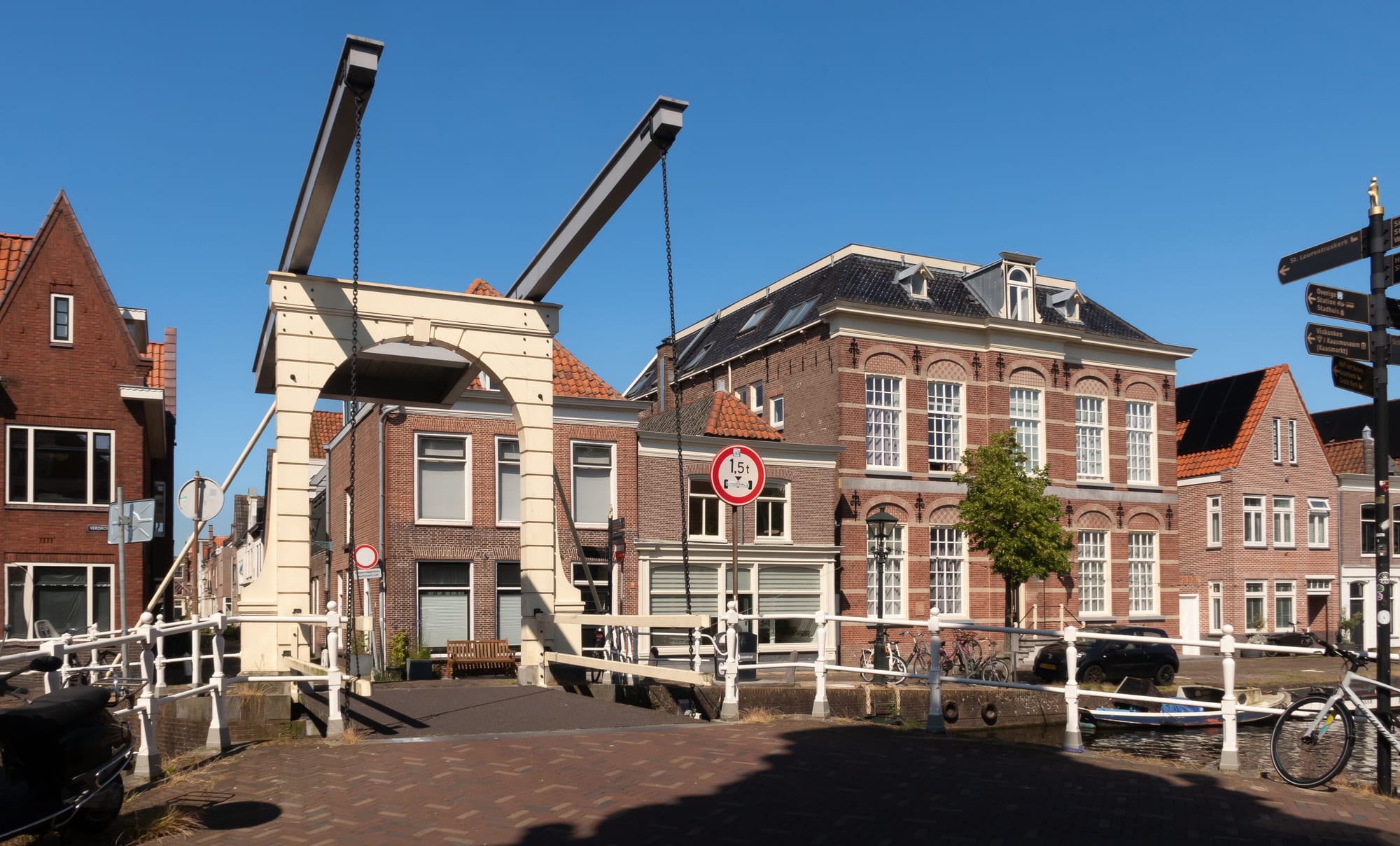
A white wooden drawbridge over a canal in Alkmaar, with brick houses and a larger 19th-century building behind under a clear blue sky

Amsterdam & North Holland, Netherlands

Alkmaar

A drawbridge over the canal at the Verdronkenoord in the old centre of Alkmaar. (Michielverbeek / Wikimedia Commons · CC BY 4.0)

A historic market city on the North Holland peninsula, about 10 km inland from the coast and 40 km north-west of Amsterdam. Granted city rights in 1254, it held out against a Spanish siege in 1573 — the moment, it is said, where victory began. Today its canal-ringed centre is best known for the costumed cheese market held in front of the weigh house through the summer.

Neighbourhoods

  • Old centre and the Waagplein
    • First-time visitors
    • Historic district
    • Nightlife

    The canal-ringed old town, built on an ancient sand bank a little above the surrounding land. The Waagplein with its weigh house, the canals of the Mient and the Verdronkenoord, and the pubs where the city's nightlife gathers are at its heart, and most of the city's listed monuments line its old canals.

    Open in Maps
  • Langestraat and the Laurenskerk
    • Shopping
    • Historic district
    • Museums

    The main shopping street runs from the great Sint-Laurenskerk to just south of the Waagplein, past patrician houses of the 18th century. The Canadaplein beside the church holds the city museum, the library and the De Vest theatre.

    Open in Maps
  • The west side and the station
    • Close to public transport
    • Quiet and residential

    Between the railway station and the old centre, a 5–10 minute walk, lie quieter streets, the almshouse of Paling and van Foreest and the city-centre windmill, the Molen van Piet, on the old ramparts.

    Open in Maps
  • The outer districts
    • Quiet and residential
    • Local life

    Former villages such as Oudorp, Koedijk and Huiswaard, now joined by housing built from the late 1970s to the early 1990s, and since 2015 the old villages of De Rijp and Schermer as well. This is where most residents live.

    Open in Maps

Things to do

Famous landmarks

  • Waaglandmark

    The weigh house on the Waagplein, backdrop to the cheese market and to most postcards of Alkmaar, now home to the tourist office and the Holland Cheese Museum.

    Open in Maps
  • Grote Kerklandmark

    The great medieval church of St Lawrence, built on the highest point of the old sand ridge, with a tall tower; many Alkmaar couples hold their wedding ceremonies here.

    Open in Maps
  • Molen van Pietlandmark

    The only windmill left in the city centre, standing on a bastion of the old walls, where ten windmills once stood.

    Open in Maps
  • Hof van Sonoylandmark

    A large almshouse-style complex built around part of the former convent of Maria Magdalena.

    Open in Maps
  • Hofje van Paling en van Foreestlandmark

    An almshouse on the Zevenhuizen, with 19th-century additions, forming a block around an enclosed garden.

    Open in Maps

Markets and museums

  • Alkmaar cheese marketmarket

    One of only four traditional Dutch cheese markets still held, on Friday mornings from April to September: traders and carriers seal bargains with a handclap and weigh local cheeses in front of the Waag.

    Open in Maps
  • Stedelijk Museum Alkmaarmuseum

    The city museum on the Canadaplein, covering the history of Alkmaar.

    Open in Maps
  • Beatles Museummuseum

    A museum devoted to The Beatles, in the city where John Lennon's first guitar was made.

    Open in Maps
  • National Beer Museum De Boommuseum

    The national beer museum, housed in a 17th-century brewery just north of the Waagplein, once one of the largest breweries in Alkmaar.

    Open in Maps

On the water and in town

  • Canal boat toursattraction

    Low open boats leave from the Mient, almost opposite the Waag, for tours under the narrow bridges of the old canals from spring to autumn; canoes can also be hired.

    Open in Maps
  • AFAS Stadionattraction

    The 17,000-seat home of AZ, the club that won the Eredivisie in 2008–09, just beyond the ring road south of the centre.

    Open in Maps

Short trips from the city

  • Bergenattraction

    A village at the edge of the dunes west of the city, with Bergen aan Zee on the coast beyond, reached by bus.

    Open in Maps
  • Egmond aan Zeebeach

    A seaside village on the North Sea coast, reached by bus from Alkmaar station.

    Open in Maps
  • De Rijpattraction

    A historic village south-east of the city, part of the municipality of Alkmaar since 2015.

    Open in Maps

Seasonal events

  • Cheese market seasonApril to September, Friday mornings

    The traditional cheese market is held on the Waagplein every Friday morning from early April into September.

  • Relief of Alkmaar8 October

    The annual celebration of the lifting of the Spanish siege on 8 October 1573.

  • Alkmaar Prideyearly

    A nine-day Pride event that opens with a Pride Walk and ends with a parade along the canals.

Eat and drink

Long-standing places and food districts in Alkmaar. Hours, ratings and directions come from your maps app, always current.

Alkmaar classics

  • Cheese stalls around the marketmarket

    Cheese cannot be bought at the market itself, which is a demonstration of the old trade, but specialist stalls around the square sell local cheeses and cheese-related products.

    Open in Maps
  • Holland Cheese Museummarket

    The cheese museum inside the Waag, on the history of Dutch cheese-making and the market.

    Open in Maps

Cafés and bars

  • Pubs on the Waagpleinneighborhood

    The bars and café terraces facing the cheese market, the centre of the city's nightlife.

    Open in Maps

Experience Alkmaar

History

The name Alkmaar first appears in a 10th-century document. The oldest part of the town lies on an ancient sand bank a couple of metres above the surrounding land, which gave some protection from floods in the Middle Ages. The village grew into a town and was granted city rights in 1254, and by the late Middle Ages it was the largest town north of Amsterdam and Haarlem — as it still is — serving as the market for the farm produce of the region. Just to the south, the small Achtermeer became, in 1532, the first lake recorded as drained by windmills.

In 1573, early in the Eighty Years' War, Spanish forces under Don Fadrique, son of the Duke of Alba, laid siege to the city. The citizens appealed to the Prince of Orange, who promised to open the dykes and flood the land if necessary, and did so despite the protests of farmers fearful for their harvest. Some of his dispatches fell into Spanish hands, and with the water rising the besiegers withdrew. The relief was a turning point in the war and gave rise to the saying "Bij Alkmaar begint de victorie" — "victory begins at Alkmaar" — still celebrated every 8 October.

The city's fortunes followed its role as a market and regional centre. The North Holland Canal, opened in 1824, was dug through Alkmaar. In the late 20th century surrounding villages were absorbed into suburban growth and the population almost doubled, and in 2015 the municipalities of Graft-De Rijp and Schermer were merged into Alkmaar.

Culture & Customs

The cheese market is Alkmaar's emblem. Every Friday morning from early April into September, the Waagplein becomes a stage: traders strike deals with the traditional handclap, and carriers weigh the cheeses in front of the medieval weigh house. It is one of only four traditional Dutch cheese markets still held, and it deals in cheeses made in the local area rather than the big national brands. Nothing is sold at the market itself, which is a demonstration of how the merchants' trade once worked, but stalls around it sell all kinds of cheese.

The relief of the siege on 8 October 1573 is the city's other great occasion, and the saying "victory begins at Alkmaar" is known across the country. Alkmaar Pride, a nine-day event ending in a canal parade, and Kaeskoppenstad, a historical event, fill out the calendar.

Football means AZ, the club of Alkmaar and the Zaan district, which won the Eredivisie in 2008–09 and plays at the AFAS Stadion. The city has an unexpected link with pop history: John Lennon's first guitar was made here, and a Beatles Museum honours it.

Daily Life

The municipality had about 113,000 people in 2023. Most live outside the old centre, in former villages such as Oudorp, Koedijk and Huiswaard that were joined into one built-up area between the late 1970s and early 1990s, and since 2015 in the villages of the former Graft-De Rijp and Schermer municipalities as well.

Alkmaar is the main town of the northern part of the province, but its closeness to Amsterdam keeps it from being an independent regional centre in the way of cities such as Zwolle or Maastricht; frequent intercity trains link it to the capital. Shops, services and offices fill the centre, and the city serves the dune villages and polders around it.

The old centre's rhythm is set by the Friday cheese market in summer, when visitors fill the Waagplein, and by the shoppers on the Langestraat and the evening crowds in the pubs facing the square. Weekends bring cycling in the countryside and trips to the beaches at Egmond aan Zee and Bergen aan Zee, and AZ home games bring out the city's football fans.

Food

Cheese is at the centre of Alkmaar's food culture. The market deals in cheeses from the local area — the weighing square was where Edam and Gouda cheeses were traditionally sold — and the stalls around the Waagplein sell young and aged cheeses as well as cheese-related products. The Holland Cheese Museum in the Waag tells the story of the trade.

Fish has its own history here: the simple covered stalls of the Vismarkt, at the corner of the Mient and the Verdronkenoord, were first built in the 16th century and renovated around 1755. Herring, usually with onions and pickles, and kibbeling, battered chunks of fish, traditionally cod, are Dutch snacks found across the province.

Beer has its own museum here, the National Beer Museum De Boom, in a 17th-century brewery that was once one of the largest in the city; in the Middle Ages beer was drunk in huge quantities in towns that rarely had safe drinking water. The streets around the Waagplein and the Langestraat hold most of the city's cafés and restaurants.

Planning tools

Budget

Alkmaar costs noticeably less than Amsterdam, with cheaper hotels and a fast train link to the capital, which makes it a sensible base for the north of the province. The cheese market itself is free to watch.

Daily Budget Midrange
USD 180–320 (mid-range hotel, restaurant dinners, museum tickets, a canal tour)
Daily Budget Shoestring
USD 85–135 (budget room, market and snack-bar food, buses to the coast)

Watch the cheese market for free and buy cheese from the stalls around it; arrive early on Fridays for a place at the front.

Best Time to Visit

April to September, when the cheese market runs on Friday mornings, the canal boats operate and the coast nearby is at its best. The siege is celebrated on 8 October. Winter is quiet and grey, without the market.

Suggested Number of Days

A day or two covers the old centre, more if the visit is timed to a Friday in season. Three or four days allow for the dunes, the beaches and the villages around the city.

First Visit
1–2 days
With Surroundings
3–4 days

Transportation

The old centre is compact and walkable, and bikes can be hired beside the station. Buses from the station bus hub run to Egmond aan Zee, Bergen aan Zee and other nearby towns. The city has two railway stations, Alkmaar and Alkmaar Noord.

Fares are paid by tapping in and out with a contactless card or OV-chipkaart; on foot, keep out of the cycle lanes.

Airport & Station Connections

Intercity trains from Amsterdam run four times an hour and take 35 to 40 minutes, continuing north to Den Helder; at Amsterdam Sloterdijk they connect with trains to Schiphol Airport. Trains also run from The Hague via Haarlem and on to Hoorn. A signposted long-distance cycle route links Amsterdam and Alkmaar.

Walkability

Very walkable: the station is a 5–10 minute walk from the old centre, and the Waag, the Laurenskerk and the canals are all close together on flat streets. The Waagplein is crowded on Friday mornings in season.

Safety

The Netherlands is very safe, with low violent crime. In Alkmaar the busiest moment is the Friday cheese market, when the Waagplein is crowded.

Keep bags closed in the Friday crowds and lock any bike securely. Check current official travel advice before travelling.

Climate

Mild, cloudy and windy, close to the North Sea, with rain spread through the year.

Summer
moderately warm — in Amsterdam, to the south, the average daily high in August is about 22°C
Winter
cool, grey and damp; in Amsterdam, to the south, nights rarely fall below −5°C

Local Customs

Service charges are included in prices by law, so tipping is not necessary, though rounding up or 5–10 per cent for good service is appreciated. People are direct and informal. The hofjes are almshouses, and quiet is expected in their courtyards.

Keep voices down in the hofjes, and do not step into the cheese market's roped-off area during the demonstration.

Common Payment Methods

The currency is the euro. Mastercard and Visa cards are widely accepted, and a growing number of shops do not take cash at all, though some stores block credit cards issued in the EU, and a few have had trouble with cards issued outside the European Economic Area, so carry a second way to pay.