💰 Budget
Delft is cheaper than Amsterdam and makes a popular base for day trips across the province. Food can be cheap at the markets and snack bars, while the churches, the Prinsenhof and Royal Delft are the main entrance costs. Parking in the centre has been among the most expensive in the country.
- Daily Budget Midrange
- USD 170–300 (mid-range hotel, restaurant dinners, museum entries, trains to nearby cities)
- Daily Budget Shoestring
- USD 80–130 (hostel, market food and snack bars, trains and a hire bike)
Arrive by train rather than car, and hire a bike at the station to reach Royal Delft, the Delftse Hout and the surrounding countryside.
📅 Best Time to Visit
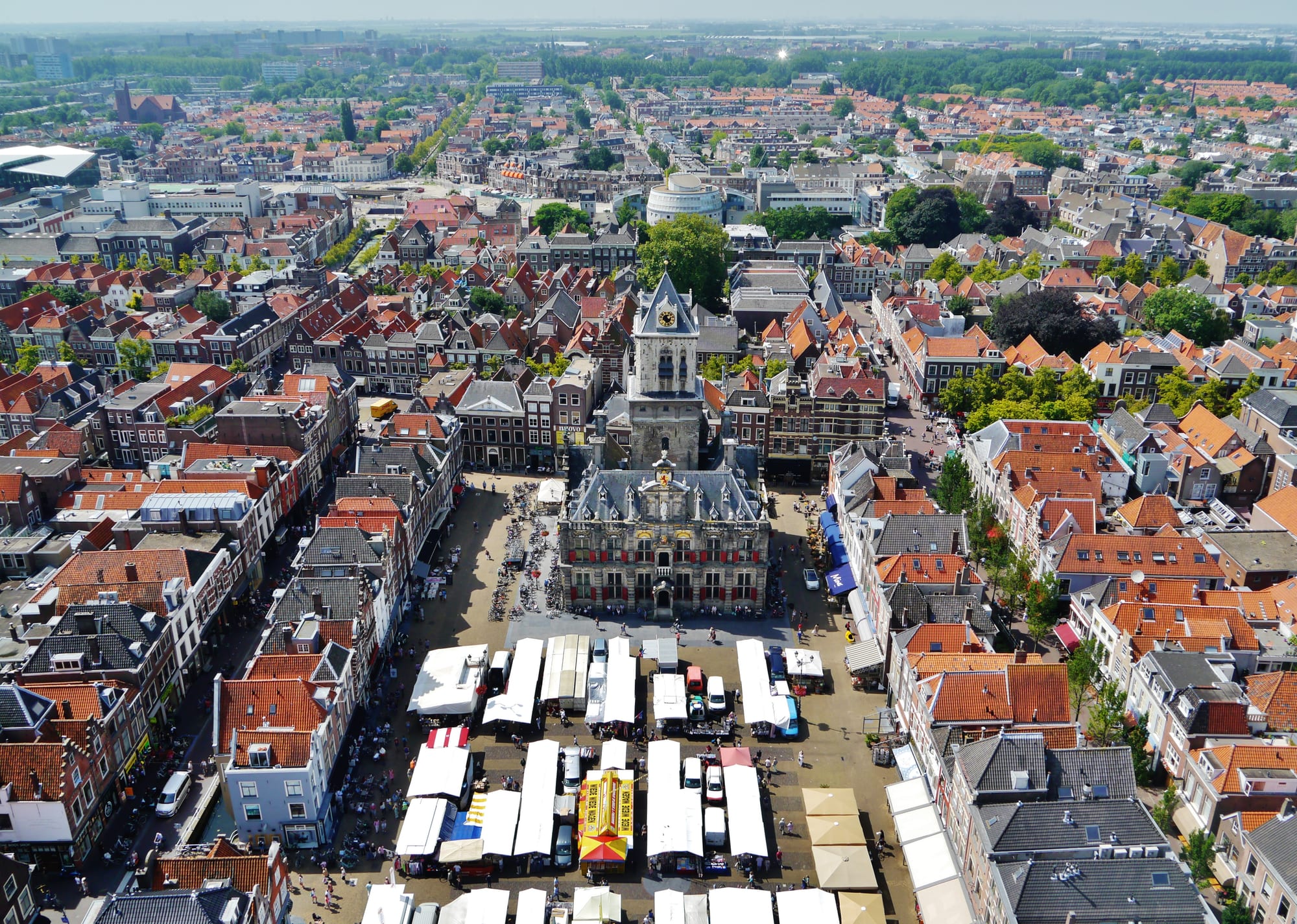
Late spring and summer are the best time, when café terraces fill the Markt and the Beestenmarkt, the Saturday bric-à-brac markets run along the canals from April to October, and the flower boat parade arrives in August. King's Night brings a party on the Markt in late April. Winter is quiet and grey, but the churches and museums make good use of it.
⏳ Suggested Number of Days
Delft is small, and many visitors come for a single day; one or two days give time to see the town at an easy pace. Used as a base for the region, a stay of three or four days allows trips to the neighbouring cities.
- First Visit
- 1–2 days
- With Surroundings
- 3–4 days
🚆 Transportation
Trains stop at Delft station, rebuilt with a rail tunnel under the city in 2015, and at Delft Campus, with services to Rotterdam and The Hague as often as every five minutes for much of the day. Trams run to The Hague and Leidschendam, and regional buses cover the surroundings. The old town is largely car-free and easiest on foot or by bike.
Bikes can be hired at the station; tap in and out with a contactless card on trains and trams.
🛬 Airport & Station Connections
Direct trains link Delft with Den Haag Hollands Spoor in about ten minutes, Rotterdam Centraal in about fifteen and Amsterdam Centraal in about an hour; Schiphol airport is under an hour by direct train. Tram 1 runs from Scheveningen through The Hague to Delft. Rotterdam The Hague Airport is only a few kilometres away but has no direct public transport link, so the trip takes around 45 minutes via Rotterdam Centraal.
🚶 Walkability
The historic centre is compact, flat and largely car-free, and the station is a few minutes' walk from the canals. The Markt, the two great churches, the Prinsenhof and the Beestenmarkt are all within a short walk of one another; Royal Delft and the Delftse Hout are easier by bike.
🛡️ Safety
The Netherlands is very safe, with low violent crime. Delft is a quiet student and tourist city.
Lock bikes securely and watch for cyclists in the narrow streets. Check current official travel advice before travelling.
🌦️ Climate
A temperate oceanic climate, like that of all the Dutch coast, with rain spread through the year. Spring and early summer tend to be drier and sunnier, while autumn and winter are cloudier and wetter.
- Summer
- mild to warm; in nearby Rotterdam the thermometer passes 30°C on about four days a summer
- Winter
- cool and damp; in nearby Rotterdam nights can drop below −5°C for short spells, mostly in easterly winds
🤝 Local Customs
Delft is both a royal city and a student city: the House of Orange's tombs lie in the Nieuwe Kerk, while the tens of thousands of TU Delft students set the tone of its bars and its weekend nights. Tipping is not necessary but appreciated; rounding up or 5–10 per cent on a larger bill is common.
The legal age for buying alcohol is 18, and smoking is banned inside bars and restaurants. Be respectful in the churches, which are places of worship as well as monuments.
💳 Common Payment Methods
The currency is the euro. Mastercard and Visa cards are widely accepted, and a growing number of shops do not take cash at all, though some stores block credit cards issued in the EU, and a few have had trouble with cards issued outside the European Economic Area, so carry a second way to pay.