💰 Budget
The Hague is cheaper than Amsterdam, and hotels in the centre and at Scheveningen are mid-priced outside summer. Indonesian takeaways, the Haagse Markt and snack bars keep food costs low, while the museums are the main extra expense.
- Daily Budget Midrange
- USD 170–310 (mid-range hotel, restaurant dinners, museum entries, trams and trains)
- Daily Budget Shoestring
- USD 80–130 (hostel, market food and Indonesian takeaways, trams and a hire bike)
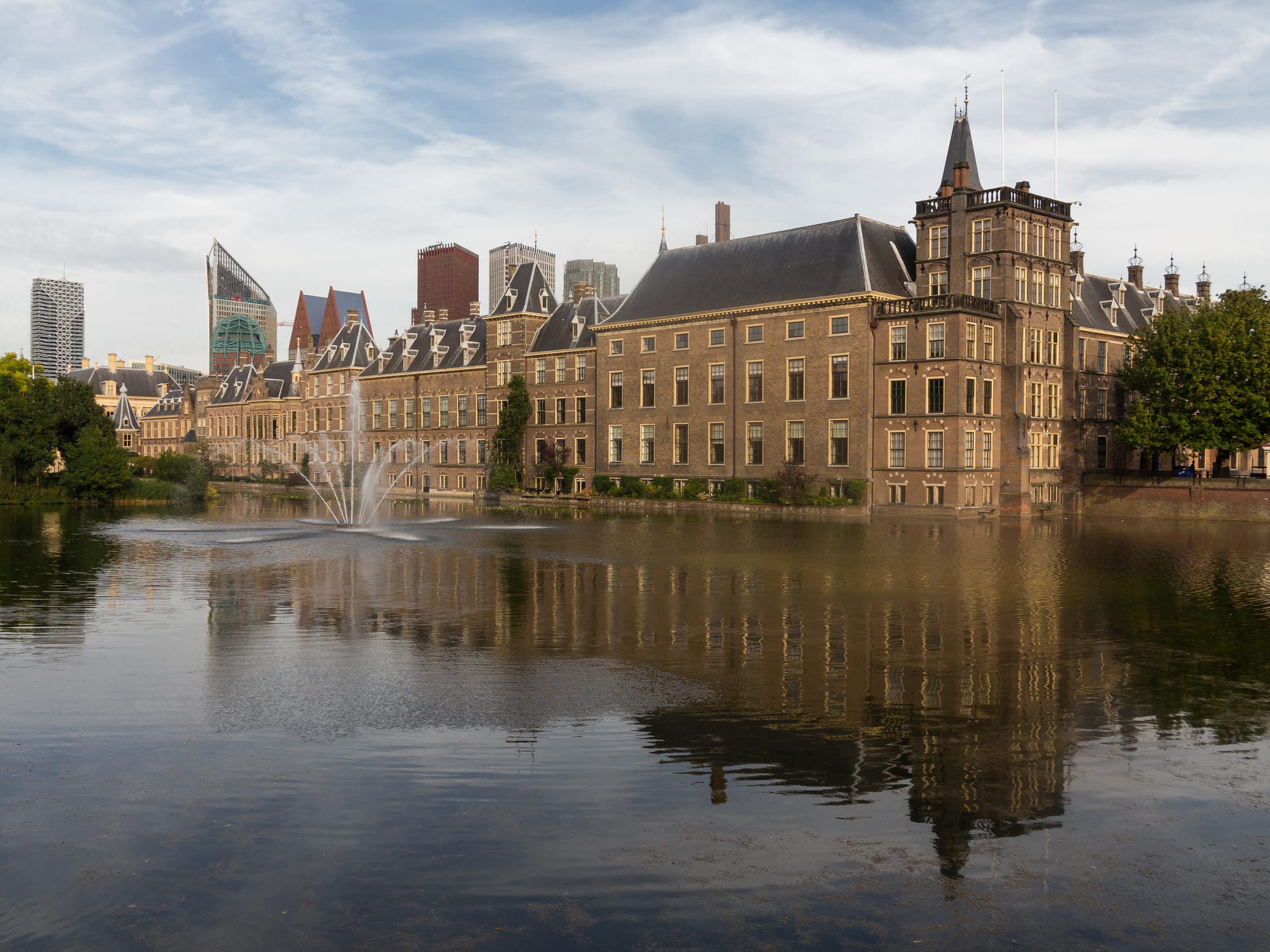
The Peace Palace, the Binnenhof and the Hofvijver, the palaces and the beach can all be seen from outside for nothing.
📅 Best Time to Visit
Late April brings King's Night and King's Day; June to August suits Scheveningen, the fireworks and the café terraces. September has Prinsjesdag and the royal procession. Winter is quieter and windier, a good season for the museums.
⏳ Suggested Number of Days
Two or three days suit a first visit to the city and its coast. Four or five allow time for the nearby towns, which are a short tram or train ride away, and summer beach stays naturally run longer.
- First Visit
- 2–3 days
- With Surroundings
- 4–5 days
🚆 Transportation
Trams and buses run by HTM cover the city, with a network of twelve tram lines, some of them light-rail RandstadRail routes that continue to Zoetermeer, Rotterdam and Leidschendam-Voorburg; a tunnel under the centre has two underground tram stops. Tap in and out with a contactless card. The city has a good network of bike paths, and trams run to Scheveningen and Delft.
Check which station a train uses: east–west lines end at Centraal, while north–south lines run through Hollands Spoor, 1.5 kilometres away.
🛬 Airport & Station Connections
Amsterdam Airport Schiphol is the airport most visitors use, with several direct trains an hour from Centraal and Hollands Spoor. The smaller Rotterdam The Hague Airport is reached by RandstadRail line E and an airport shuttle bus. Travellers to Antwerp and Brussels change trains at Rotterdam, and both stations have frequent trains to Rotterdam, Delft, Leiden and Amsterdam.
🚶 Walkability
The centre is compact and green, and the Binnenhof is a short walk from Centraal station; the Mauritshuis, the palaces, the Lange Voorhout and the café squares are all within a short stroll. The city is more spread out than most Dutch cities, and Scheveningen and the Peace Palace are best reached by tram or bike.
🛡️ Safety
The Netherlands is very safe, with low violent crime. Pickpocketing occurs around the stations and on busy trams. The area around Hollands Spoor station is less pleasant at night than Centraal.
Watch bags at stations and on trams, lock bikes to fixed racks, and swim only where lifeguards are posted at Scheveningen and Kijkduin. Check current official travel advice before travelling.
🌦️ Climate
A temperate oceanic climate. Its coastal position gives milder winters, cooler summers and more sunshine than inland places, but it can be very windy in winter and humid in summer.
- Summer
- mild and often breezy on the coast; in nearby Rotterdam the thermometer passes 30°C on about four days a summer
- Winter
- milder than inland but often very windy; in nearby Rotterdam nights can drop below −5°C for short spells, mostly in easterly winds
🤝 Local Customs
The city has two demonyms that carry a class edge: Hagenaar, the official and more upper-class term, and Hagenees, for someone born and raised here, with a posh and a broad local accent to match. The stork has long been the city's symbol. Tipping is not necessary but appreciated; rounding up or 5–10 per cent on a larger bill is common.
The legal age for buying alcohol is 18, and smoking is banned inside bars and restaurants. Never walk in the red cycle lanes.
💳 Common Payment Methods
The currency is the euro. Mastercard and Visa cards are widely accepted, and a growing number of shops do not take cash at all, though some stores block credit cards issued in the EU, and a few have had trouble with cards issued outside the European Economic Area, so carry a second way to pay.