💰 Budget
Niamey has the country's only real choice of hotels, restaurants and supermarkets, priced for aid workers, officials and diplomats, while street food, shared taxis and market shopping are cheap. The real cost of any trip is security: a hired vehicle and driver for anything beyond the city, where such trips are permitted at all.
- Daily Budget Midrange
- USD 100–230 (better Niamey hotel, a hired 4x4 and driver)
- Daily Budget Shoestring
- USD 35–50 (basic hotel, street food, shared taxis in Niamey)
Carry CFA francs in cash, and arrange any trip outside Niamey through an established local operator.
📅 Best Time to Visit
November to February, when the heat is bearable and the dust of the Harmattan is the main complaint. April and May are brutal, often above 40°C, and the rains fall from about June to September. The security situation, rather than the season, decides what is possible.
⏳ Suggested Number of Days
The museum, the markets and the riverside make up a short stay in the city, which is not large in sights. More time is usually for the giraffe country and river villages outside it, and depends entirely on whether travel beyond the capital is allowed.
- First Visit
- 2 days
- With Surroundings
- 3–4 days
🚆 Transportation
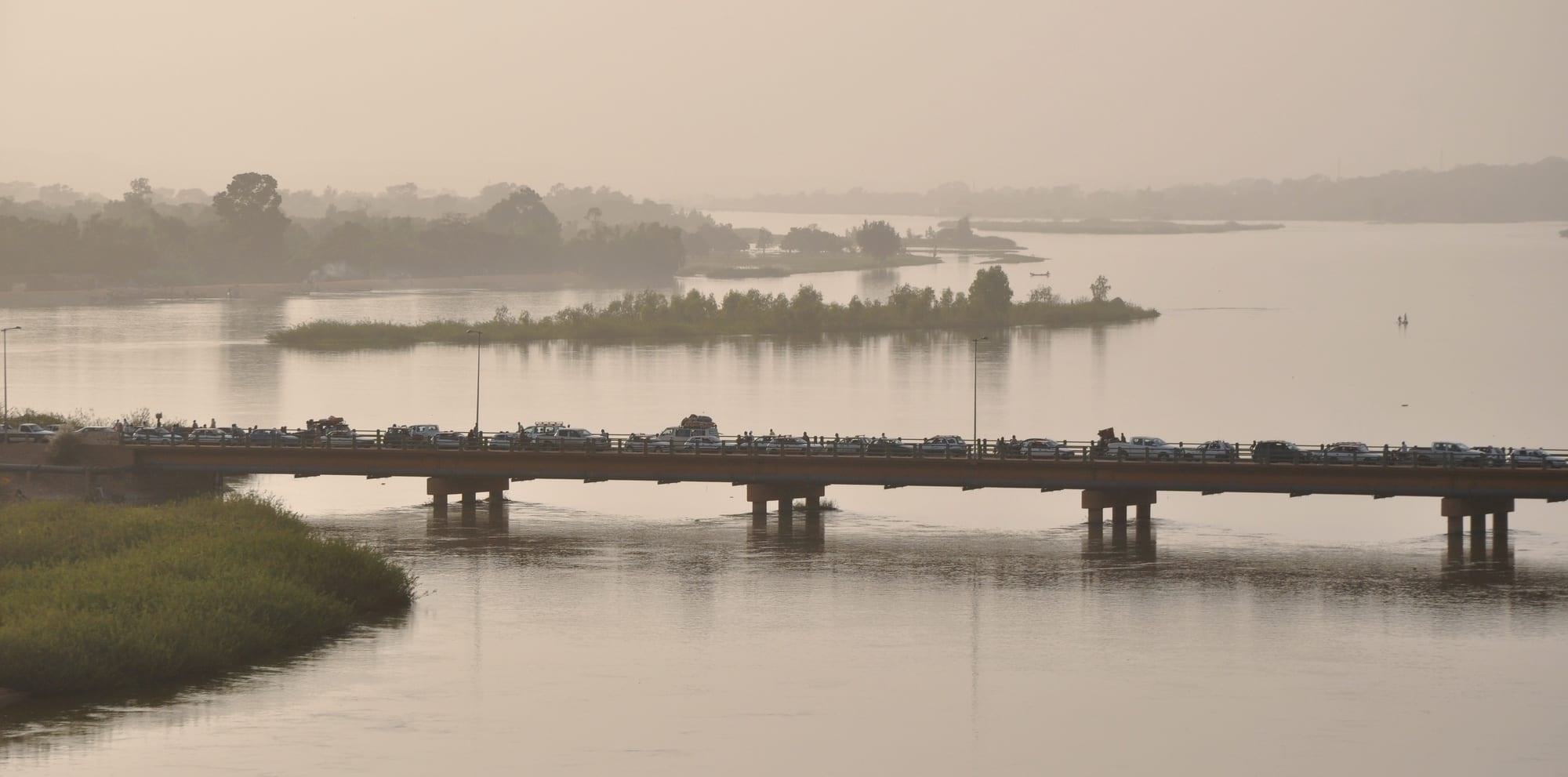
Getting around is by green shared taxi, which runs set routes for a fixed fare and picks up other passengers, by motorbike taxi, and by private hire. There is no urban rail or formal bus network of any size. The Kennedy bridge and a second, Chinese-funded bridge opened in 2021 carry traffic to the right bank, and both are congested at rush hour.
Avoid all road travel west and north of Niamey, and never drive after dark outside the city.
🛬 Airport & Station Connections
Diori Hamani International Airport, about 10 kilometres south-east of the centre, is the country's main gateway, with a limited number of regional and European connections. The paved national road runs east through Dosso towards Maradi and Zinder, and south to Gaya and the Benin border; roads north and west towards Tillabéri and the Mali and Burkina Faso borders are exposed to attack. The railway station has never had regular services.
🚶 Walkability
The plateau and the market quarter are walkable, and the distances between the museum, the ministries and the Grand Marché are short. Beyond that the city is spread out, pavements are patchy, sand and traffic are constant, and the heat makes walking hard for much of the day; most journeys are by shared taxi.
🛡️ Safety
Most governments advise against all travel to Niger, or all but essential travel to Niamey. The city itself carries a risk of terrorism and of kidnapping of foreigners, and armed groups linked to the Islamic State Sahel Province and to al-Qaeda's JNIM are active in the Tillabéri region that surrounds it to the north and west. The military took power in July 2023 and its leader was sworn in as president in 2025; an attempted coup by mutinous soldiers in Niamey followed in August 2026. Petty theft, street robbery and traffic are the everyday risks.
Most governments advise against all travel to Niger, or against all but essential travel to Niamey only. Stay in Niamey unless there is a pressing reason, keep a low profile and vary routines. Check current official travel advice before travelling.
🌦️ Climate
Hot and semi-arid, with one rainy season. Niamey is among the hottest capitals on Earth before the rains, and the Harmattan brings dust and cooler nights in midwinter. The Niger rises and falls twice a year, most strongly between about August and October.
- Summer
- rainy season June–September, hot and humid, around 25–38°C
- Winter
- dry and dusty, 15–33°C from December to February; very hot, often above 40°C, from March to May
🤝 Local Customs
Niger is an overwhelmingly Muslim country and Niamey follows the five daily prayers, with Friday the main congregational day. Greetings are long and come before business, elders and officials are addressed with care, and food is eaten and given with the right hand. Modest dress is expected, more so for women, and alcohol is confined to a few hotels and bars. Zarma-Songhai and Hausa are the city's languages, with French in offices.
Never photograph soldiers, police, checkpoints, the airport or government buildings, and ask before photographing people; tipping is not expected but small change for a guard or attendant is normal.
💳 Common Payment Methods
The currency is the West African CFA franc (XOF), pegged to the euro. The city works largely in cash; there are ATMs and some hotels and supermarkets take cards, but acceptance is unreliable and euros are the most useful currency to bring for exchange. Mobile money is widely used.