💰 Budget
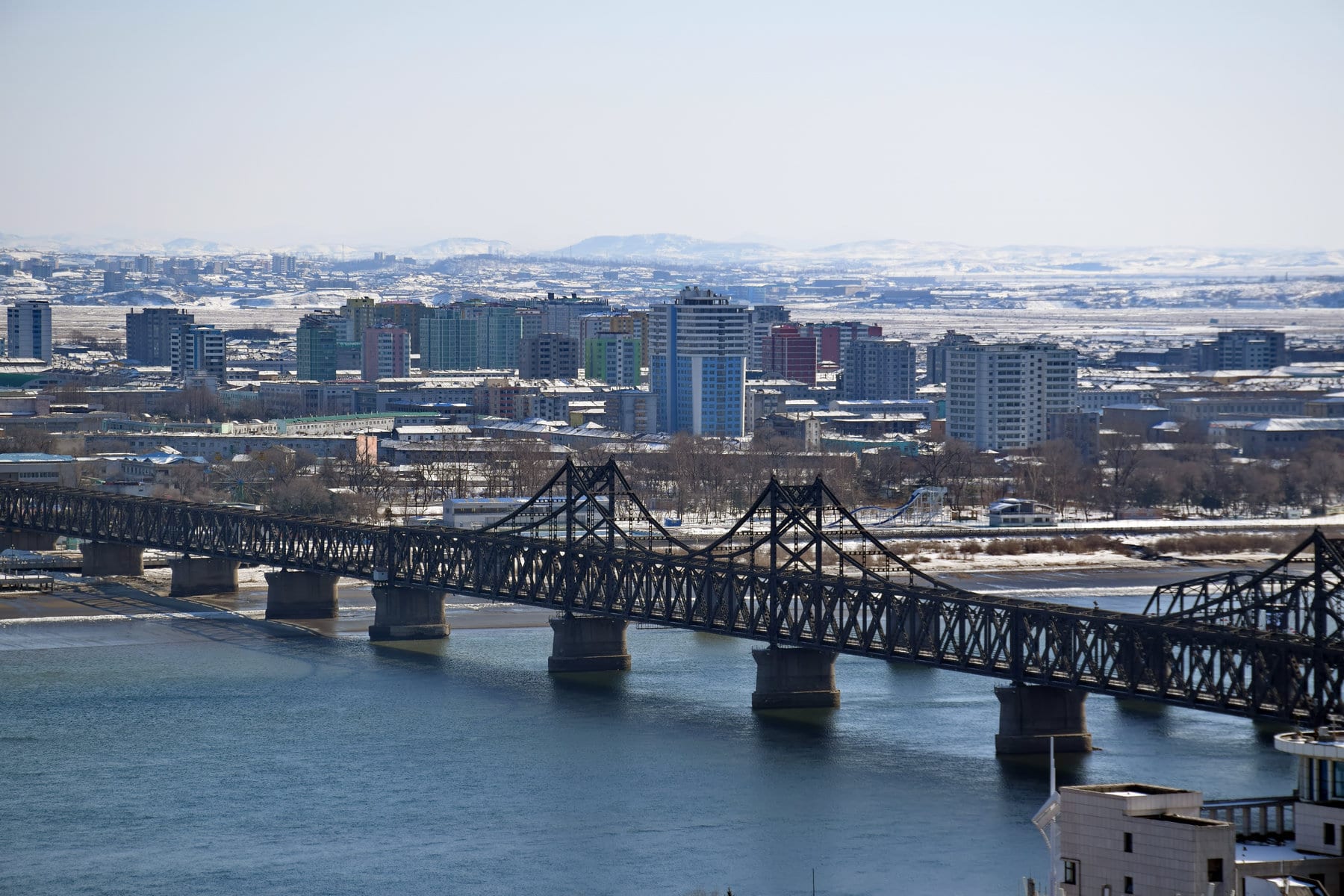
There is no independent budget for Sinuiju. When tourism has operated, the city has been seen either from the Chinese bank at Dandong, at no cost beyond a boat trip, or briefly from the train on a fixed all-inclusive tour paid in advance to a state-approved agency. Short tours into the city itself have been arranged only occasionally from China.
- Daily Budget Midrange
- USD 170–400 (an all-inclusive group tour, when tours run: hotel, meals, guides and transport)
- Daily Budget Shoestring
- USD 170–400 (no cheaper option exists — independent travel is not permitted, so the tour price is the floor)
Tourist access has been almost entirely suspended since the border closed in 2020; if a tour ever runs, carry euros or Chinese yuan in small notes.
📅 Best Time to Visit
Late April to June and September to October are the mildest and driest months, and the ones the guided tours historically used. Summer brings monsoon rain and a flood risk on the Yalu, and winter on this stretch of the river is cold and windy, with the water freezing along the banks in hard years.
⏳ Suggested Number of Days
Time here is decided by the tour programme, not the visitor. The city has been seen as a short stop on the rail journey, as a day trip arranged from China, or from the Dandong side of the river, which needs no more than a few hours.
- First Visit
- Half a day to 1 day
- With Surroundings
- 1–2 days
🚆 Transportation
Visitors move only with guides on approved routes. The city is the terminus of the line from Pyongyang and the crossing point for through trains to Dandong and Beijing, and freight is transferred here between Chinese and Korean wagons. Residents use buses, bicycles and a great deal of walking, and need permits to travel to other provinces.
No independent movement is allowed, and the bridges, customs yards and riverbank are sensitive: do not approach or photograph them without explicit permission.
🛬 Airport & Station Connections
Sinuiju sits at the end of the main line north from Pyongyang, roughly 220 km away, and the through train from Dandong in China crosses the Friendship Bridge into the city, a journey of the better part of a day from the capital. Road freight uses the same bridge. All access requires an approved tour and a visa arranged by the operator in advance.
🚶 Walkability
The central grid is flat and compact, but in practice visitors walk only where guides allow, usually between a vehicle and a specific stop. The riverfront, the station and the customs area are controlled, and the city's edges run out into industrial plants and farmland.
🛡️ Safety
The danger is political rather than criminal. This is a heavily policed border city: photographing the bridges, the river, soldiers, checkpoints or the customs yards, straying from the group, or unsanctioned contact with residents can bring arrest and long detention, and few countries have an embassy able to help. Ordinary crime against foreigners is essentially unknown under this level of supervision.
Most governments advise against all travel to North Korea and the US bans its citizens from going without special permission. Treat the border zone as off limits for photography and follow the guides' instructions exactly. Check current official travel advice before travelling.
🌦️ Climate
Continental with a monsoon summer, and colder in winter than Pyongyang because of its position on the Yalu. Most of the year's rain falls in July and August, when the river can flood; spring and autumn are short, dry and clear.
- Summer
- warm to hot and humid — often 24–29°C, with heavy monsoon rain in July and August
- Winter
- cold and dry with little snow — daytime temperatures usually near or below 0°C from December to February, with ice along the riverbanks
🤝 Local Customs
The rules of the capital apply here too: formal conduct at monuments, bowing where the group is asked to bow, and images of the leaders never cropped, folded or creased. Neat dress is expected at memorials. Korean courtesies — two-handed giving and receiving, shoes off indoors, deference to age — are ordinary good manners, and Chinese is understood by some people in a city that lives from cross-border trade.
Ask the guides before any photograph, never photograph the bridges, the border or soldiers, and do not give gifts, money or printed material to residents.
💳 Common Payment Methods
The North Korean won is not available to visitors, who pay in Chinese yuan, euros or US dollars in cash at the few counters open to foreigners; the yuan circulates more widely here than elsewhere because of the border trade. Foreign cards do not work and there are no international ATMs, so small notes are essential.