💰 Budget
Skopje is one of the cheaper capitals in Europe. Grill houses, bakeries, buses and metered taxis cost little, and the biggest expense is a central hotel.
- Daily Budget Midrange
- USD 70–140 (central hotel, restaurant dinners, taxis, museum tickets and a trip to Matka)
- Daily Budget Shoestring
- USD 35–60 (hostel bed, burek and kebapi, city buses)
Many of the best sights — the Old Bazaar, the Stone Bridge, the fortress and the walks on Vodno — cost nothing.
📅 Best Time to Visit
April to June and September to October, when days are mild and the mountains around the city are pleasant for walking; October also brings the jazz festival. July and August are often very hot. Winters are cold, and smog from heating and traffic makes the air badly polluted on many days.
⏳ Suggested Number of Days
Two or three days covers the centre, the bazaar and the museums. Four or five allow time for the mountain and the canyon on the city's edge and for day trips further afield; travellers using the city as a base for the rest of the country often return between trips.
- First Visit
- 2–3 days
- With Surroundings
- 4–5 days
🚆 Transportation
The centre and the bazaar are easily covered on foot. City buses cover the rest, and line 60 runs out to Matka Canyon. Taxis are cheap and plentiful, and many run on a meter. A suburban rail line to Zelenikovo opened in 2026.
Check that the meter is running before a taxi sets off, and take another taxi if a driver insists on an inflated price.
🛬 Airport & Station Connections
Skopje International Airport is about 20 km south-east of the city, near Petrovec, linked to the centre by airport buses and taxis. The main railway and bus station stands in one building south of the river, about 2 km from the centre, with buses to Ohrid, Bitola and other towns and to neighbouring countries. Pristina airport in Kosovo is about three hours away by bus.
🚶 Walkability
The centre is compact and flat: the Stone Bridge joins Macedonia Square with the Old Bazaar, and the riverside promenades run along both banks. The fortress and the upper bazaar involve short climbs. Mount Vodno is reached by cable car or on foot along woodland paths.
🛡️ Safety
North Macedonia is a safe country for visitors, with low violent crime. In Skopje the usual risks are pickpockets in the bazaar and around the station, and the poor winter air, which is a genuine health concern for people with breathing problems.
Watch bags in crowds and at the station, check air-quality readings in winter, and use metered taxis. Check current official travel advice before travelling.
🌦️ Climate
A humid subtropical climate, in a valley ringed by mountains. Summers are long and hot, winters cool with frequent night frosts, and spring and autumn are mild.
- Summer
- hot — days usually above 31°C and sometimes above 40°C
- Winter
- cool — days of roughly 5–10°C, with nights often below 0°C and sometimes below −10°C
🤝 Local Customs
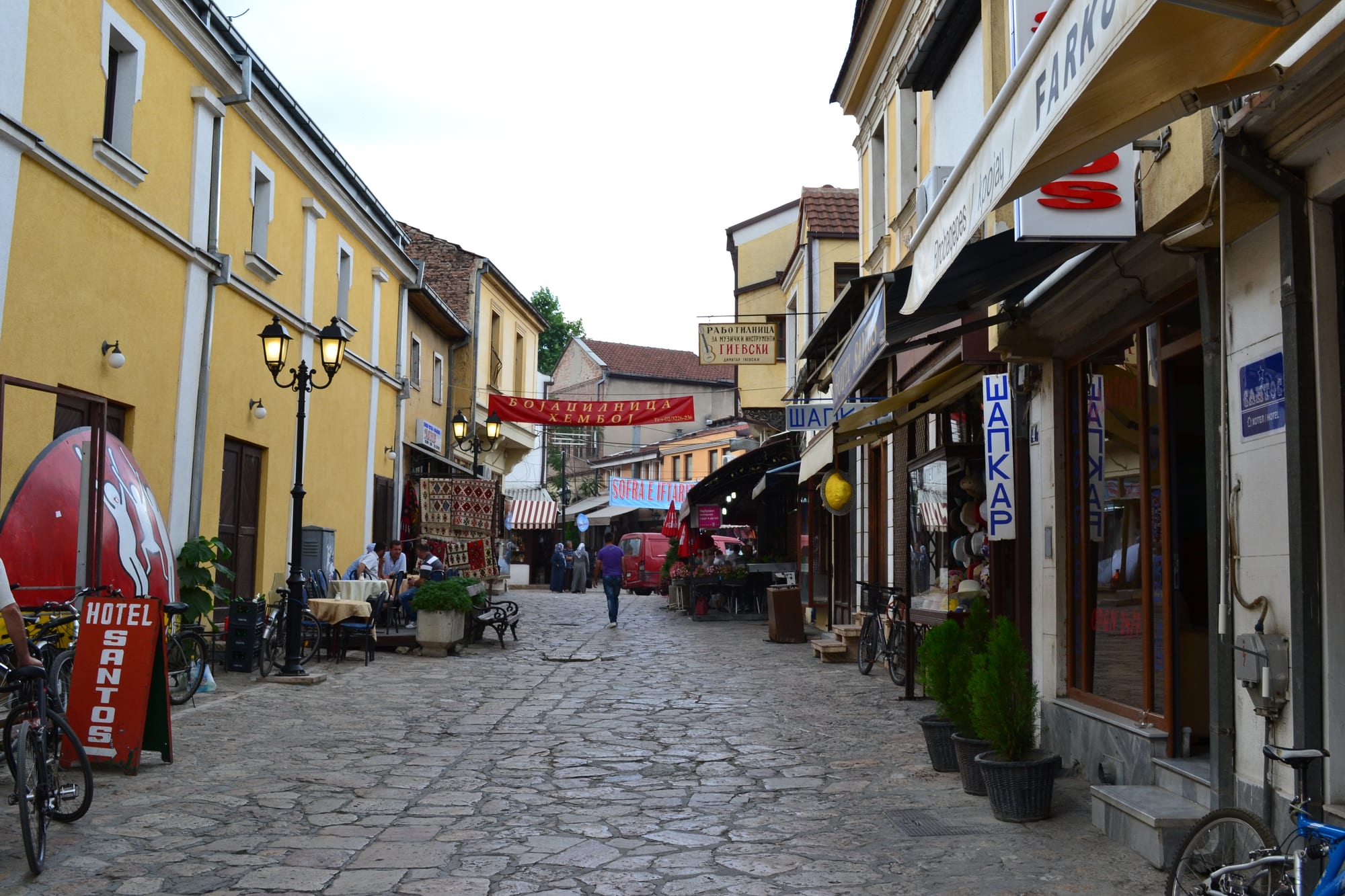
Skopje is a city of two main communities: Macedonians, mostly Orthodox, live largely south of the Vardar, and Albanians and other Muslims mostly on the north bank and in the Old Bazaar. Both languages are heard, and the Stone Bridge is where the two halves meet. Coffee is taken slowly and hospitality is generous.
Dress modestly in churches and mosques and remove shoes in mosques; avoid raising the name dispute or ethnic politics in casual conversation.
💳 Common Payment Methods
The currency is the Macedonian denar (MKD). Train tickets cannot be bought by credit card, though there are plenty of ATMs around the railway and bus station.