💰 Budget
Ramallah is the most expensive city in the West Bank — it has the international offices and the salaries that go with them — but is still cheap by European or Israeli standards. Shared servees taxis cost very little, hotels are moderate, and the cost of an evening depends entirely on whether it involves alcohol, which is heavily taxed.
- Daily Budget Midrange
- USD 110–220 (mid-range hotel, restaurant meals, a private driver or guide for the day)
- Daily Budget Shoestring
- USD 45–85 (budget hotel or hostel, falafel and market food, servees taxis)
Servees taxis from the ranks around al-Manara reach every other West Bank town for a fraction of a private car, and most of the city's cultural centres are free to enter.
📅 Best Time to Visit
Spring, from March to May, and autumn, from September to November, are mildest in these hills. Summer is hot and dry but tempered by altitude and evening breezes; winter is cool and wet, with occasional snow that closes roads. The security and political situation matters more than the season, and travel is not advised during periods of escalation.
⏳ Suggested Number of Days
A day covers the centre, the memorials and a cultural centre or two; a second allows the museums north of the city and time in the cafés. Three or four days suit anyone adding the surrounding villages or using Ramallah as a base for the northern West Bank. Closures can make any plan longer.
- First Visit
- 1–2 days
- With Surroundings
- 3–4 days
🚆 Transportation
Shared servees taxis and minibuses are the backbone: they leave from ranks near al-Manara when full, serving Jerusalem via Qalandia, Nablus, Bethlehem, Jericho and the villages. Yellow taxis are cheap within the city and fares are usually negotiated. There is no rail, no tram and no airport. Traffic in the centre is dense and parking is scarce.
Israeli-plated hire cars can enter the city, but Palestinian-plated cars cannot cross into Israel, and crossing at Qalandia can take hours at busy times.
🛬 Airport & Station Connections
Visitors arrive through Israel, usually at Ben Gurion Airport about 50 kilometres west, or from Jordan over the Allenby / King Hussein Bridge, roughly 60 kilometres east, and Israeli immigration governs entry. From Jerusalem it is about 10 kilometres north — under an hour by bus or servees through the Qalandia crossing when it is clear, and considerably longer when it is not. There is no functioning airport in the West Bank.
🚶 Walkability
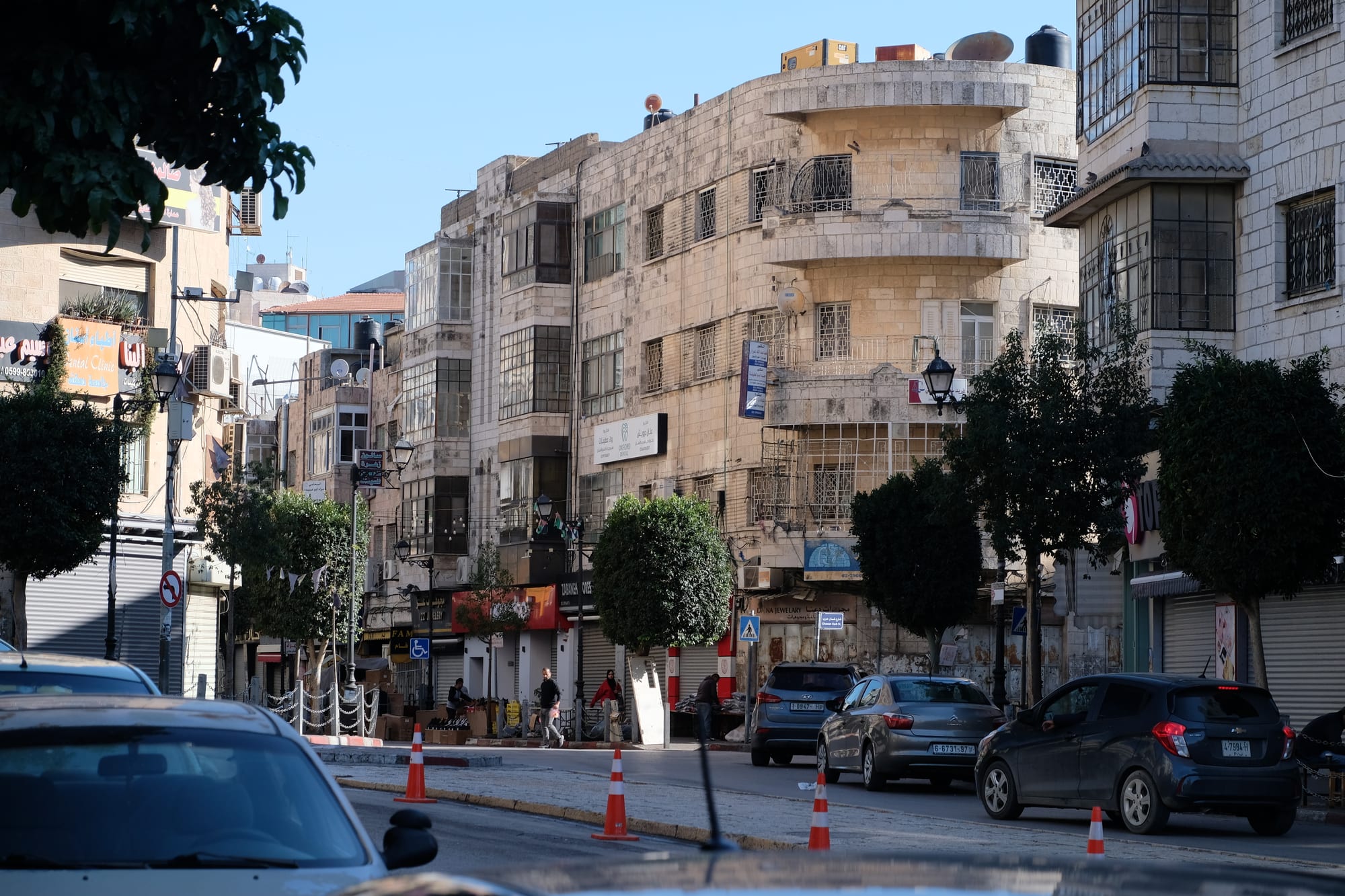
The centre is compact and walkable: al-Manara, the market, Rukab Street and the older lanes are within ten or fifteen minutes of each other. The city is built on hills, so the climb to al-Masyoun or al-Tireh is steep, pavements are uneven and traffic is heavy at the main junctions. Most people walk the centre and take a taxi for everything else.
🛡️ Safety
Ramallah is one of the West Bank towns more routinely visited, and ordinary crime is low, but governments advise against all or non-essential travel to much of the territory. Risks include military operations and raids, tear gas and live fire at protests and checkpoints, settler violence in the surrounding countryside, arbitrary detention, and closures that can strand travellers. Since 28 February 2026 the wider war between the United States and Israel on one side and Iran and its allies on the other has disrupted aviation and tourism across the region, West Bank roads have been blocked, and settler violence against Palestinians has increased under the movement curbs. Conditions change fast.
Official advisories should be checked immediately before any trip; all demonstrations, checkpoints under tension, refugee camps and the vicinity of settlements are to be avoided, a reputable local guide is worth having, passports and permits should be carried at all times, and travel during periods of escalation is not advised at all. Check current official travel advice before travelling.
🌦️ Climate
A Mediterranean hill climate at about 870 metres, one of the coolest places in the territory. Rain falls between November and March and the summer is rainless; nights are cool even in August.
- Summer
- warm and dry — daytime highs usually around 28–30°C, with cool evenings
- Winter
- cool and wet — daytime highs around 11–13°C, with rain, wind and occasional snow
🤝 Local Customs
Ramallah is the most liberal city in the West Bank, with bars, mixed cafés and a visible arts scene, but it sits beside the more conservative town of al-Bireh and modest dress remains the norm — covered shoulders and knees, and a headscarf for women entering a mosque. Hospitality is pressing: coffee and tea are offered constantly and accepting is polite. Greetings are long, and Arabic phrases are welcomed.
Ask before photographing people, never photograph soldiers, checkpoints or military installations, tip around 10 per cent in restaurants, and treat political conversation as something to listen to rather than to join.
💳 Common Payment Methods
The Israeli new shekel is the everyday currency, with Jordanian dinars and US dollars accepted for larger sums and rent. Cards work in hotels, restaurants and larger shops in the centre; the market, taxis and the villages are cash. ATMs are common around al-Manara and along the main streets.