History
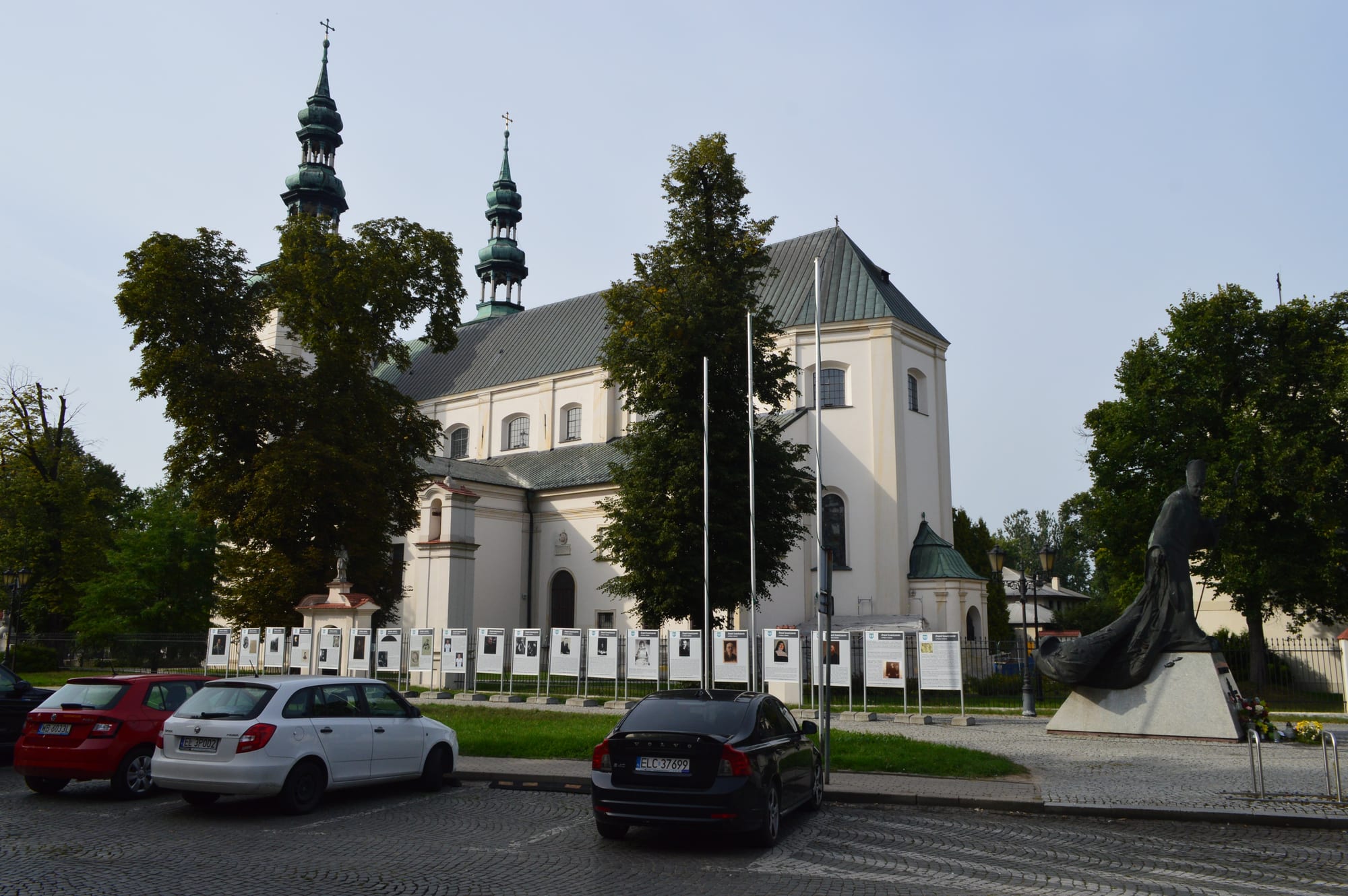
Łowicz began as a gord guarding a ford over the swampy Bzura, first mentioned in a papal bull of 1136. Early in the 13th century the Piast dukes confirmed its ownership by the archbishops of Gniezno, and it stayed theirs for six centuries: in 1355 Archbishop Jarosław built a brick Gothic castle on the site of the gord, in 1358 he granted Magdeburg rights to a new town, and by the mid-14th century Łowicz and 111 villages formed the largest church estate in Poland. In 1433 its church became a collegiate church, the future cathedral.
As the residence of the primates of Poland, who acted as regents between the death of a king and the election of the next, Łowicz served from 1572 as a kind of second capital during each interregnum. The Swedish invasion of 1655–60 ended its prosperity, though one of the first Piarist colleges in the Commonwealth opened here in 1668, and the road between Warsaw and Dresden carried the Saxon kings through the town. After the Partitions the archbishops' estates were given in 1820 to Grand Duke Constantine of Russia and his wife Joanna Grudzińska, made Duchess of Łowicz; the young Chopin visited in 1826. Railways arrived in 1848, and a second line in 1866 made the town a junction.
In September 1939 Łowicz lay at the centre of the Battle of the Bzura, the largest battle of the German invasion; air raids killed hundreds of civilians and damaged the cathedral. The Germans set up a ghetto in 1940 and in March 1941 deported all its 8,000 or more inhabitants to the Warsaw Ghetto. Today the town is a prominent site of food production.