History
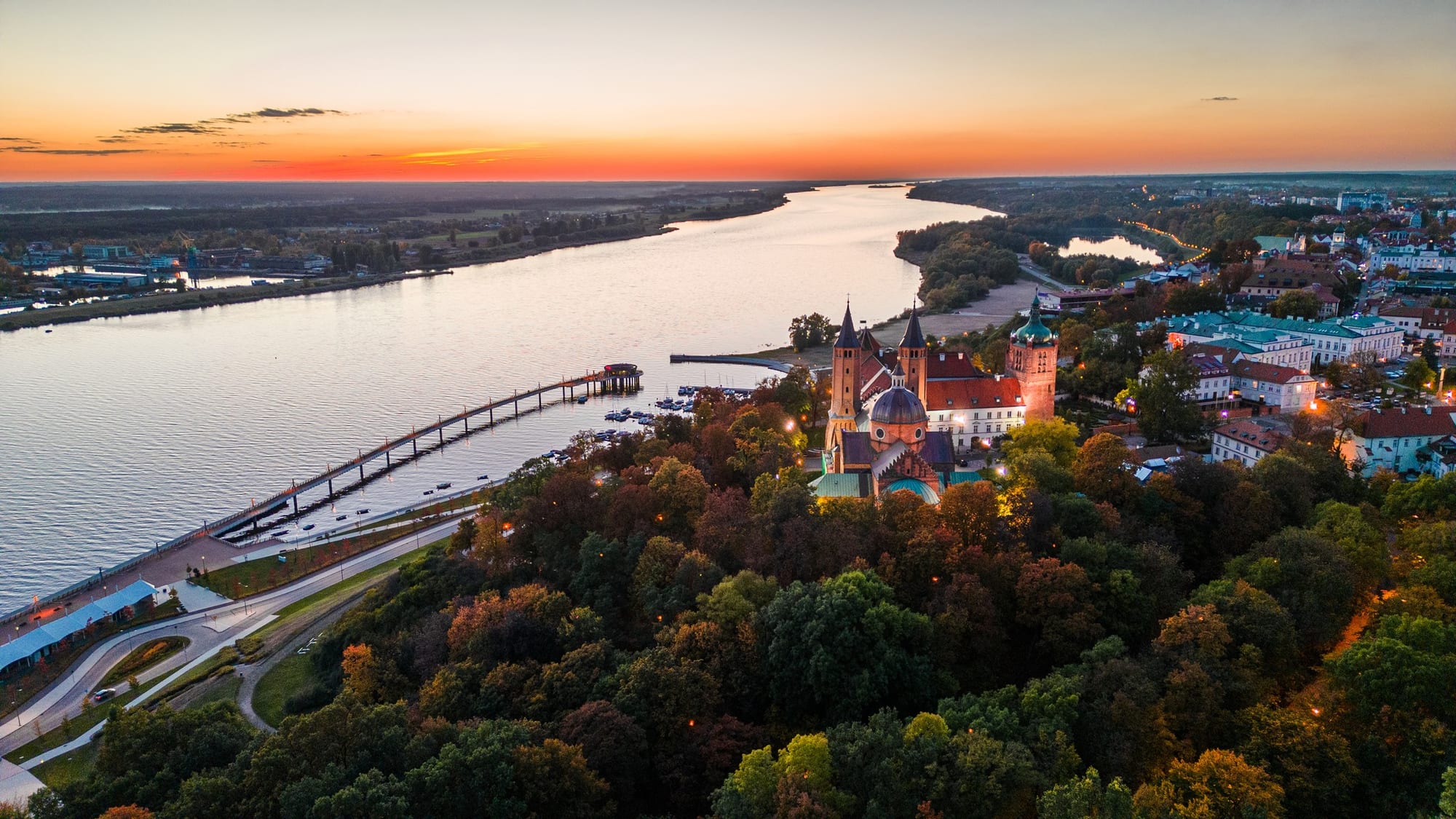
A stronghold rose on the high bank of the Vistula in the 10th century, and under the first Piast rulers, even before Poland's baptism, Płock served as one of their seats. From 1037 to 1047 it was the capital of Miecław's breakaway Mazovian state, and from 1079 to 1138, under Władysław I Herman and Bolesław III Wrymouth, it was the capital of Poland — the origin of its official title, the Ducal Capital City of Płock. When the kingdom split into duchies after 1138, it became the capital of Mazovia, and its bishopric, founded in the 11th century, is one of the oldest in the country.
The city prospered on a trade route linking Toruń with Warsaw and Lublin, and the 16th century was its golden age, before plague, fire and the Swedish wars of the late 17th and early 18th centuries brought decline. Jews had settled here from the 14th century, and in the early 19th century they made up close to half of the old town's population. Płock became the capital of a department of Napoleon's Duchy of Warsaw in 1807, and in 1831 the last Sejm of Congress Poland met in its Town Hall.
The German occupation brought a ghetto in 1940 and the deportation of the Jewish community, of whom only a few hundred survived; museum and cathedral collections were looted. After the war the building of the country's largest oil refinery transformed the city, and from 1975 to 1998 it was the capital of its own province. Its population peaked at about 131,000 in 1998.