💰 Budget
Porto is cheaper than Lisbon but has become noticeably more expensive with the tourism boom, above all for central rooms in summer and during São João. Eating remains good value away from the Ribeira quays, where set lunches in tascas cost far less than riverside dinners. Port tastings, river cruises and day trips to the Douro are the main extra costs.
- Daily Budget Midrange
- USD 140–260 (central hotel, restaurant dinners, museum tickets, a port-cellar tasting)
- Daily Budget Shoestring
- USD 55–95 (hostel bed, prato do dia lunches and francesinhas, metro and buses)
Eat the set lunch of the day, walk rather than ride in the compact centre, and book rooms well ahead for the São João week in June.
📅 Best Time to Visit
May, June and September are the most comfortable months, warm and mostly dry. São João in late June is the city's biggest night and fills every room. July and August are rarely very hot here, though the city is at its busiest. Winter is mild but rainy, quiet and cheaper, good for museums and cafés.
⏳ Suggested Number of Days
Two or three days cover the old town, the river and the Gaia cellars at an easy pace. Four to six days allow for the coast and for day trips up the Douro Valley or to Braga and Guimarães by train. The steep streets make the centre slower going than its size suggests.
- First Visit
- 2–3 days
- With Surroundings
- 4–6 days
🚆 Transportation
The Porto Metro, a light rail network of six lines and about 70 km, is the backbone of the city and its suburbs; the lines meet at Trindade, and line D crosses the top deck of the Dom Luís I Bridge to Gaia. STCP buses cover the rest of the city, a bus rapid transit line run by the metro has operated since February 2026, and three vintage tram lines survive, one along the river to Foz. The Guindais funicular links the riverside with Batalha.
Contactless bank cards work at the airport and major central metro stations; the old trams are a heritage service rather than everyday transport.
🛬 Airport & Station Connections
Francisco Sá Carneiro Airport, the second busiest in Portugal, lies about 15 km north-west of the city centre and is linked to the centre by metro line E. Campanhã is the main railway station, with Alfa Pendular trains to Lisbon in under three hours and lines to the Douro, the Minho and Vigo in Spain; São Bento in the centre handles suburban and regional trains.
🚶 Walkability
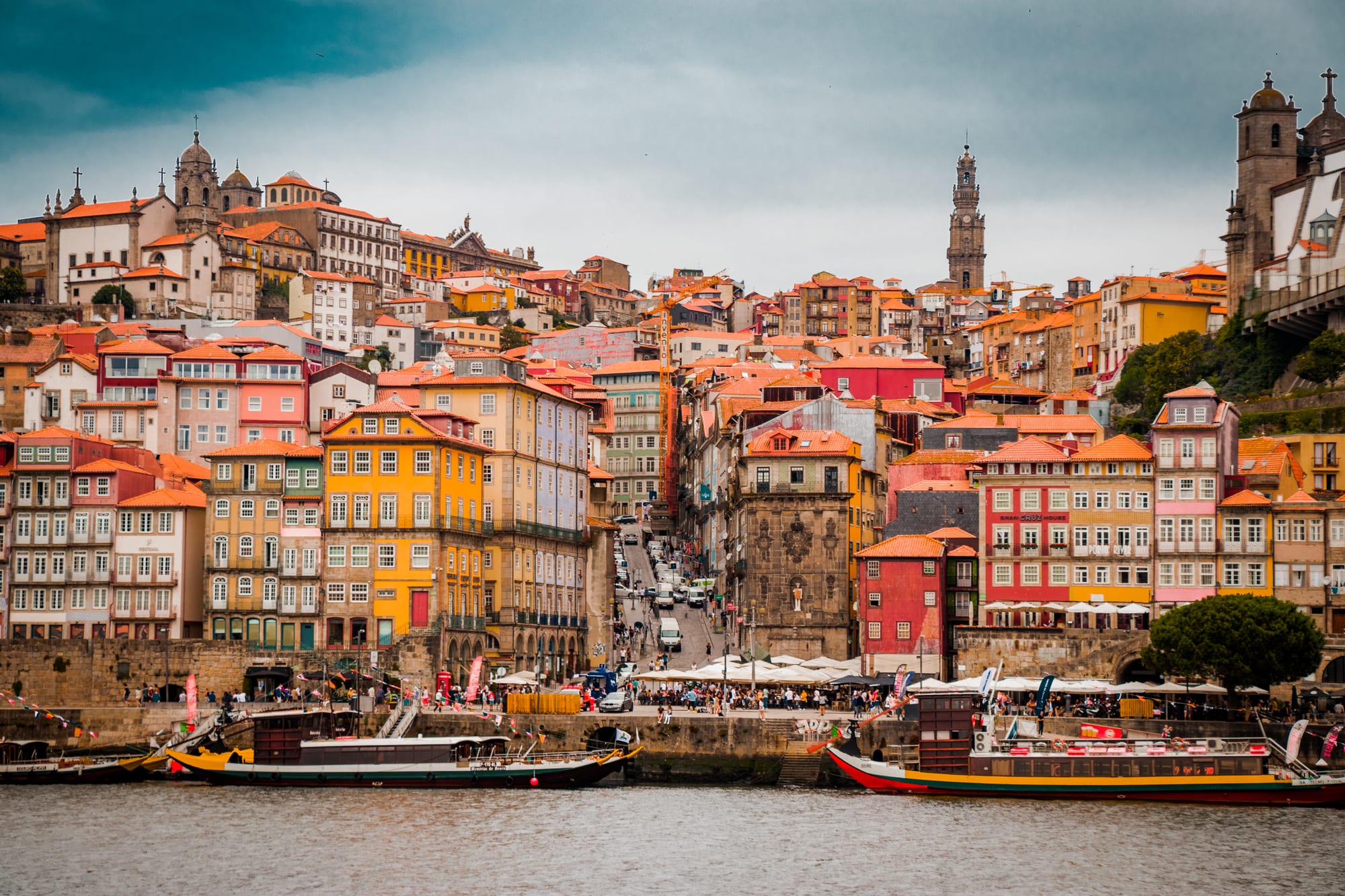
The historic centre is compact and best seen on foot, but it is built on steep hills: stairways and lanes drop sharply from the cathedral and Baixa to the river, and cobbles can be slippery in the rain. The funicular and the lift at the Ribeira save some climbs. Walking across either deck of the Dom Luís I Bridge to Gaia is part of most visits; Boavista and Foz are better reached by metro, bus or tram.
🛡️ Safety
Portugal is one of the safest countries in Europe, with low violent crime. Porto is calm by big-city standards. Pickpockets work crowded places — the Ribeira, São Bento, the trams, buses and trains — and the crowds on the night of São João call for extra care with phones and wallets.
Keep bags closed and in front in crowds and on public transport, and take care on steep, wet cobbles. Check current official travel advice before travelling.
🌦️ Climate
A warm-summer Mediterranean climate tempered by the Atlantic. Summers are mild and sunny; rain is heavy and falls mostly in winter, making Porto one of the wettest major cities in Europe, though sunny spells are common even in the rainiest months. The beaches are often windier and cooler than the city.
- Summer
- warm and sunny — temperatures typically between 16 and 26°C, occasionally up to 30°C in heatwaves
- Winter
- mild and damp — around 5–6°C in the morning and 14–15°C in the afternoon, seldom below freezing
🤝 Local Customs
Tipping is not generally expected; leaving a euro or two after a full meal is appreciated, and nothing is added for a coffee or a pastry. People of the city call themselves tripeiros with pride, and loyalty to FC Porto runs deep.
Dress modestly and keep quiet inside churches, which are working places of worship.
💳 Common Payment Methods
Portugal uses the euro. Cards and contactless payment are accepted almost everywhere, and Multibanco cash machines are common and usually charge no extra fee of their own. Keep a little cash for small tascas, market stalls and some buses.