💰 Budget
Băile Herculane ranges from tired state-era hotels to newer spa hotels and simple riverside guesthouses, and the river pools are free. Spa treatments and a hire car for the gorges are the main extra costs.
- Daily Budget Midrange
- USD 85–170 (renovated spa hotel with pools, treatments, restaurant meals, a hire car for the mountains)
- Daily Budget Shoestring
- USD 35–55 (guesthouse room, simple meals, free river pools, the town minibus)
Carry cash for the historic centre, which has no ATMs; cash machines are in the hotel zone and the southern part of town.
📅 Best Time to Visit
Late spring to early autumn suits walking in the national park and trips to the gorges, with summer the busiest season. The open-air thermal pools are at their best in cooler weather, when steam rises off the water, and the spa hotels work all year.
⏳ Suggested Number of Days
Two days cover the old resort, the pools and a short trail. Four or five allow time for longer hikes and the Nera gorges and Bigăr, which are a long drive away; a car makes a big difference.
- First Visit
- 2 days
- With Surroundings
- 4–5 days
🚆 Transportation
The town is long and narrow: walking from the railway station to the northern end takes over an hour, though each of its three parts is easy on foot. A municipal minibus runs roughly hourly from the station to Hercules Square. The gorges and waterfalls further out are best reached by car.
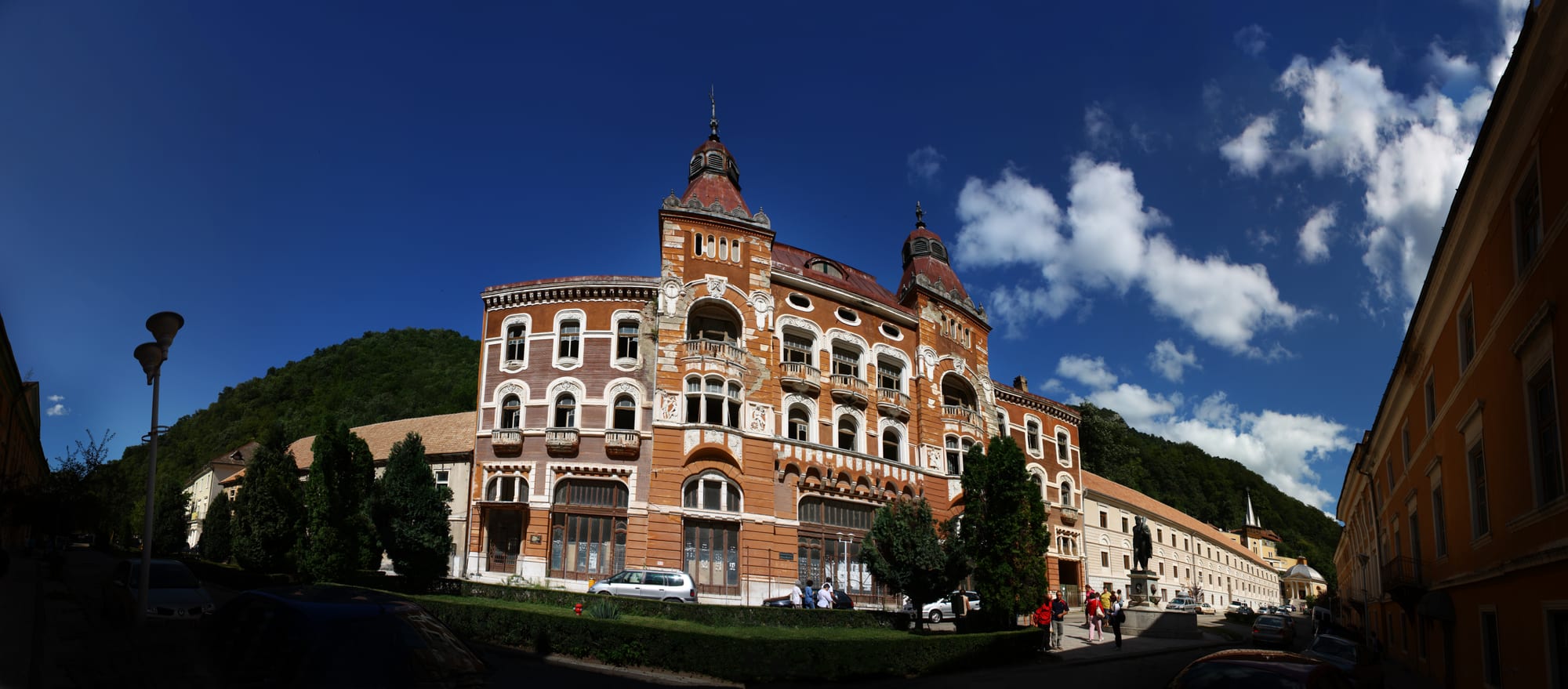
Keep to marked paths on the trails, avoid the river after storms, and stay out of the ruined bathhouses.
🛬 Airport & Station Connections
The town has its own station on the main railway between Timișoara and Bucharest. By road it lies about 5 km off the DN6/E70 between western Romania and Bucharest. Drobeta-Turnu Severin is the nearest sizeable town, and Timișoara and Craiova have the nearest airports with regular flights.
🚶 Walkability
Each part of the town — the station area, the hotel zone and the historic centre — is compact and walkable, linked by a single road along the river. The forest trails start right above the town.
🛡️ Safety
Romania is a safe country with low violent crime. In the mountains around the town the risks are flash floods after heavy rain, slippery limestone paths, snakes on warm rocks, and poor mobile coverage. Parts of the historic bathhouses are derelict and unsafe to enter.
Stay out of the ruined bathhouses, keep to marked trails, take care on warm rocks where snakes bask, and avoid riverside pools when the Cerna is high. Check current official travel advice before travelling.
🌦️ Climate
A sheltered mountain-valley climate with sub-Mediterranean influences. Summers in the valley are warm and humid; in nearby Drobeta-Turnu Severin, on the Danube, summers are warm and winters mild.
- Summer
- warm and humid — in nearby Caransebeș summer averages are about 20–24°C
- Winter
- cold — in Timișoara, on the Banat plain to the north-west, January averages about 1°C
🤝 Local Customs
Most residents are Romanian and Orthodox. The river pools are informal and popular with local people: ordinary swimwear and a towel are all that is needed. A tip of 5–10 per cent is expected in restaurants and cafés.
Dress modestly in churches and respect the quiet of treatment areas in the spa hotels.
💳 Common Payment Methods
The currency is the Romanian leu (RON). Larger hotels accept cards, and there are ATMs from BCR, BRD, Raiffeisen and UniCredit in the hotel zone, the southern part of town and inside some hotels, but none in the old centre; carry cash for stands, guesthouses and fruit sellers.