💰 Budget
Krasnoyarsk is mid-priced for Siberia and cheaper than Moscow. Foreign bank cards do not work, so the whole stay has to be paid from cash brought into the country and exchanged for roubles.
- Daily Budget Midrange
- USD 85–170 (mid-range hotel, restaurants, museums, a ski pass or a guided trip to Stolby)
- Daily Budget Shoestring
- USD 30–60 (hostel bed, canteens, buses and trams)
The embankment, Karaulnaya Hill and the trails of Stolby cost nothing; the chairlift and the zoo are the main paid extras.
📅 Best Time to Visit
June to September for walking and climbing among the pillars of Stolby and for the June festivals; winter for skiing at Bobrovy Log. Timing matters less than the national picture: most governments advise against all travel to Russia.
⏳ Suggested Number of Days
Two days cover the historic centre, the embankment and the hilltop chapel. Allow three or four to spend a full day in the national park and to visit the dam upstream; a river cruise north takes one to two weeks.
- First Visit
- 2 days
- With Surroundings
- 3–4 days
🚆 Transportation
Buses dominate public transport, with several trolleybus and tram routes. A three-line metro was planned for decades and its construction stopped in 2008; in 2021 the tunnels were assigned to a light rail system, and building resumed in 2023. Buses run to the main entrances of Stolby and to the zoo.
Carry passport, visa and migration card at all times, and agree taxi fares in advance.
🛬 Airport & Station Connections
Krasnoyarsk International Airport is 27 km north-west of the city, with domestic flights and some to China and Central Asia. Trans-Siberian trains stop at Krasnoyarsk-Passazhirsky station: about 12 hours from Novosibirsk, 18 from Irkutsk and 61 from Moscow. In summer, cruises of one to two weeks run north along the Yenisei to its mouth.
🚶 Walkability
The historic centre on the peninsula between the Kacha and the Yenisei is easy to walk, with Mira Avenue, the embankment and the museums close together; the climb to the chapel on Karaulnaya Hill is steep. The city as a whole sprawls across both banks, so the national park, the zoo and the ski area need a bus or taxi.
🛡️ Safety
Far from the front line, but the national risks apply in full: arbitrary detention of foreigners on political charges, wartime censorship laws and near-total loss of consular support. In Krasnoyarsk, pickpockets work the large markets and the railway station, and on still days emissions from the aluminium smelter and power stations can leave black smog over the city. Ticks carrying encephalitis are a risk in the Siberian forest.
Most governments advise against all travel to Russia and against any travel near the Ukrainian border. Take tick precautions in the forest, climb the pillars only with experienced local guides, and do not photograph the dam, bridges or industrial sites. Check current official travel advice before travelling.
🌦️ Climate
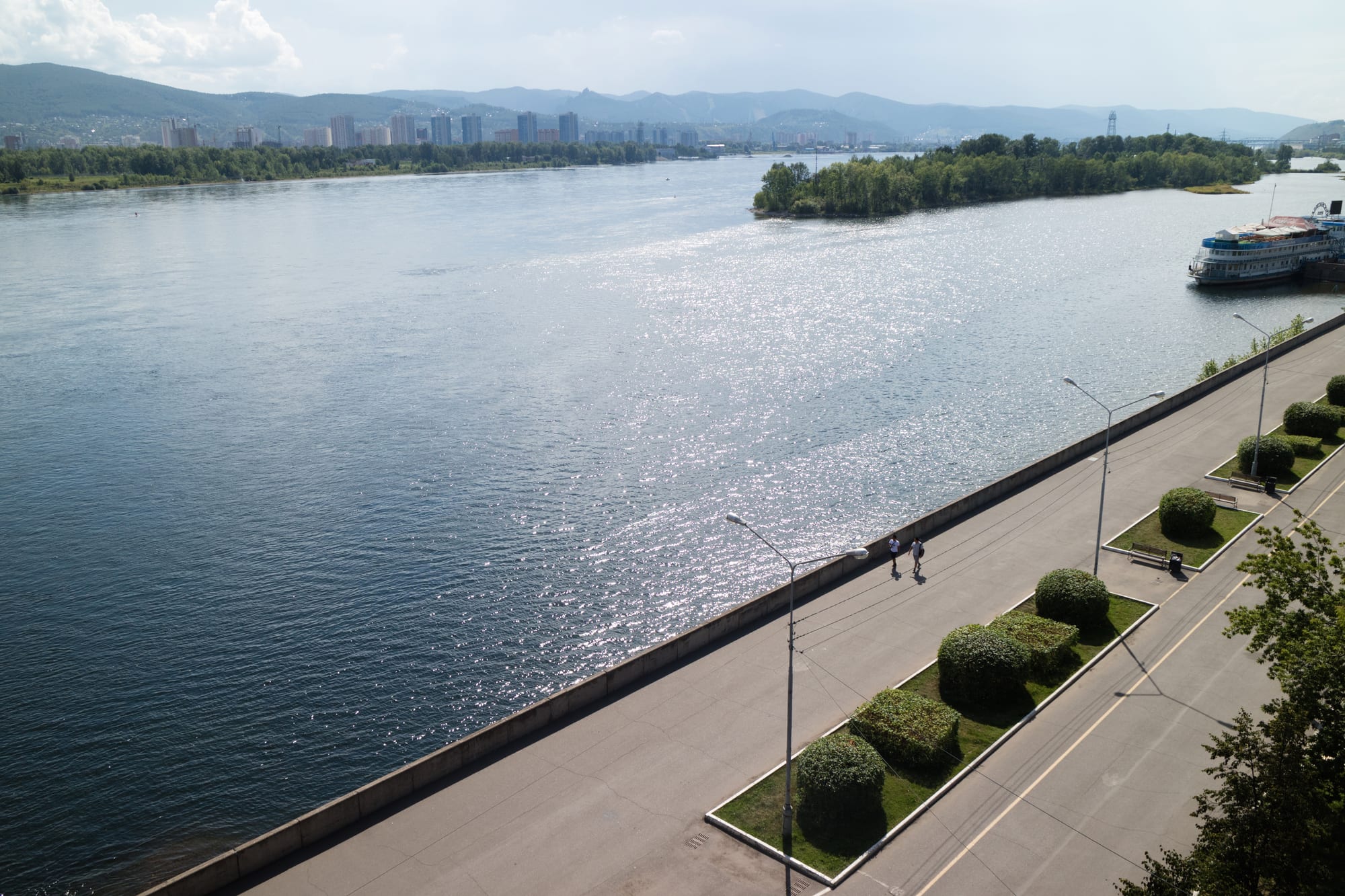
Humid continental, with large differences between summer and winter: summers warmer than in European cities at the same latitude, winters much colder and longer. Because of the dam upstream, the Yenisei never freezes as it passes through the city.
- Summer
- warm — July averages about 18.9°C
- Winter
- cold — January averages about −16.7°C
🤝 Local Customs
Krasnoyarsk takes pride in its landscape and its sport: bandy and rugby draw crowds, and many local climbers on the pillars practise 'stolbizm', climbing without ropes. Most people are Russian, with large Central Asian and Chinese communities. Tipping is not necessary but expected in restaurants; more than 10 per cent would be unusual.
Cover shoulders and knees in churches, where women usually cover their hair, and ask before photographing people.
💳 Common Payment Methods
The currency is the rouble (RUB). Western and Japanese credit and debit cards — Visa, Mastercard, American Express and JCB — do not work in Russia, and most foreign cards cannot be used at Russian ATMs; some shops serving many foreigners accept UnionPay. Bring enough cash for the whole stay and exchange it at banks.