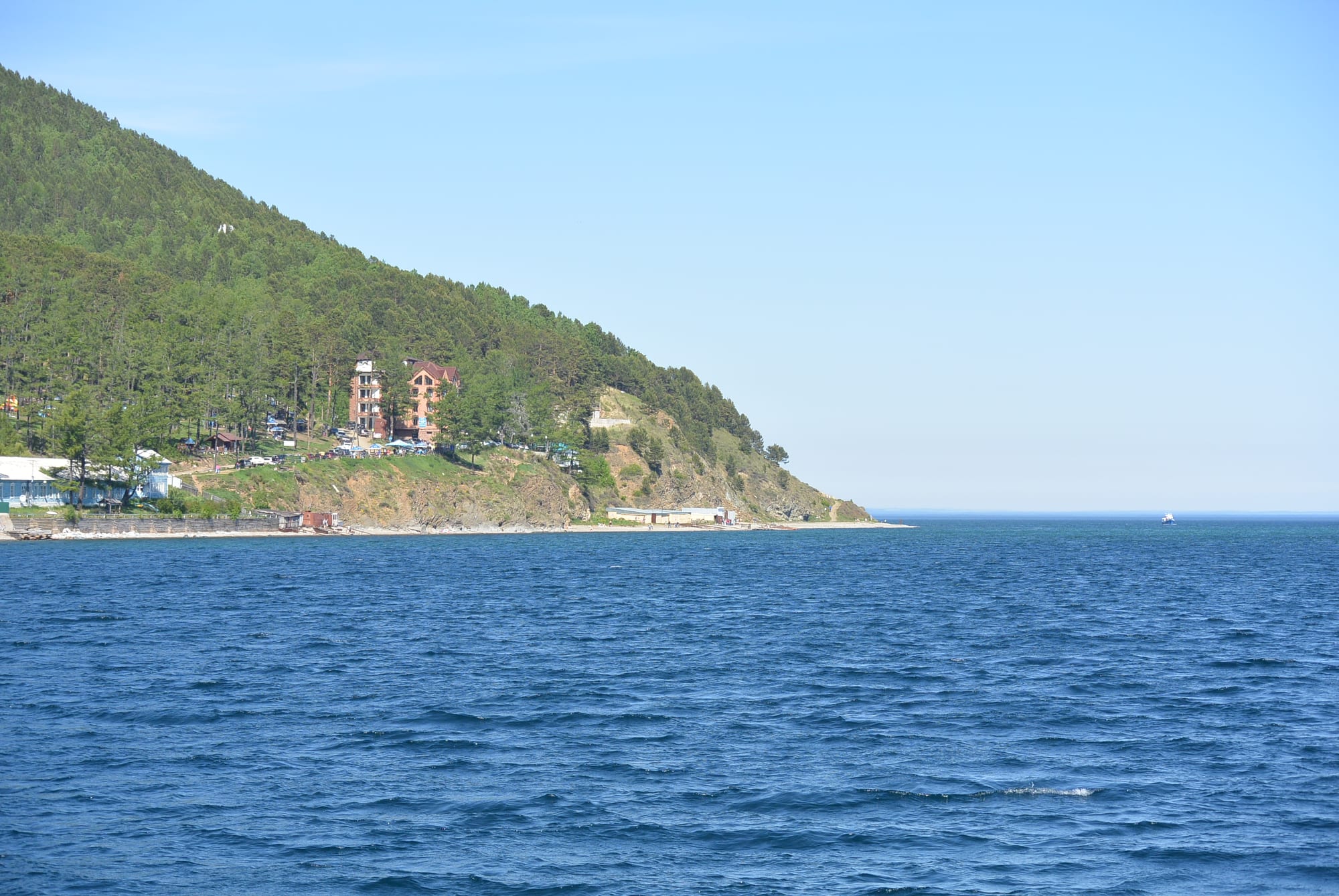
Deep blue lake water in front of a forested headland, with houses and a tall red-roofed building along the shore under a clear sky

Siberia, Russia

Listvyanka

The shore of Lake Baikal near Listvyanka. (Thomas D. Fischer / Wikimedia Commons · CC BY-SA 4.0)

A village of about 1,900 people on the shore of Lake Baikal where the Angara River leaves it, about 70 km from Irkutsk. A port and shipyard grew up here in the late 19th century, then a lake research institute; since the fall of communism it has grown into a tourist resort, known for smoked omul and boat trips. This page is written to explain the village, not to encourage travel.

Neighbourhoods

  • Krestovka
    • Museums
    • Quieter stays

    The first two and a half kilometres of the village along the road from Irkutsk, where the Angara leaves the lake. Many of the guesthouses and most of the museums are here.

    Open in Maps
  • The centre and the port
    • First-time visitors
    • Best for food
    • Boat trips

    The middle of the village, with the market, the boat piers, cafés and the marshrutka stop. Tour boats and private craft now use the old port, and it is the busiest and most crowded part of Listvyanka in summer.

    Open in Maps
  • The far end and the trailhead
    • Hiking
    • Views

    Beyond the centre the road follows the shore to its end at a solar telescope, where the Great Baikal Trail sets off along the lake towards Bolshiye Koty, about 20 km to the north.

    Open in Maps

Things to do

Museums and sights

  • Baikal Museummuseum

    A natural history museum of the Russian Academy of Sciences, in the former limnological institute, explaining how the lake formed and its endemic life, with aquariums of Baikal fish and seals and an arboretum of about 400 plant species.

    Open in Maps
  • Church of St Nicholaslandmark

    A 19th-century wooden church, described as the oldest building around the lake, much altered; only its round windows hint at the original classicist design.

    Open in Maps
  • Nerpinaryattraction

    One of only two places with performing Baikal seals, or nerpa — the freshwater seal found only in this lake — the other being in Irkutsk.

    Open in Maps
  • Shaman Stonelandmark

    The tip of a rock in the middle of the Angara at its source, lower since the dam raised the water level; legend says Baikal threw it after his daughter Angara when she fled to the Yenisei.

    Open in Maps

Viewpoints and walks

  • Chersky Stoneviewpoint

    A viewpoint about 270 metres above the lake, reached on foot or by a ski-resort chairlift, with wide views over the lake and the surrounding mountains.

    Open in Maps
  • Great Baikal Trailtrail

    A footpath along the shore from the end of the road towards Bolshiye Koty, inside Pribaikalsky National Park, which covers the south-western coast of the lake; hikers need a park permit.

    Open in Maps

Markets and boats

  • Listvyanka marketmarket

    The village market, selling smoked fish and souvenirs, with food stands.

    Open in Maps
  • Circum-Baikal Railwayattraction

    The historic railway along the southern shore of the lake, reached by ferry across the river mouth to Port Baikal; its tracks can be followed on foot or by excursion train to Slyudyanka.

    Open in Maps

Short trips from the village

  • Taltsy Museummuseum

    The largest museum of wooden architecture in Eastern Siberia, 25 km up the Angara towards Irkutsk, with village houses, a water mill and the Kazan chapel from the old fort of Ilimsk, one of Siberia's oldest buildings.

    Open in Maps

Eat and drink

Long-standing places and food districts in Listvyanka. Hours, ratings and directions come from your maps app, always current.

Listvyanka classics

  • Smoked omulmarket

    Omul, a whitefish found only in Lake Baikal and regarded as a delicacy, is the village's signature, sold smoked at the market alongside hot-smoked kharius (grayling); because omul fishing has been restricted, other fish is sometimes sold in its place.

    Open in Maps
  • Sagudairestaurant

    A starter of lightly salted, frozen raw fish with lemon, onion and spices, on the menus of many of the village's cafés and restaurants.

    Open in Maps

Food streets

  • Gorkovo Streetneighborhood

    The road along the shore that forms the village's main street, lined with cafés and restaurants serving fish, shashlik and pies, many with views over the lake.

    Open in Maps

Experience Listvyanka

History

Listvyanka sits where the Angara River leaves Lake Baikal, and the village was mentioned in 1726 in the diary of a tsarist embassy travelling to China. Like most of Siberia at the time it was only a tiny settlement, and it remained one until the late 19th century, when a port was established and then a shipyard. From 1900 the first Trans-Siberian Railway passed close by: the stretch from Irkutsk up the Angara and across the lake to Mysovsk was operated by ships, until the railway was built along the cliffs of the southern shore — today's Circum-Baikal Railway — on the opposite bank of the river.

In the Soviet period Listvyanka became a centre of lake science. A limnological station was raised to an institute in 1961, devoted to the history and life of the lake, and in 1993 it became the Baikal Museum. The first simple tourist facilities opened in the same era. The Irkutsk dam, built downstream in the 1950s, raised the level of the Angara here, partly drowning the Shaman Stone.

Since the end of communism the village has turned into a true resort, compared to a small Black Sea resort, crowded in summer with hikers and day visitors from Irkutsk. The port now serves tour boats and private craft rather than cargo ships. About 1,900 people lived here at the 2010 census.

Culture & Customs

Life in Listvyanka revolves around the lake. Baikal is the deepest and oldest lake in the world, 25 to 30 million years old and among the clearest, and a UNESCO World Heritage Site since 1996, and the village lives off the people who come to see it. The legend of the Shaman Stone — Baikal hurling a rock after his daughter Angara, who fled from the groom he had chosen, Irkut, to join the Yenisei — belongs to the rock at the river mouth.

The Baikal Museum keeps the scientific tradition of the old institute alive, with exhibits on the 3,000 endemic species of the lake and on its formation, and the village has a small theatre of authors' songs, where traditional song concerts take place through the year. The wooden Church of St Nicholas, from the 19th century, is the oldest building around the lake.

Winter has its own culture. The lake freezes over in January, and when the ice is thick enough there are trips by snowmobile, all-terrain vehicle, dog sled and hovercraft; the ice can be bluish or transparent. A small ski area on the hill above the village serves downhill skiers in winter and, by chairlift, walkers heading to the Chersky Stone viewpoint in summer.

Daily Life

About 1,900 people lived in Listvyanka at the 2010 census, and around 2,150 were registered in 2025. It is an urban-type settlement of Irkutsky District, strung out for about 4 km along the road that follows the left bank of the Angara to its source and then the shore of the lake.

Tourism is the economy. Guesthouses, hotels, cafés, the market, boat operators, a diving centre, a dog-sled kennel and rental agencies line the road, and many tour operators are based in Irkutsk, and the village fills up at weekends and in high summer. Fishing for omul, once a mainstay of the lake, has been restricted. The Baikal Museum and the solar telescope at the end of the road are reminders of the scientific institutions that have worked here since Soviet times.

Winters are long but milder than in Irkutsk, and the rhythm of the year is set by the ice, which covers the lake from about January to May, and by the short summer season of boats, hikers and crowds.

Food

Smoked fish is Listvyanka's signature, sold at the market, and fish of all kinds features prominently on the menus of the village's restaurants and cafés, smoked omul above all. Omul, a whitefish of the salmon family found only in Lake Baikal, is a delicacy and the object of one of the lake's largest fisheries; with its catch restricted, other fish is sometimes served when omul is ordered. Hot-smoked kharius (Arctic grayling) is also sold in the village.

Fish is also eaten raw. Sagudai is a starter of lightly salted, frozen fish with lemon, onion and spices, and around Baikal the shavings of frozen raw whitefish known elsewhere in Siberia as stroganina are called raskolotka. Cafés along the shore road also serve shashlik and kebabs, and good pies.

The market has food stands alongside its fish and souvenir stalls, and the cafés strung along the shore road range from simple places for fish and pies to restaurants with views over the water. To drink there is kvass, a cloudy, sweet-and-sour, low-alcohol drink fermented from rye bread, and mors, made from lingonberries or cranberries.

Planning tools

Budget

Prices are higher than in Irkutsk, and the market charges more than most Siberian markets. Boat tours, dog-sled and snowmobile trips and dives add most to the bill. Foreign bank cards do not work, so bring all the roubles needed from Irkutsk.

Daily Budget Midrange
USD 85–170 (lakeside hotel, restaurants, museum tickets, a boat trip)
Daily Budget Shoestring
USD 30–60 (guesthouse bed, smoked fish and pies, marshrutka from Irkutsk)

Walking the shore, the trail and the viewpoints costs nothing beyond the national park permit.

Best Time to Visit

June to September for boats and hiking; summer is crowded, while September is still pleasant and quieter. The lake freezes in early or late January, and February and March are the months to see the frozen lake. Timing matters less than the national picture: most governments advise against all travel to Russia.

Suggested Number of Days

Many visitors come as a day trip from Irkutsk, but a night or two allows time on the water and on the trail. Three or four days are needed to add longer hikes, the railway along the southern shore or boat journeys up the lake.

First Visit
1–2 days
With Surroundings
3–4 days

Transportation

The village stretches for about 4 km along the river and lake, which is walkable, and marshrutkas from Irkutsk also run through it. Boats and ferries cross the river mouth to Port Baikal and run along the shore, and tour operators along the road rent bikes, all-terrain vehicles and snowmobiles.

Carry passport, visa and migration card, and buy a national park permit before hiking the Great Baikal Trail.

Airport & Station Connections

Listvyanka lies at the end of the road from Irkutsk, 65 to 70 km away, the nearest major airport and railway station. Marshrutkas run from Irkutsk bus station about every hour; in summer boats also come down the Angara from Irkutsk and from Olkhon Island, and ferries cross from Port Baikal.

Walkability

The whole village can be walked along the shore road, from the source of the Angara to the trailhead at the far end. Parking is limited and paid at the busy end of the village.

Safety

Far from the front line, but the national risks apply in full: arbitrary detention of foreigners on political charges, wartime censorship laws and near-total loss of consular support. In Listvyanka the main local dangers are natural: weak or cracking ice on Baikal in winter, cold water all year, and ticks carrying encephalitis in the surrounding forest.

Most governments advise against all travel to Russia and against any travel near the Ukrainian border. Never go onto the ice without local advice, take tick precautions on forest paths, and do not photograph the dam or military sites. Check current official travel advice before travelling.

Climate

One of the more pleasant climates in Siberia: summers are not very hot, and winters are milder than in Irkutsk. The lake stays cool all year and is covered in ice from about January into May.

Summer
mild — highs around 25°C and lows around 12°C
Winter
cold — temperatures normally drop below −11°C

Local Customs

The Shaman Stone at the river mouth is tied to the legend of Angara's flight from her father. Tipping is not necessary but expected in restaurants; more than 10 per cent would be unusual. Photography of the seals in the nerpinary is allowed only in one pool and for a fee.

Take litter away from the shore and the trail.

Common Payment Methods

The currency is the rouble (RUB). Western and Japanese credit and debit cards — Visa, Mastercard, American Express and JCB — do not work in Russia, and most foreign cards cannot be used at Russian ATMs. Bring enough cash from Irkutsk for the whole stay.