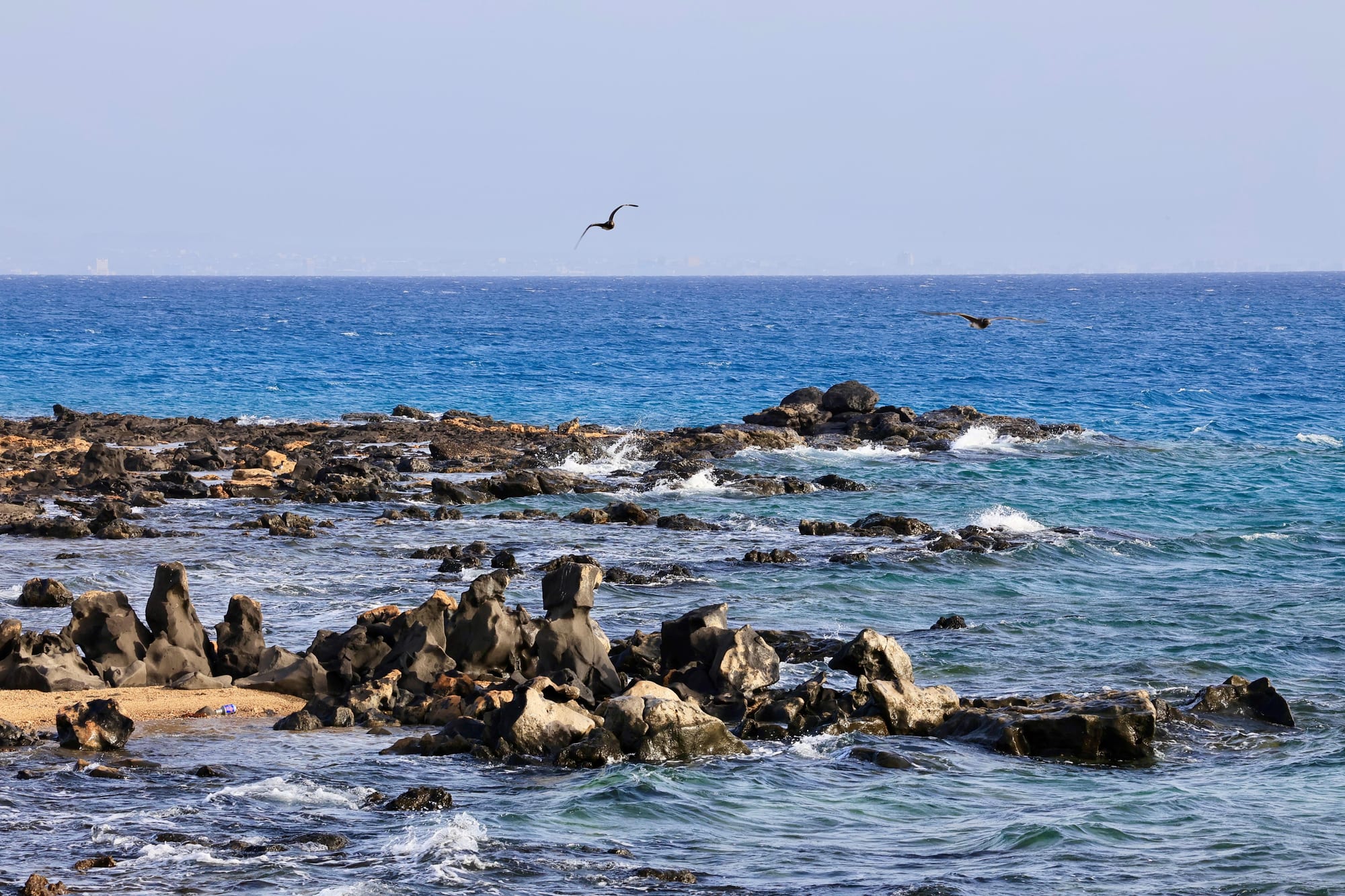
Dark volcanic rocks and pale sand at the edge of a deep blue sea, with surf breaking over a shallow reef and birds overhead

AlUla, Tabuk & the Northwest, Saudi Arabia

Umluj

The volcanic shoreline and shallow reef at Umluj on the Red Sea. (Saudi Press Agency (SPA) / Wikimedia Commons · CC BY-SA 4.0)

A small fishing and port town on the Red Sea coast of Tabuk Province, set between a lava field and a shallow shelf of reefs, sandbars and low islands. Long a quiet harbour supplying the interior, it has become known for its pale beaches and clear water and now sits at the edge of the kingdom's new coastal resort developments. This page is written to explain the town, not to encourage travel.

Neighbourhoods

  • The harbour and old town
    • First-time visitors
    • Local life

    The working core of Umluj, where fishing boats tie up, the catch is landed and sold, and older low buildings and small shops stand a street or two back from the water. It is the part of town with the most to watch.

    Open in Maps
  • The corniche and seafront
    • Evening walks
    • Families

    A landscaped strip along the shore with paths, shelters and grass where families gather after sunset. Cafés and small restaurants face the water, and the sea is calm inside the reef.

    Open in Maps
  • The northern beach road
    • Beaches
    • Quiet

    The coast running north from town, a sequence of sandy bays, black lava outcrops and viewpoints over the islands. Development here is sparse, with camps, chalets and stretches of empty shore.

    Open in Maps
  • The inland residential districts
    • Quiet and residential

    Blocks of low villas and apartment buildings set back from the coast, with neighbourhood mosques, schools and grocery shops. These are ordinary living areas rather than places for visitors.

    Open in Maps

Things to do

Beaches and the coast

  • The town beaches and corniche shorebeach

    Shallow, clear water inside a reef shelf, with stretches of white sand broken by black volcanic rock — the setting that made the town known nationally.

    Open in Maps
  • The offshore islandsattraction

    A scatter of low sand and coral islands a short boat ride out, ringed by pale shallows and visited on day trips arranged through local boat owners.

    Open in Maps
  • The mangrove shallowsattraction

    Stands of mangrove along sheltered parts of the coast that shelter fish and wading birds, best seen from a boat or from the shore at low water.

    Open in Maps

The working town

  • The fishing harbourattraction

    Small wooden and fibreglass boats land reef fish, mackerel and shellfish here, and the quayside is busiest in the early morning and late afternoon.

    Open in Maps
  • The fish marketmarket

    The covered stalls beside the harbour where the day's catch is sold, and where a buyer can have a fish cleaned and grilled nearby.

    Open in Maps

Short trips from the town

  • Harrat Lunayyirattraction

    A volcanic field of black lava and cinder cones inland from the coast, geologically young and the site of an earthquake swarm in 2009.

    Open in Maps
  • Al Wajhattraction

    A coastal town and governorate seat about 145 kilometres up the coast road, with an older quarter above its harbour and the small domestic airport that also serves Umluj.

    Open in Maps

Eat and drink

Long-standing places and food districts in Umluj. Hours, ratings and directions come from your maps app, always current.

Umluj classics

  • Grilled and fried Red Sea fishrestaurant

    Reef fish, emperor and grouper among them, grilled whole over charcoal or fried and served with rice, bread and a hot chilli relish.

    Open in Maps
  • Sayadiyah and rice dishesrestaurant

    Sayadieh, fish cooked with rice, fried onion and spices, a fisherman's dish that began on the eastern Mediterranean coast and is now found in Arab coastal cities generally, alongside the kabsa and mandi served everywhere in the kingdom.

    Open in Maps

Markets and cafés

  • The harbour fish marketmarket

    The simplest meal in town is bought here by the kilo and cooked at one of the grills beside the quay.

    Open in Maps
  • Cafés on the cornichecafe

    Arabic coffee, tea and modern espresso drinks at tables facing the water, busiest after sunset when the heat drops.

    Open in Maps

Experience Umluj

History

Umluj grew where a sheltered anchorage meets a break in the reef, on a coast that has carried traffic between Egypt, the Hejaz and the southern Red Sea for millennia. Small ports along this shore served the pilgrim and trade routes, landing goods for the caravan roads that ran inland towards Medina, and fishing and pearl diving supported the families who settled beside the water. The town's name appears in accounts of the northern Hejaz coast long before the modern state.

Under Ottoman authority the Hejaz coast was administered loosely from Jeddah, with garrisons and customs posts at the larger harbours. During the First World War the region was caught up in the Arab Revolt, when the Red Sea ports of the northern Hejaz changed hands and were supplied from the sea. In the years after, the area became part of the kingdom unified under Ibn Saud, and Umluj settled into the role it kept for most of the 20th century: a modest fishing town and minor port, linked to the interior by desert tracks and later by a paved coastal highway.

Change came late and quickly. Improved roads, electricity and services enlarged the town in the second half of the 20th century, and from the 2010s the government's tourism plans turned attention to this coast. The beaches and islands off Umluj were promoted nationally, the corniche was rebuilt, and large resort projects were begun along the shore to the north and south. The town has found itself on the edge of one of the kingdom's biggest development programmes while remaining, in its daily character, a small fishing port.

Culture & Customs

Umluj is a coastal town in Bedouin country, and both worlds shape it. Families descend from tribes of the northern Hejaz and the desert behind the coast, and tribal courtesy governs social life: long greetings, the serving of Arabic coffee before business, and a strong obligation of hospitality to guests. Seafaring traditions run alongside — boatbuilding, net making, the reading of weather and reef, and knowledge of the islands passed down in fishing families.

The town is conservative and its public life is religious in rhythm. Prayer times punctuate the day and close the shops, Ramadan turns the day around so that the streets come alive after dark, and the Eid holidays bring visiting, new clothes and large family meals. Weddings are the main public celebration, with drumming, sword dances and Nabati poetry recited in the local dialect.

Leisure is outdoors and seasonal. Families picnic and camp on the beaches in the cooler months, men fish from the rocks in the evening, and weekends bring visitors from Tabuk, Yanbu and further afield to the sand and the islands. That attention is recent, and residents talk about it with a mixture of pride and unease: national fame has brought jobs, traffic and litter to beaches that were empty within living memory, and the etiquette of the place — modest dress, quiet, respect for fishing grounds — is still assumed of everyone who comes.

Daily Life

Umluj is a small town; counts put its population in the tens of thousands, with villages and Bedouin settlements scattered along the coast and the plain behind it. Nearly everyone is Saudi, with Egyptian, Sudanese, Yemeni and South Asian workers in the shops, restaurants, boats and construction sites.

Fishing is the old economy and still a visible one: boats leave before dawn and return to the harbour to sell reef fish, mackerel and shellfish to local buyers and to traders who truck them inland. Government employment, schools, the municipality and the port provide steady salaries, and farming and herding continue in the wadis behind the town. The newest source of work is construction and service jobs at the coastal developments, which have drawn young people who would once have left for Jeddah or Riyadh.

The day divides around the heat. Business is done in the morning, the town goes quiet through the afternoon, and by early evening the corniche, the cafés and the beaches fill with families who stay out late. Friday is the day of communal prayer and long lunches. The concerns residents raise are the ones common to fast-changing small places: housing costs, water, pressure on the reefs and the beaches, and whether the resort boom will bring lasting work to the town itself.

Food

The kitchen here is a Red Sea one. Fish is the centre of it — reef species such as grouper, emperor and parrotfish, along with mackerel and, in season, shrimp and squid — usually grilled whole over charcoal after a rub of spices, or fried, and eaten with flatbread and a hot relish. Sayadiyah, fish served over rice browned with onion and spices, is the classic sit-down version; simpler meals are bought at the market and cooked at a grill beside the harbour.

The land dishes are those of the wider kingdom and the northern Hejaz. Kabsa, rice cooked with meat and a mix of spices including dried lime, and mandi, meat slow-cooked and served over rice, appear at every celebration, and madghut, meat and rice cooked in a pressure pot, is made in some households. Bread is baked daily in neighbourhood ovens, and dates are the standard offering to a visitor, eaten with coffee at any hour.

Drinks are non-alcoholic, alcohol being illegal in the kingdom. Arabic coffee, pale and scented with cardamom, is poured in small cups and refilled until the guest tilts the cup; sweet black tea, sometimes with mint or sage, follows meals; and fresh juices, karak-style milky tea and speciality coffee have all taken hold with younger people. Sweets are simple — dates, basbousa and similar semolina cakes, and sugary pastries bought from bakeries in the evening.

Planning tools

Budget

Umluj itself is inexpensive: small hotels and furnished flats, cheap seafood and fuel. The regional midrange figure of USD 210–530 reflects AlUla's limited, upmarket rooms and the new luxury resorts along this coast; staying in the town instead costs a fraction of that. Boat trips to the islands are the main discretionary expense and are usually shared among a group.

Daily Budget Midrange
USD 120–260 (comfortable hotel or chalet, restaurants, a hire car, a shared boat trip)
Daily Budget Shoestring
USD 50–90 (budget hotel or beach camp, local seafood, shared transport)

Agree the price and the return time with a boat owner before setting out, and expect resorts along this coast to cost several times more than the town.

Best Time to Visit

October to April, when the sea is warm but the air is comfortable and the water is usually calm enough for boats. Midsummer is hot and humid and little is done outdoors in the middle of the day. Winter brings the clearest water and the most settled conditions for diving and snorkelling. The war that began in late February 2026 has disrupted air travel and events across the region, so dates should be confirmed before booking.

Suggested Number of Days

A night or two covers the town, its beaches and a boat trip. Longer stays make sense for diving, for exploring the coast north and south, or for combining Umluj with the inland sights of the province; sea conditions decide how much boat time is possible.

First Visit
1–2 days
With Surroundings
3–4 days

Transportation

There is no public transport worth the name. Almost everyone drives: visitors hire a car, usually in Tabuk, Yanbu or at the nearest airport, and ride-hailing coverage in the town is thin. Boats are the way to reach the islands, and some of the tracks to remoter beaches need a four-wheel drive.

Refuel whenever a station appears on the coast road, and carry water and shade for beach days.

Airport & Station Connections

Most visitors arrive by road on the coastal highway, roughly three to four hours from Yanbu to the south and longer from Tabuk to the north. Umluj has no airport of its own: the nearest are the small domestic field at Al-Wajh up the coast, Red Sea International Airport, which opened in 2023 to serve the Red Sea resort development between Umluj and Al-Wajh, and Prince Abdulmohsen bin Abdulaziz International Airport at Yanbu to the south, which has domestic and international flights. Flights across the region have been disrupted by the war since late February 2026.

Walkability

The harbour, market and corniche are close together and easy on foot, and the seafront is the one part of town made for walking. Everything else is spread thinly along the coast road, with long gaps, little shade and few pavements, so beaches beyond the centre need a car. Heat rules out walking for much of the day from May to September.

Safety

Umluj is a quiet town and crime against visitors is rare. The real risks are in the natural setting: strong sun and dehydration, sharp coral and sea urchins in the shallows, currents and sudden wind offshore, boats without safety equipment, and long empty stretches of road. A regional war involving Iran and the Gulf states has been under way since late February 2026, and air travel and tourism across the region have been disrupted.

Wear shoes in the water, check the weather and the boat before going out, carry water on every drive, and swim in modest clothing at public beaches. Check current official travel advice before travelling.

Climate

Hot desert climate on a warm sea. Rain is rare and irregular, skies are mostly clear, and humidity from the Red Sea makes the summer heat feel heavier than inland figures suggest.

Summer
hot and humid, with days around 35–40°C and warm nights
Winter
warm and pleasant, generally 20–27°C by day with cooler evenings

Local Customs

Small-town Saudi manners apply and dress is modest for everyone, including at the beach: men swim in shorts and a shirt, women in loose clothing rather than swimwear except at private resorts. Greetings are unhurried, coffee and dates are offered to guests, and non-Muslims do not enter mosques. Alcohol is illegal in the kingdom. Shops close for each of the five daily prayers, and life moves to the evening in the hot months.

Ask before photographing people or boats, keep swimwear to resort beaches, and do not photograph port or security areas.

Common Payment Methods

The currency is the Saudi riyal, pegged to the US dollar. Cards work in hotels, filling stations and larger shops, and ATMs are available in town, but cash is worth carrying for the fish market, small grills and boat owners. Visitors normally need a visa arranged before arrival or online.