💰 Budget
La Digue is among the dearer islands for food and rooms, because supplies arrive by boat, but it is cheap to get around: a hired bicycle covers the whole island.
- Daily Budget Midrange
- USD 270–540 (mid-range hotel, restaurant meals, estate and reserve fees, a boat trip to the outlying islands)
- Daily Budget Shoestring
- USD 120–190 (guesthouse room, self-catering and takeaways, a hired bicycle, the ferry from Praslin)
Bring groceries from Praslin or Mahé if self-catering, hire a bicycle rather than a buggy, and budget separately for the entry fee to the L'Union Estate grounds.
📅 Best Time to Visit
April–May and October–November have the calmest sea, the clearest water and the best conditions for boat trips. December–March is hot, humid and calm on the west coast; June–September is cooler and windier, with heavy surf on the east-coast beaches and crossings sometimes disrupted.
⏳ Suggested Number of Days
Two days covers the island at cycling pace. Three or four suit a slower stay that adds a boat trip to the smaller islands nearby. Many visitors come only for a day from the neighbouring island, which is tight for a place whose appeal is the pace.
- First Visit
- 2 days
- With Surroundings
- 3–4 days
🚆 Transportation
Bicycles are the normal way to get around, hired by the day near the jetty; the flat west-coast lanes suit them, and there are only a few privately owned vehicles, most cars and buses belonging to hotel companies. Ox carts, suited to the island's slow pace, are another way to get around. The road over the hill to the east coast is short but very steep, and the paths beyond Grand Anse are walked, not ridden.
Take a torch for the lanes after dark, as there is little street lighting away from the village.
🛬 Airport & Station Connections
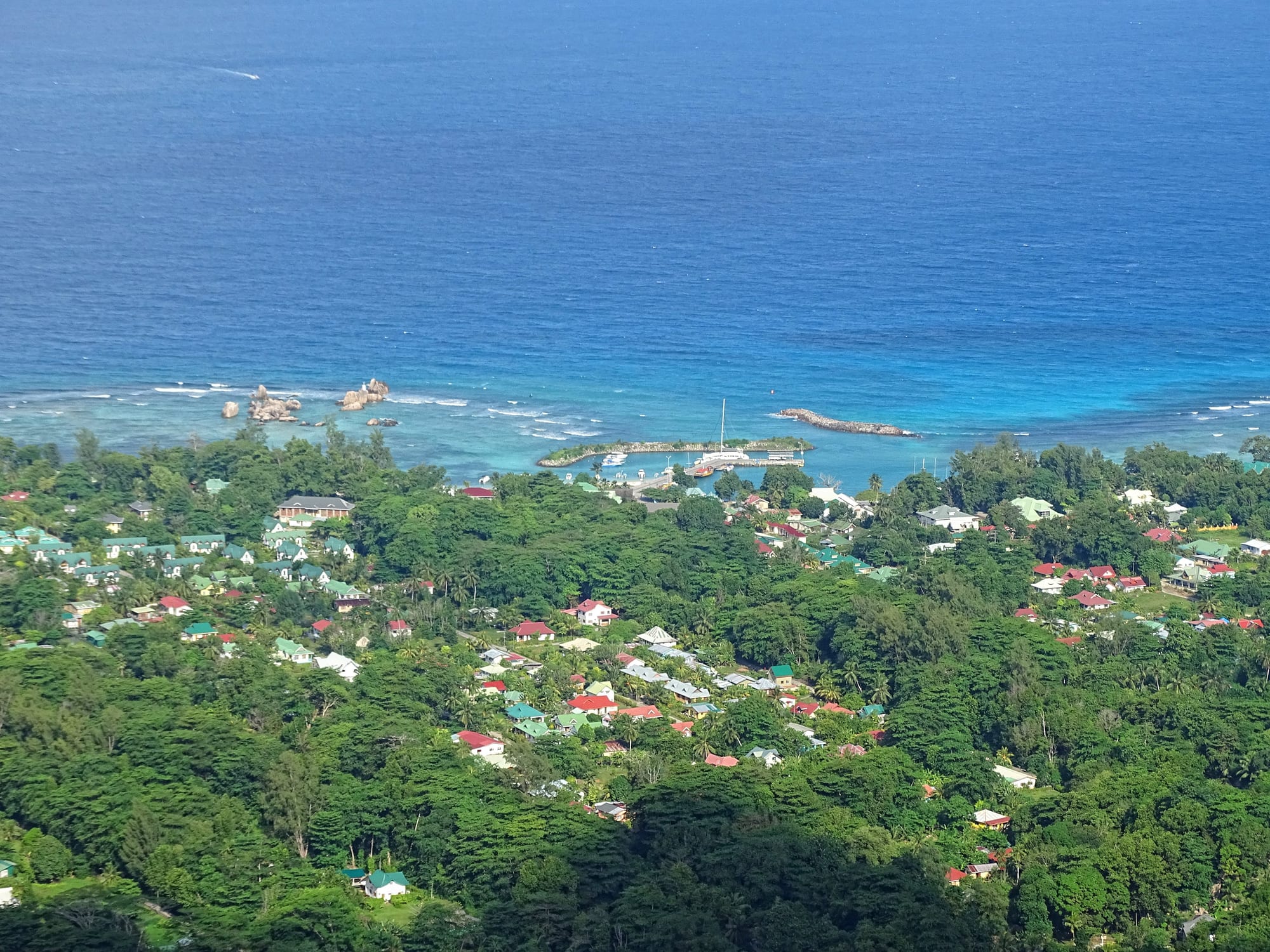
There is no airport. Visitors fly to Mahé and continue by ferry, usually via Praslin: the passenger ferry from Baie Sainte Anne makes the short crossing, and La Passe is also linked by ferry to Victoria. Boats dock at the jetty in La Passe, in the middle of the village, and crossings can be rough in the southeast monsoon.
🚶 Walkability
The village and the west coast are entirely walkable — the jetty to the L'Union Estate is a level twenty minutes — and walking is the only way to reach the coves beyond Grand Anse. The lanes are flat and quiet, shared with cyclists; the crossing to the east coast is a hard climb in the heat.
🛡️ Safety
La Digue is very safe, with little crime beyond occasional theft from unlocked rooms and bags left on the beach. The real risks are in the water: the east-coast beaches have powerful surf and strong currents, especially in the southeast monsoon, and cycling on the steep hill road and the unlit lanes calls for care.
Never leave valuables on the sand or visible in a car, avoid isolated beaches and unlit areas alone at night, heed swimming advice, and carry insurance with evacuation cover as care beyond Mahé is limited. Check current official travel advice before travelling.
🌦️ Climate
Tropical, humid and warm all year, generally between about 24 and 32°C, and outside the cyclone belt. Showers are heavy but usually last an hour or less, and the wettest months are October to March, and there is little shade on the east-coast beaches.
- Summer
- December–March, the northwest monsoon: hottest and wettest at about 27–32°C, with calm water on the west coast
- Winter
- May–September, the southeast monsoon: about 24–29°C, breezier and drier, with big surf on the east coast
🤝 Local Customs
Kreol is the language of the island, with English and French widely understood. Everyone knows everyone: greetings come before questions, and noise carries in a village where few people lock a door. Beachwear stays on the beach, churches fill on Sunday, and nudity is not acceptable on public beaches.
Tipping is not expected but is welcome; ask before photographing people, houses or the ox carts, and give way to cyclists and pedestrians in the lanes.
💳 Common Payment Methods
The currency is the Seychellois rupee, and hotel rates are often quoted in euros. Hotels, restaurants and the estate take cards, but bicycle hire, small shops, takeaway counters and boat operators may want cash. Cash machines are few, so it is worth arriving with rupees.