💰 Budget
Praslin costs more than Mahé for food and rooms, since almost everything arrives by ferry, but self-catering guesthouses and the cheap island bus keep an independent trip manageable. The Vallée de Mai, the island reserves and boat trips are the main extra costs.
- Daily Budget Midrange
- USD 270–540 (mid-range hotel, restaurant meals, a hire car, reserve fees and a boat trip to Curieuse or Cousin)
- Daily Budget Shoestring
- USD 110–180 (guesthouse room, self-catering and takeaways, the island bus, the ferry from Mahé)
Buy groceries at the larger shops near Baie Sainte Anne and Grand Anse rather than the beach strip, and use the island's cheap SPTC buses.
📅 Best Time to Visit
April–May and October–November bring the calmest sea and the clearest water for snorkelling and boat trips. December–March is hot, humid and calm on the north-east beaches; June–September is breezier and cooler, good value but rougher for crossings to the smaller islands, which are cancelled in heavy swell.
⏳ Suggested Number of Days
Two or three days is enough for the forest, a couple of beaches and one boat trip. Four to six suits a slower stay that adds the outlying reserves and day visits to the neighbouring islands. Ferry timings, not distance, shape the length of a visit.
- First Visit
- 2–3 days
- With Surroundings
- 4–6 days
🚆 Transportation
SPTC buses run along the island's coast roads, cheaply and fairly frequently in daylight. Taxis meet the ferries and flights, hire cars and scooters are easy to arrange, and driving is on the left on a narrow road with steep sections over the central hill. Boats to the outlying islands leave from Anse Volbert and Baie Sainte Anne.
Distances are short but the hill road is steep and unlit, so plan evening journeys by taxi rather than on foot.
🛬 Airport & Station Connections
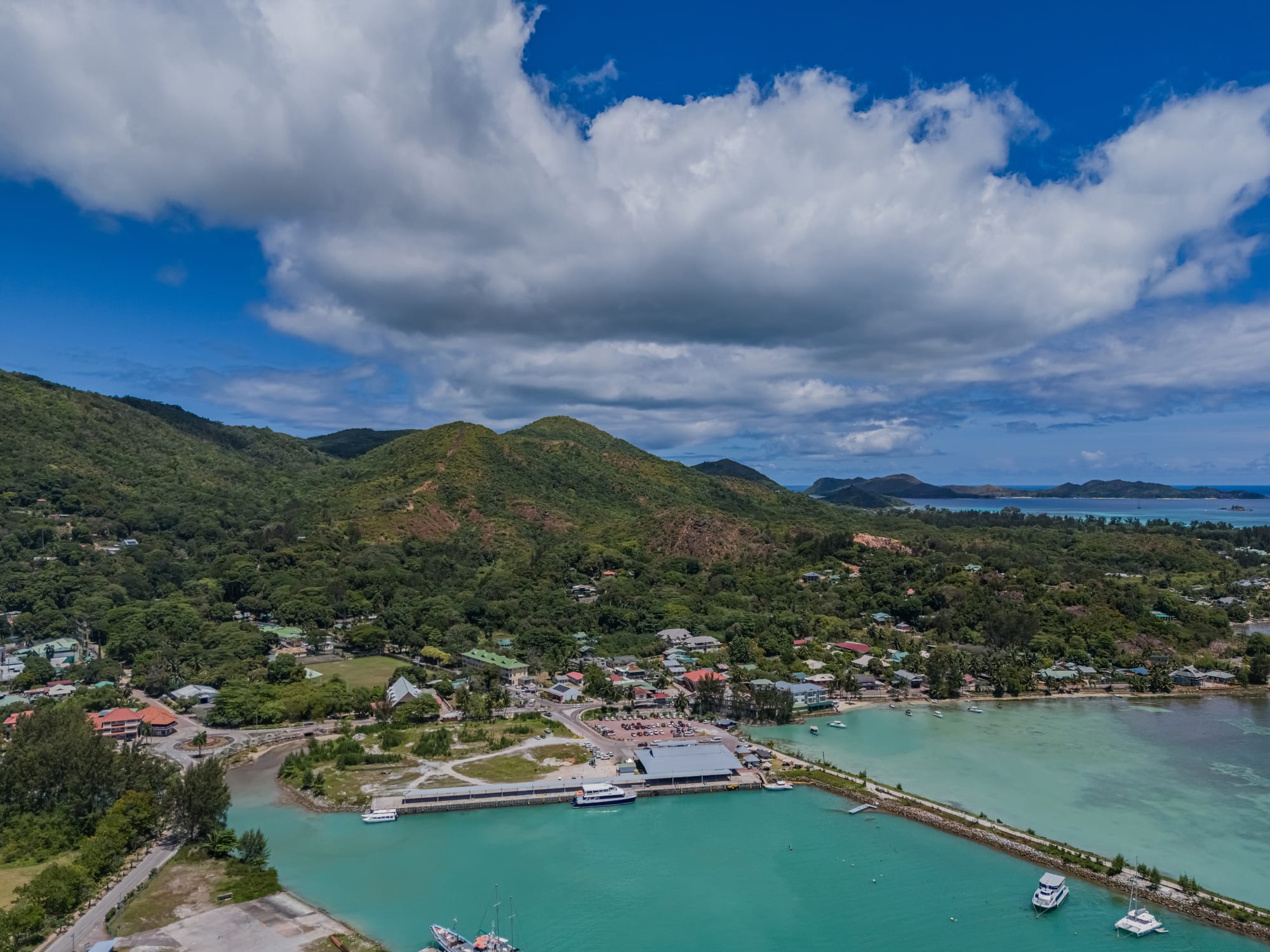
The catamaran ferry from Victoria on Mahé docks at the harbour at Baie Sainte Anne, from which a second service crosses to La Digue. Air Seychelles flies scheduled services from the domestic terminal at Seychelles International Airport to Praslin Island Airport at Grand Anse, with frequent inter-island departures.
🚶 Walkability
Each settlement is walkable in itself, and the flat coast road at Anse Volbert and Grand Anse is pleasant on foot. Between bays the road climbs steeply, has no pavement in places and is dark at night, so most people use the bus, a taxi or a hire car for anything beyond their own beach.
🛡️ Safety
Praslin is a quiet and safe island with very little crime beyond occasional theft from unlocked rooms, parked cars and bags left on the beach. The greater risks are in the water: currents can run strongly off the beaches during the southeast monsoon, and boat crossings to the outlying reserves are called off in heavy swell.
Never leave valuables on the sand or visible in a car, avoid isolated beaches and unlit areas alone at night, heed swimming advice, and carry insurance with evacuation cover as care beyond Mahé is limited. Check current official travel advice before travelling.
🌦️ Climate
Tropical and humid all year, generally between about 24 and 32°C, and outside the cyclone belt. Rain falls in short heavy showers, heaviest from December to February, and the forested interior stays damp.
- Summer
- December–March, the northwest monsoon: hottest and wettest at about 27–32°C, with calm water on the north-east coast
- Winter
- May–September, the southeast monsoon: about 24–29°C, breezier and drier, with seaweed on some east-facing beaches
🤝 Local Customs
Kreol is the everyday language, with English and French understood almost everywhere. Villages are small and greetings are expected before a request. Beachwear stays at the beach; modest dress is normal in shops, villages and churches, which fill on Sunday mornings in a strongly Catholic community. Nudity is not acceptable on public beaches.
Tipping is not expected, though it is welcome; ask before photographing people or houses, and stay on marked paths in the reserves, where the plants and birds are protected.
💳 Common Payment Methods
The currency is the Seychellois rupee, with hotel rates often quoted in euros. Cards are taken by hotels, restaurants, dive shops and the reserves, but small shops, the bus and market stalls need cash. There are banks and ATMs at Baie Sainte Anne and Grand Anse, and few elsewhere.