💰 Budget
A Coruña is good value by Spanish standards. Tapas, the menú del día and the house wine are inexpensive; shellfish sold by weight is what raises a bill. Rooms are dearer and scarcer in August, during the María Pita festival, and when cruise ships are in port.
- Daily Budget Midrange
- USD 130–240 (mid-range hotel, a seafood dinner, museum tickets, taxis or a hire car for day trips)
- Daily Budget Shoestring
- USD 55–95 (hostel or simple pension, tapas and menú del día, city buses)
Ask the price per kilo before ordering shellfish; the promenade, the beaches, the old town and the Monte de San Pedro views cost nothing.
📅 Best Time to Visit
Early summer is the most pleasant time, with long days and the San Xoán bonfires on 23 June. July and August are the warmest and busiest months, with the María Pita festival filling August. Spring and autumn are mild; winter brings Atlantic storms, wind and much of the year's rain.
⏳ Suggested Number of Days
Two days cover the city at an easy pace. Four or five allow time for the nearby towns and the coast as well. Rain is the main thing that changes the number: in a wet spell an extra day is worth having.
- First Visit
- 2 days
- With Surroundings
- 4–5 days
🚆 Transportation
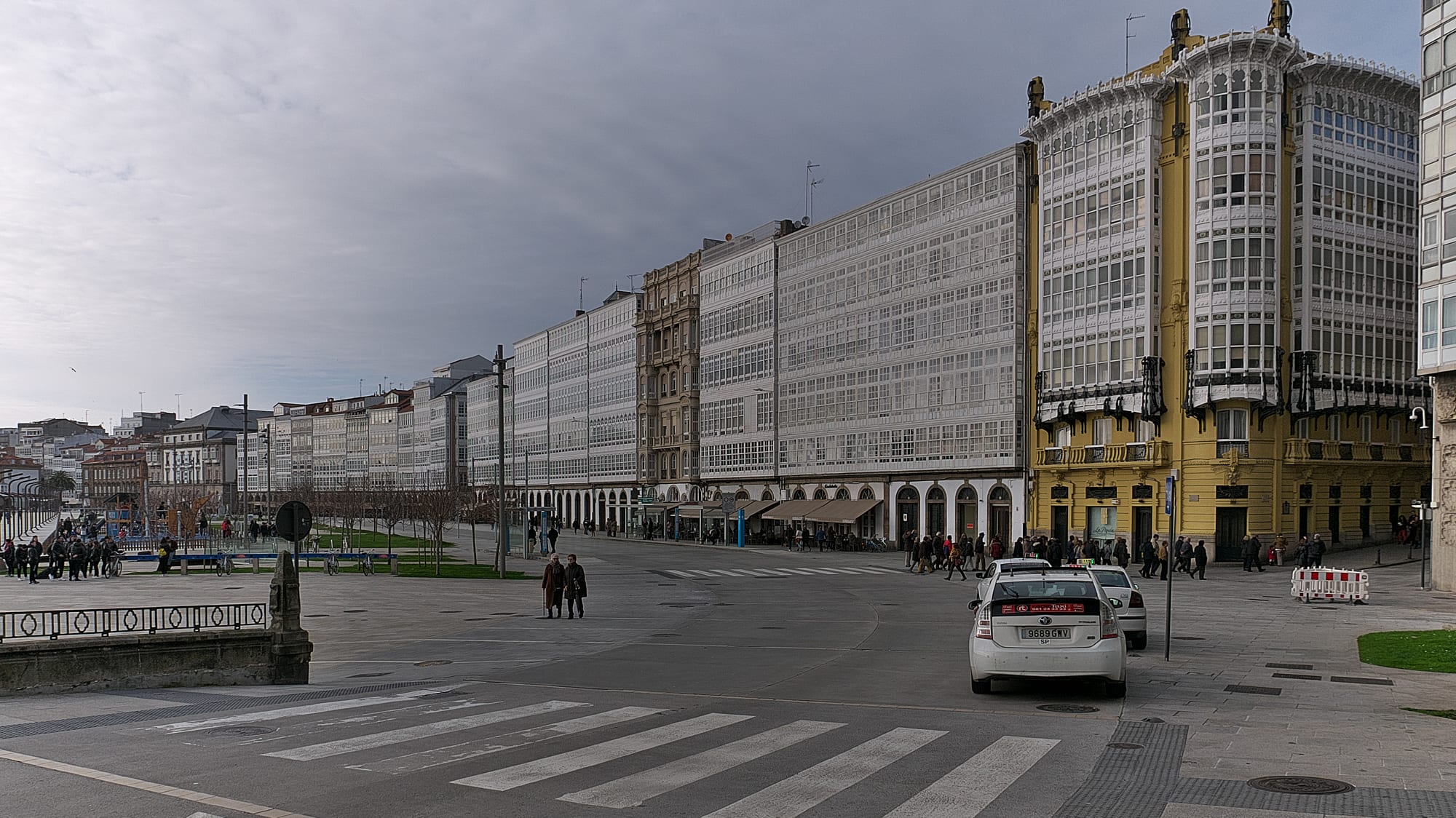
The centre is compact and most visitors walk. City buses run by the Compañía de Tranvías cover the rest of the municipality with about two dozen lines; despite the name, the old tramway along the seafront stopped running in 2011. Taxis are white and show a green roof light when free. A car is useful only for the coast and inland towns.
The promenade is the easiest way round the peninsula on foot or by bike; save the bus for the Tower of Hercules or Monte de San Pedro on a wet day.
🛬 Airport & Station Connections
A Coruña Airport, formerly Alvedro, is in Culleredo about 7 km from the centre, with flights mainly to Spanish cities and a few European ones. Santiago de Compostela's airport, with more international flights, is to the south. Trains leave from San Cristovo station: high-speed services to Madrid since 2021, the fastest direct ones taking under four hours, and regional trains to Santiago, Pontevedra and Vigo. Cruise ships dock in the city's harbour.
🚶 Walkability
Very walkable. The old town, the Marina, María Pita square and the beaches are all within a short walk of each other on the narrow isthmus, and the seafront promenade continues around the whole headland to the Tower of Hercules and Monte de San Pedro. Some old-town streets climb, and granite paving is slippery in the rain.
🛡️ Safety
Spain is a safe country with low violent crime. A Coruña is a calm city with little crime that affects visitors; ordinary care with bags and phones is enough in the bar streets at night and around cruise days. The real hazards are natural: the Orzán and Riazor beaches face the open Atlantic, and winter storms can send waves over the promenade, as in March 2008.
Swim where lifeguards are on duty, keep back from the sea wall in rough weather, and watch belongings in crowded bars. Check current official travel advice before travelling.
🌦️ Climate
A mild oceanic climate in which the sea keeps the difference between winter and summer small. Winters are unsettled, windy and wet, and frost and snow are extremely rare — the last significant snowfall was in 1987. Summers are mostly sunny with occasional drizzle. About 1,000 mm of rain falls in a year.
- Summer
- mild and mostly sunny — highs most often around 22°C from July to September; days over 30°C are infrequent
- Winter
- mild, windy and wet — the average winter minimum is about 8.6°C, among the least cold of Spain's mainland provincial capitals
🤝 Local Customs
Galician and Spanish are both official, and most residents speak or understand Galician; the city's name is the Galician form. Meals run late, with lunch around two and dinner after nine. Going out for tapas means moving from bar to bar. Churches are working places of worship.
Cover shoulders in churches, keep beachwear for the beach and the promenade, and greet staff on entering a bar or shop.
💳 Common Payment Methods
Spain uses the euro. Cards and contactless are accepted almost everywhere, including small bars; carry a little cash for markets and small tabernas. Cash machines are easy to find in the centre.