History
Before Rome, Galicia was the land of the castros, walled hillforts of round stone houses such as Santa Trega above the Miño mouth and Baroña on the coast, whose Iron Age people are often linked to the Celts. Rome conquered the north-west under Augustus and named it Gallaecia; its legacies include the walls of Lugo and the Tower of Hercules in A Coruña, both UNESCO World Heritage Sites. After the empire, the Suebi ruled a kingdom here until the Visigoths absorbed it in 585, and the Muslim conquest barely touched the region.
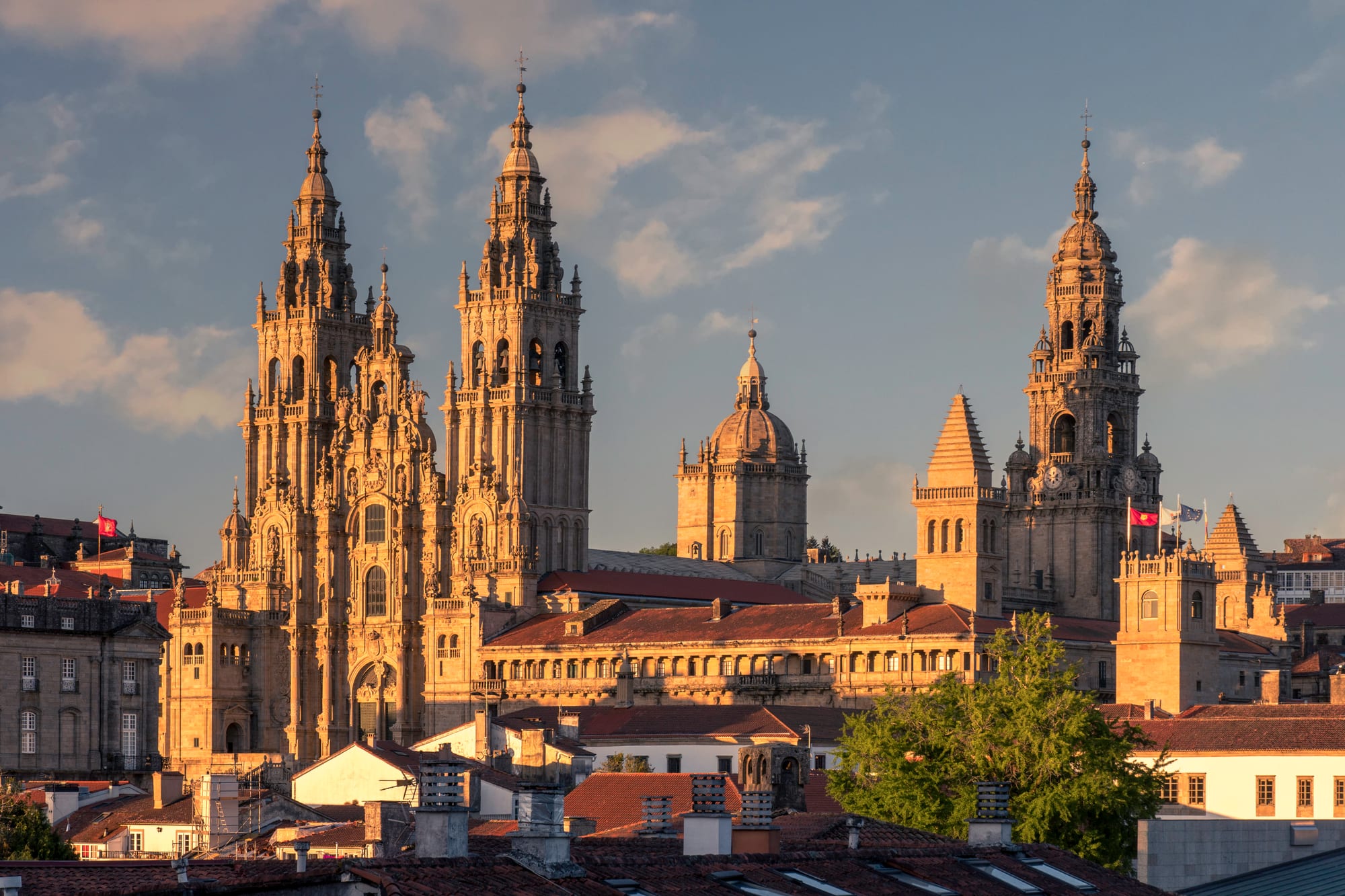
In the early 9th century a tomb identified as that of the apostle James was found at the site of Santiago de Compostela, and the pilgrimage that followed made a remote corner of Europe one of Christendom's three great goals, with Rome and Jerusalem. The cathedral rose from 1075, and Master Mateo completed its Pórtico da Gloria in 1188. Galicia later passed firmly under Castile and long remained a poor province of small farms.
Hunger drove mass emigration from the 19th century to Cuba, Argentina and Uruguay, so that "gallego" came to mean any Spaniard in Buenos Aires. A literary revival, the Rexurdimento, began with Rosalía de Castro's Cantares gallegos in 1863. Franco was born in Ferrol, and after his death Galicia became an autonomous community in 1981. The Prestige tanker disaster of 2002 fouled the Costa da Morte and prompted a mass volunteer clean-up.