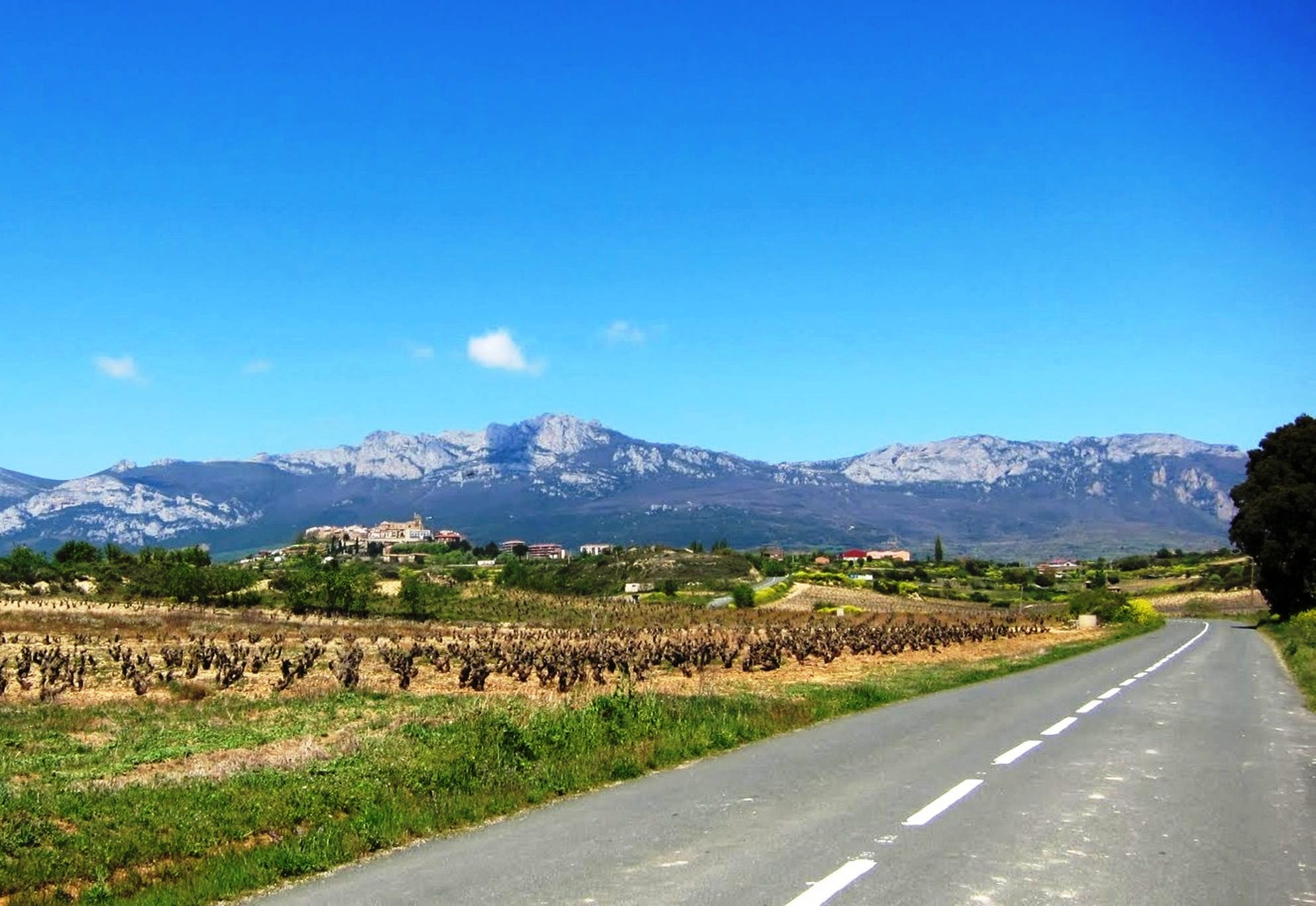
A road running past bare vineyards towards the hill town of Laguardia, with a grey limestone mountain ridge behind

Spain

The Basque Country, Navarre & La Rioja

Vineyards on the approach to Laguardia in Rioja Alavesa, beneath the Sierra de Cantabria. (Art Anderson / Wikimedia Commons · CC BY-SA 3.0)

Three neighbouring communities in Spain's north, from the green Bay of Biscay coast around Bilbao and San Sebastián through the old kingdom of Navarre to the vineyards of the Ebro valley — a region of the Basque language, a celebrated food culture, the San Fermín festival and Spain's best-known red wine.

Explore The Basque Country, Navarre & La Rioja

History

The Basques are among Europe's oldest peoples: their language predates the arrival of Indo-European tongues, and the Romans knew the Vascones, whose land around Pamplona — founded, by tradition, by Pompey — became part of Hispania. The mountains kept Visigoths and later the Muslim armies at a distance, and in the 9th century the Kingdom of Pamplona emerged, later called Navarre. Under Sancho III the Great in the early 11th century it was the strongest Christian state in Iberia. La Rioja, fought over by Navarre and Castile, finally went to Castile, and its monastery of San Millán de la Cogolla holds the Glosas Emilianenses, marginal notes counted among the earliest written Romance and Basque.

Castile conquered Upper Navarre in 1512, but the Basque provinces and Navarre kept their fueros — their own laws, taxes and exemptions — for centuries. The Carlist Wars of the 19th century were fought partly over them, and after 1876 the Basque fueros were largely abolished, though tax privileges survived. At the same time Bilbao boomed on iron ore, steel and shipbuilding, and Sabino Arana founded Basque nationalism and the PNV party in 1895.

In the Civil War the Basque Country sided with the Republic and Navarre with Franco; the bombing of Gernika in 1937 became the symbol of the war. Franco suppressed the Basque language, and ETA, founded in 1959, waged a violent campaign that killed over 800 people before it ended in 2011. Under historic agreements the Basque Country and Navarre collect their own taxes, and the 1997 Guggenheim marked Bilbao's shift from heavy industry to services.

Culture & Customs

Basque identity rests on Euskara, a language unrelated to any other living tongue, now taught in schools and spoken by a large minority, more on the Gipuzkoan coast than in Álava or southern Navarre. Navarre is split between a Basque-speaking north and a Castilian-speaking, Ebro-valley south, and La Rioja is wholly Castilian-speaking. Basque national sentiment is strong and elections in the Basque Country are dominated by nationalist parties.

Traditions include pelota played against a fronton wall, rural sports such as stone lifting and log chopping, the improvised verse of the bertsolariak and the percussion of the txalaparta. The txoko, a private gastronomic society where members cook for one another, is a Basque institution. Athletic Club of Bilbao famously fields only players with Basque roots.

The calendar is crowded: San Sebastián's Tamborrada on 20 January, when the city drums for 24 hours; San Fermín in Pamplona from 6 July, with its morning encierro and white-and-red dress; Vitoria's Fiestas de la Virgen Blanca in August, opened by the descent of the figure Celedón; Bilbao's Aste Nagusia; and Haro's Batalla del Vino on 29 June, when crowds drench each other in red wine.

Daily Life

About 2.2 million people live in the Basque Country, around 670,000 in Navarre and about 320,000 in La Rioja. Bilbao has around 345,000 inhabitants and a metropolitan area of close to a million along the Nervión estuary; Vitoria-Gasteiz has about 255,000, San Sebastián about 190,000, Pamplona about 200,000 and Logroño about 150,000.

The Basque Country and Navarre are among the richest parts of Spain. Industry still matters — machine tools, steel, energy and cars, with Volkswagen's plant at Pamplona — alongside banking, the Mondragon co-operative group in Gipuzkoa and a growing service economy. La Rioja lives largely from wine, food processing and farming, and Navarre's Ribera is a market garden for vegetables.

The day turns on the evening round of bars, the txikiteo or poteo, when friends move from counter to counter for a small glass and a pintxo. Mountain walks at weekends and surfing along the coast are common pastimes. Housing costs in San Sebastián, driven partly by tourism, are a political issue.

Food

Basque cooking is Spain's most celebrated. Salt cod is central — bacalao al pil-pil, emulsified with olive oil and garlic, and bacalao a la vizcaína in a dried-pepper sauce — alongside marmitako, a tuna and potato stew from the fishing ports, kokotxas, the throats of hake or cod, and txangurro, stuffed spider crab. Thick chuletón beef steaks come from the grill, and pintxos, small snacks on bread, fill the bar counters. Idiazabal is the smoked or unsmoked sheep's cheese, and in cider houses around Astigarraga the new cider is poured straight from the barrel, the txotx, from January to April, with salt-cod omelette and steak.

Navarre is a vegetable country: piquillo peppers from Lodosa, white asparagus, artichokes and the spring menestra of Tudela, plus Roncal sheep's cheese from the Pyrenees and pacharán, a sloe-flavoured anise liqueur. La Rioja adds patatas a la riojana, potatoes stewed with chorizo, and lamb chops grilled over vine cuttings.

Wine is the region's pride: red Rioja, largely Tempranillo and graded by ageing from joven to gran reserva, grown in La Rioja, Rioja Alavesa and part of Navarre; Navarre's own wines, long known for rosé; and txakoli, a sharp, lightly sparkling white from the Basque coast.

Attractions & Natural Wonders

Bilbao centres on Frank Gehry's Guggenheim Museum on the Nervión, with the Fine Arts Museum nearby and the Casco Viejo's seven original streets across the river. Downstream the Vizcaya Bridge at Portugalete, a transporter bridge of 1893, is a UNESCO World Heritage Site. Along the coast lie the island hermitage of San Juan de Gaztelugatxe, Gernika and its assembly tree, the Urdaibai estuary, and the fishing town of Getaria.

San Sebastián curves around La Concha beach between Monte Urgull and Monte Igueldo, with Eduardo Chillida's Peine del Viento sculptures at the western end and pintxo bars filling the Parte Vieja. Vitoria-Gasteiz, the Basque capital, has a medieval old town, the cathedral of Santa María and green belt parks.

In Navarre, Pamplona has its walls, citadel and Plaza del Castillo, and the route of the encierro through the old streets. The royal palace of Olite, the bridge at Puente la Reina on the Camino de Santiago, the Irati beech forest, Roncesvalles below the Pyrenees and the eroded semi-desert of the Bardenas Reales cover the rest of the province.

La Rioja's capital, Logroño, is known for its tapas lanes around Calle Laurel. The Rioja vineyards spread from Haro, with its cluster of historic wineries by the station, to walled Laguardia and Elciego, where Gehry designed the Marqués de Riscal hotel. San Millán de la Cogolla's monasteries of Suso and Yuso are a UNESCO World Heritage Site, and Santo Domingo de la Calzada's cathedral keeps a live hen and rooster.

Cities in The Basque Country, Navarre & La Rioja

Planning basics

Budget

This is one of Spain's more expensive corners. San Sebastián is among the priciest cities in the country for hotels, especially in July and August and during its film festival, and Bilbao is not far behind. Pintxos help: a few in the bar make a cheap meal. Pamplona costs several times its normal rate during San Fermín, while Logroño, Vitoria-Gasteiz and rural Navarre are good value.

Daily Budget Midrange
USD 160–320 (mid-range hotel, a tasting-menu or cider-house dinner, winery visits, a hire car for Rioja)
Daily Budget Shoestring
USD 70–110 (hostel or pension, pintxos and menú del día, buses and local trains)

Book San Sebastián and Pamplona beds months ahead for summer and San Fermín; stay in Logroño or Vitoria-Gasteiz for cheaper nights.

Safety

The region is safe, with low crime; ETA's armed campaign ended in 2011 and the group dissolved in 2018. The main risks are pickpockets in crowded pintxo bars and at San Fermín, where the bull runs cause injuries every year, strong Atlantic currents at surf beaches, and drink-driving on winery roads.

Watch the encierro from behind the barriers rather than running, swim on lifeguarded beaches, and assign a driver for winery visits. Check current official travel advice before travelling.

Climate

The Basque coast and northern Navarre belong to green Spain: mild, humid and rainy in every season, with few hot days. South of the mountains the climate turns drier and more continental, and the Ebro valley around Logroño and Tudela has hot summers, cold winters and far less rain. The Pyrenean valleys of Navarre get snow in winter.

Summer
mild on the coast, 20–27°C with showers; hot in the Ebro valley, often above 30°C
Winter
cool and wet on the coast, 5–13°C; colder and frostier inland, with snow in the Navarrese Pyrenees

Transportation

Bilbao has the main airport, with smaller ones at San Sebastián, Vitoria, Pamplona and Logroño. Frequent buses link Bilbao and San Sebastián in about an hour and a quarter, and the Euskotren network runs slower local trains along the coast. Pamplona and Logroño are on the national rail network towards Madrid and Zaragoza. A car is the practical way to tour the Rioja wineries, the Bardenas Reales and the Pyrenean valleys.

Use buses between the Basque cities and hire a car only for Rioja wine country and rural Navarre.

Best Time to Visit

June and September are the best months overall, with the warmest sea and fewer crowds than August. San Fermín fills Pamplona from 6 to 14 July, and the Rioja grape harvest runs from late September into October, the best time for wine country. The cider-house season runs from January to April, and winter suits a food trip to the coast if the rain is accepted.