💰 Budget
Alicante is mid-priced. Prices rise in July and August and during the June bonfires. Almost every restaurant offers a set lunch, the cheapest way to eat well, and the castle grounds, beaches and promenades cost nothing.
- Daily Budget Midrange
- USD 130–230 (mid-range hotel, rice lunches and restaurant dinners, museum tickets, a day trip by tram)
- Daily Budget Shoestring
- USD 55–95 (hostel or simple room, menú del día, tram and bus)
A rechargeable multi-trip card works on both buses and trams and costs less than single tickets.
📅 Best Time to Visit
Spring and autumn are the most comfortable seasons, though September and October can bring torrential storms. July and August are hot and humid and busy, with the bonfires and fireworks in June. Winters are among the sunniest and warmest in mainland Europe.
⏳ Suggested Number of Days
Two or three days are enough for the city itself. Adding the island, the neighbouring towns and resorts along the coast tram, or simply time on the beach, stretches a stay to most of a week.
- First Visit
- 2–3 days
- With Surroundings
- 4–6 days
🚆 Transportation
Most of the old town and the centre are walkable. Buses and the TRAM network cover the city and its suburbs, and the coastal tram line runs north through Playa de San Juan to Benidorm, with trains continuing to Dénia. Commuter trains link the main station with the suburbs and Murcia.
For a sea view on the coastal tram towards Benidorm, sit on the right-hand side.
🛬 Airport & Station Connections
Alicante–Elche Airport, the busiest in the Valencian Community, is about 9 km south-west of the city, with buses into the centre. AVE high-speed trains have linked Alicante with Madrid since 2013, and long-distance trains also run to Valencia and Barcelona. Ferries sail from the port to Algeria.
🚶 Walkability
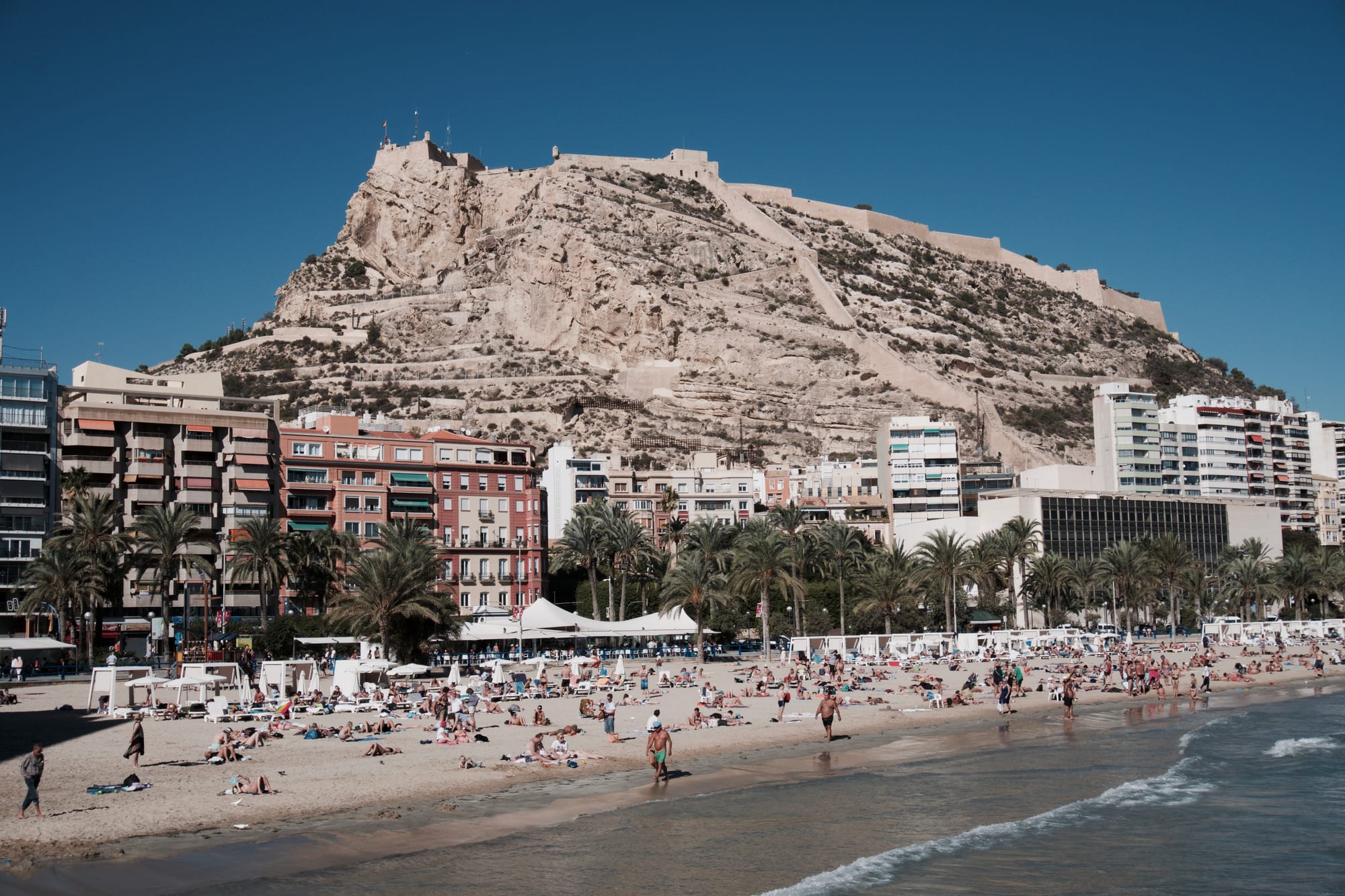
The old town, the Explanada, the Central Market and Postiguet beach are all within a short walk of each other on flat ground. The climb to the castle is steep, and Playa de San Juan is a tram ride away.
🛡️ Safety
Spain is a safe country with low violent crime. Pickpocketing happens on busy beaches and in festival crowds, and the June bonfires and fireworks go off at close range. Autumn storms occasionally bring torrential rain and flash floods; the worst in the city's modern history came in September 1997.
Keep valuables out of sight on the beach and in crowds, and heed weather warnings during heavy autumn rain. Check current official travel advice before travelling.
🌦️ Climate
A hot semi-arid climate, one of the driest in Europe, with little rain, about 35 rainy days and more than 3,000 hours of sunshine a year. The sea keeps temperatures steady; September and October are the wettest months.
- Summer
- hot and humid — August averages around 26°C, with afternoons a little above 30°C and nights around 21°C
- Winter
- mild and sunny — January averages 12°C, with afternoons of about 17°C and nights of 6–7°C; snow last fell in 1926
🤝 Local Customs
The city has two official names, Alicante in Spanish and Alacant in Valencian, and both languages are official, though Spanish is the one most heard in the streets. The main meal is a large lunch in the early afternoon, and many restaurants close in the late afternoon and do not open for dinner until about 9 pm. The evening stroll along the Explanada is a local habit.
Cover up away from the beach, especially in churches.
💳 Common Payment Methods
The currency is the euro. Cards and contactless payment are widely accepted, and ATMs are common in the centre and at the beaches. Cash is useful at market stalls and small bars.