💰 Budget
Girona is noticeably cheaper than Barcelona for rooms and meals, though prices rise during Temps de Flors in May and in summer. A weekday lunch menu is the best value. Many visitors come for the day from Barcelona, so evenings in the old town are quieter and rooms easier to find.
- Daily Budget Midrange
- USD 140–260 (mid-range hotel, restaurant dinners, cathedral and museum tickets, a train or bus day trip)
- Daily Budget Shoestring
- USD 65–100 (hostel or guesthouse, lunch menu and tapas, walking and local buses)
Stay the night to see the old town after the day-trippers leave; book well ahead for Temps de Flors week.
📅 Best Time to Visit
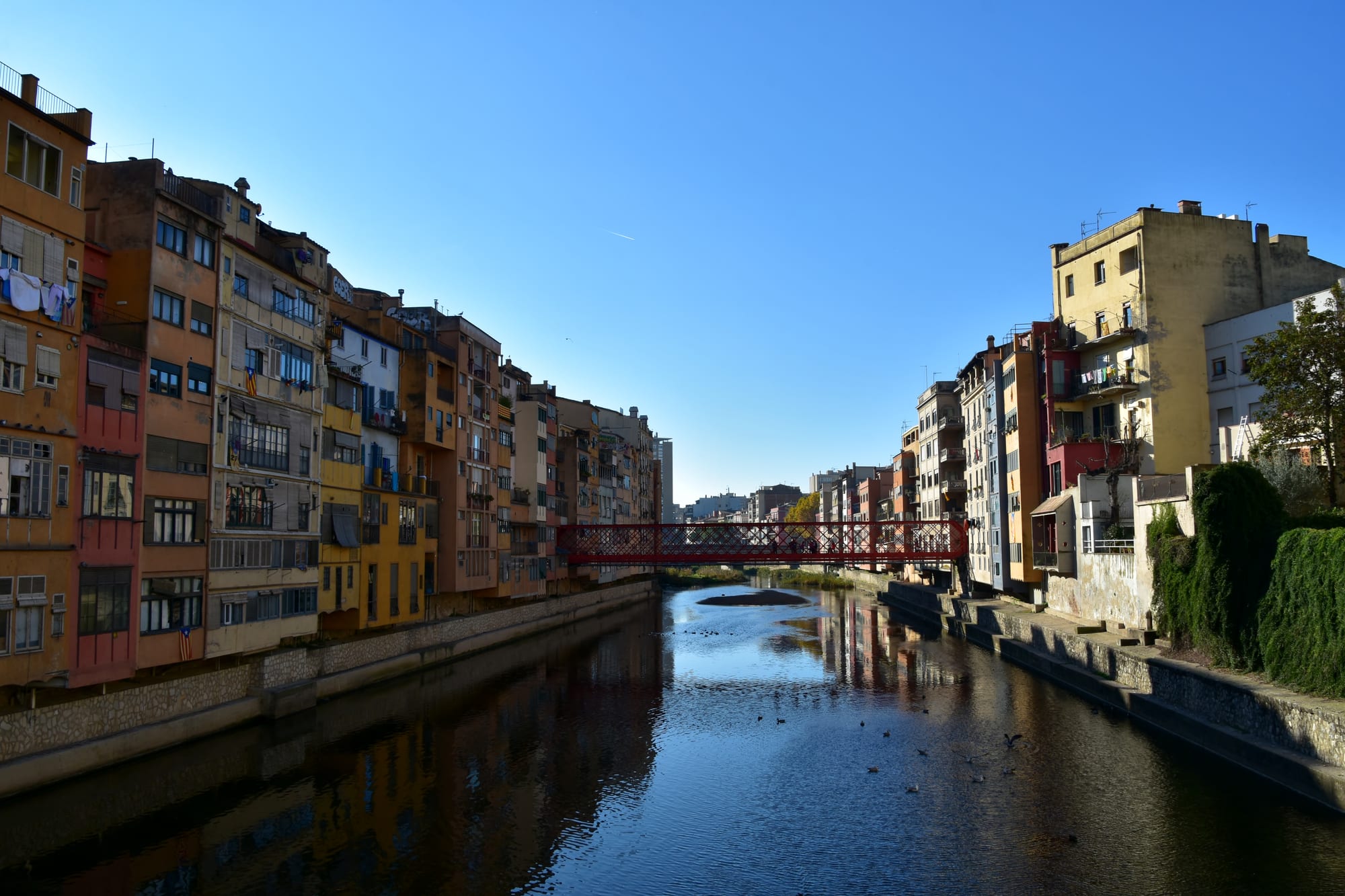
Spring and early autumn. May brings Temps de Flors, when the city is at its most crowded, and late October the Sant Narcís fair. Summer is hot and the Onyar can shrink to a trickle; winter has frequent frosts but few crowds. Autumn and spring are also the wettest seasons.
⏳ Suggested Number of Days
The old town can be seen in a long day, but a night or two allows a slower pace. Three to five days, with a car or regional trains, make room for the surrounding towns, the Costa Brava and the foothills of the Pyrenees.
- First Visit
- 1–2 days
- With Surroundings
- 3–5 days
🚆 Transportation
The old town and the centre are walkable, and city buses link the station, Devesa park and the outer districts. Regional trains run north to Figueres and the French border and south to Barcelona, and buses serve the towns of the province. A car is the easiest way to reach the smaller villages and the coves of the Costa Brava.
High-speed trains to Barcelona are far quicker than the regional R11 service, which takes about an hour and a half.
🛬 Airport & Station Connections
Girona–Costa Brava Airport is about 12.5 kilometres south-west of the city, roughly half an hour by bus; Barcelona–El Prat is the larger alternative. The station west of the old town is on the high-speed line, with trains to Barcelona in about 40 minutes and through services to Madrid and France; slower regional trains also run to Barcelona. The AP-7 motorway passes the city.
🚶 Walkability
Excellent in the centre: the station is a short walk from the river, and several footbridges cross to the old town. The Barri Vell is steep, with stepped lanes, the cathedral stairway and the wall walk, so comfortable shoes matter; parts of the walls have uneven steps.
🛡️ Safety
Spain is a safe country with low violent crime. Girona is a calm city; the main risk is opportunistic theft in the crowded old town during Temps de Flors and in summer.
Keep an eye on bags in crowds, and take care on the steep, uneven steps of the wall walk, especially when wet. Check current official travel advice before travelling.
🌦️ Climate
A humid subtropical climate with hot summers and cool winters. Annual rainfall is slightly above 700 mm, with the wettest seasons in autumn and spring, and thunderstorms are most frequent in summer.
- Summer
- hot, though maximum temperatures above 40°C are very rare
- Winter
- cool, with frost on about 41 days a year between November and March; temperatures can fall below −2°C, but snow is rare
🤝 Local Customs
Catalan is the everyday language of the city, and a greeting in Catalan is appreciated. Lunch is the main meal and dinner is late. Local legend says that a true Gironí who wants to return safely from a journey must kiss the bottom of the Lleona, a stone lioness in the old town.
Dress modestly and keep voices low in the cathedral and churches, and avoid visiting during services.
💳 Common Payment Methods
The currency is the euro. Cards and contactless payment are widely accepted; a little cash is useful for market stalls and small bars.