💰 Budget
Jaca is a town of moderate prices with plenty of restaurants, cafés and places to stay, since a steady flow of travellers passes through on the way to the Pyrenees. Costs rise in the ski season and in August, and lift passes or a hire car for the valleys add most to a budget.
- Daily Budget Midrange
- USD 110–230 (mid-range hotel, restaurant dinners, a hire car and site tickets)
- Daily Budget Shoestring
- USD 50–85 (guesthouse or hostel, tapas and menú del día, buses and trains)
Book ahead for ski weekends, August and the First Friday of May; the old town, the citadel moat and the walk up the Peña Oroel cost nothing.
📅 Best Time to Visit
June to early October suits walking, the monasteries and the mountain valleys, with warm days and cool nights; summer also brings storms. Winter, from December, is the ski season, when snow is common in the town itself. Late spring is quieter, and the town fills for its festival on the first Friday of May.
⏳ Suggested Number of Days
The town itself needs a day or two. Allow longer to explore the surrounding valleys and monasteries, and longer still for a ski holiday or mountain walking, for which Jaca is mainly a base.
- First Visit
- 1–2 days
- With Surroundings
- 3–5 days
🚆 Transportation
Jaca has a town bus line, an intercity bus station and a railway station, but a car is the practical way to reach the monasteries, the ski resorts and the smaller valleys. The N-330 road runs north to Canfranc and south to Huesca, and the N-240 runs west along the Canal de Berdún towards Pamplona.
Carry snow chains or winter tyres on mountain roads in winter, and check road conditions before driving to the resorts.
🛬 Airport & Station Connections
Trains on the Zaragoza–Canfranc line stop at Jaca, with medium-distance services to Zaragoza and Canfranc; Zaragoza is on the Madrid–Barcelona high-speed line. Many visitors drive up the N-330 from Huesca or along the N-240 from Pamplona.
🚶 Walkability
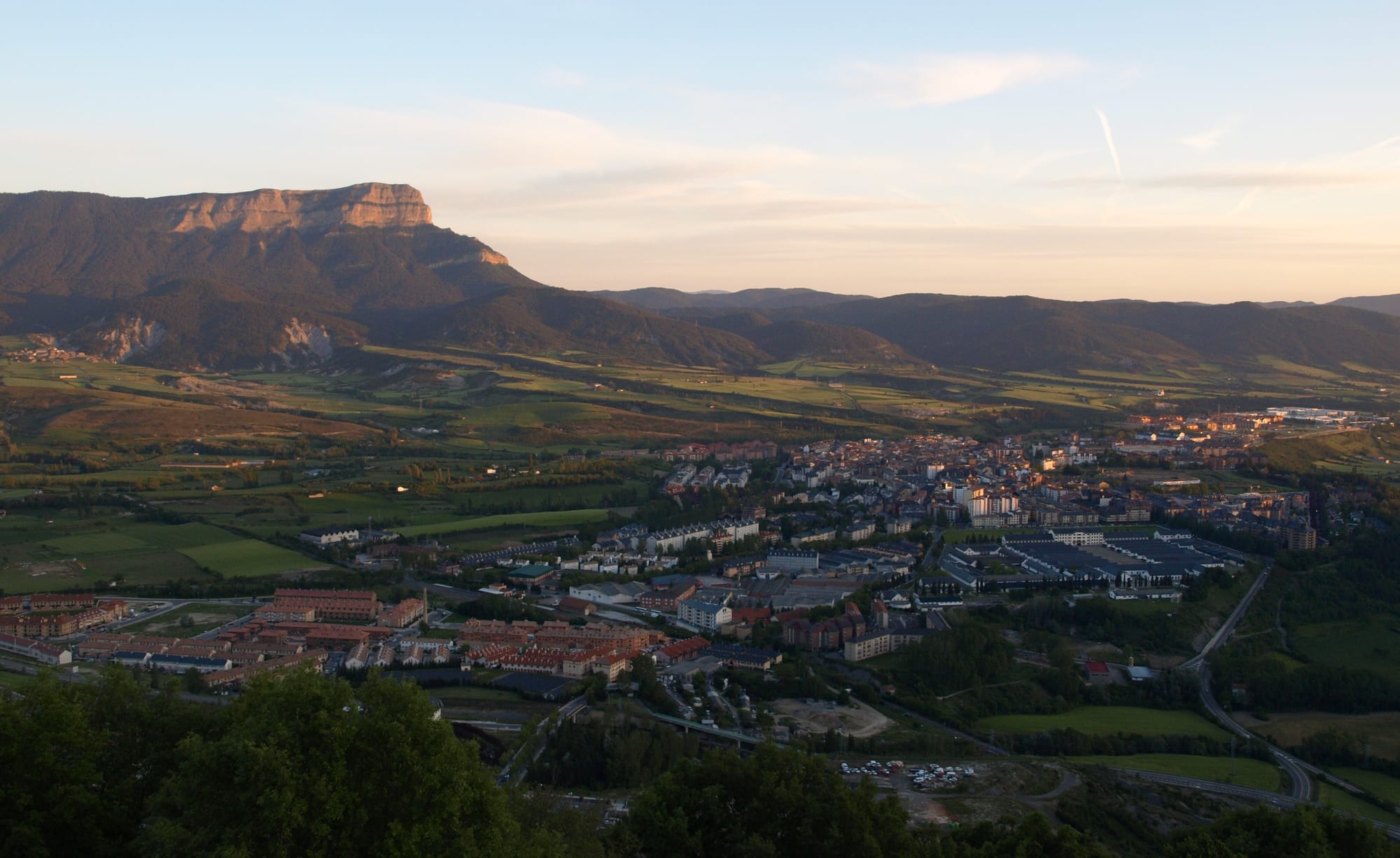
The old town is compact and level enough to walk easily, and the cathedral, the clock tower and the citadel are all within a short walk of each other. The newer districts spread out along the main roads. Paths lead down to the river and the medieval bridge, and in winter snow and ice can make the pavements slippery.
🛡️ Safety
Spain is a safe country with low violent crime. Jaca is a quiet town and crime is low. The main hazards are in the mountains: sudden summer storms, snow, ice and avalanches in winter, and wildfires in hot, dry summers.
Check the mountain forecast before walks such as the Peña Oroel, follow the ski resorts' avalanche warnings, and respect any fire restrictions in summer. Check current official travel advice before travelling.
🌦️ Climate
Jaca's height, about 820 metres, gives it an inland oceanic climate with strong continental influences. The average annual temperature is 12.2°C, and about 768 mm of rain and snow falls a year, most of it in autumn, winter and spring.
- Summer
- warm to hot days with relatively cool nights; temperatures can pass 35°C, and summer is the driest season, with some storms
- Winter
- cool to cold, with common frost and snow from late November to early March; temperatures can fall below −10°C
🤝 Local Customs
Jaca is a garrison town as well as a resort, home to the army's Military School of Mountain and Special Operations; the citadel was used by the army until 2008 and is now run by the town council. The cathedral is the seat of a diocese and a place of worship. Meals follow the Spanish rhythm of a late lunch and a late dinner.
Dress modestly in the cathedral and churches and avoid visiting during services, and do not photograph military personnel or installations without permission.
💳 Common Payment Methods
Spain uses the euro. Cards and contactless are accepted almost everywhere, including small bars; carry a little cash for markets, rural bars and the mountain villages.