💰 Budget
Kalutara is inexpensive away from the beach hotels, which range from simple guesthouses to large all-inclusive resorts and set the tone for costs here. Food in town is very cheap, transport by bus or train costs little, and there are few entry charges: the temple asks only for a donation.
- Daily Budget Midrange
- USD 70–160 (beach hotel, restaurant meals, a car for the day to Bentota or Brief Garden)
- Daily Budget Shoestring
- USD 20–40 (guesthouse room, rice and curry, buses and trains)
Resort rates drop sharply during the southwest monsoon, when the sea is too rough for swimming but the coast is at its greenest.
📅 Best Time to Visit
December to March is the west coast's dry season, with calm water and reliable sun, and is when the beach hotels are busiest. April brings New Year crowds from Colombo. The monsoon months from May to September are wet, windy and cheaper, and the mangosteen season falls in the middle of the year.
⏳ Suggested Number of Days
A day is enough for the town itself. Beach stays run longer, and two or three days suit anyone who also wants the coast and the gardens nearby.
- First Visit
- 1 day
- With Surroundings
- 2–3 days
🚆 Transportation
The Colombo–Galle road and the coastal railway both run through the town, so buses and trains are frequent and cheap in both directions. Tuk-tuks cover everything locally, and ride-hailing apps work along this coast. The Southern Expressway, a few kilometres inland, carries fast coaches between Colombo and the south.
Coastal trains are slow but scenic and stop at most beach villages; buses on the main road are quicker but crowded.
🛬 Airport & Station Connections
Kalutara is about 40 kilometres south of Colombo, roughly an hour by road outside peak traffic and a little over an hour by coastal train from Colombo Fort. Bandaranaike International Airport lies about 75 kilometres north, around ninety minutes away using the expressway that skirts the capital.
🚶 Walkability
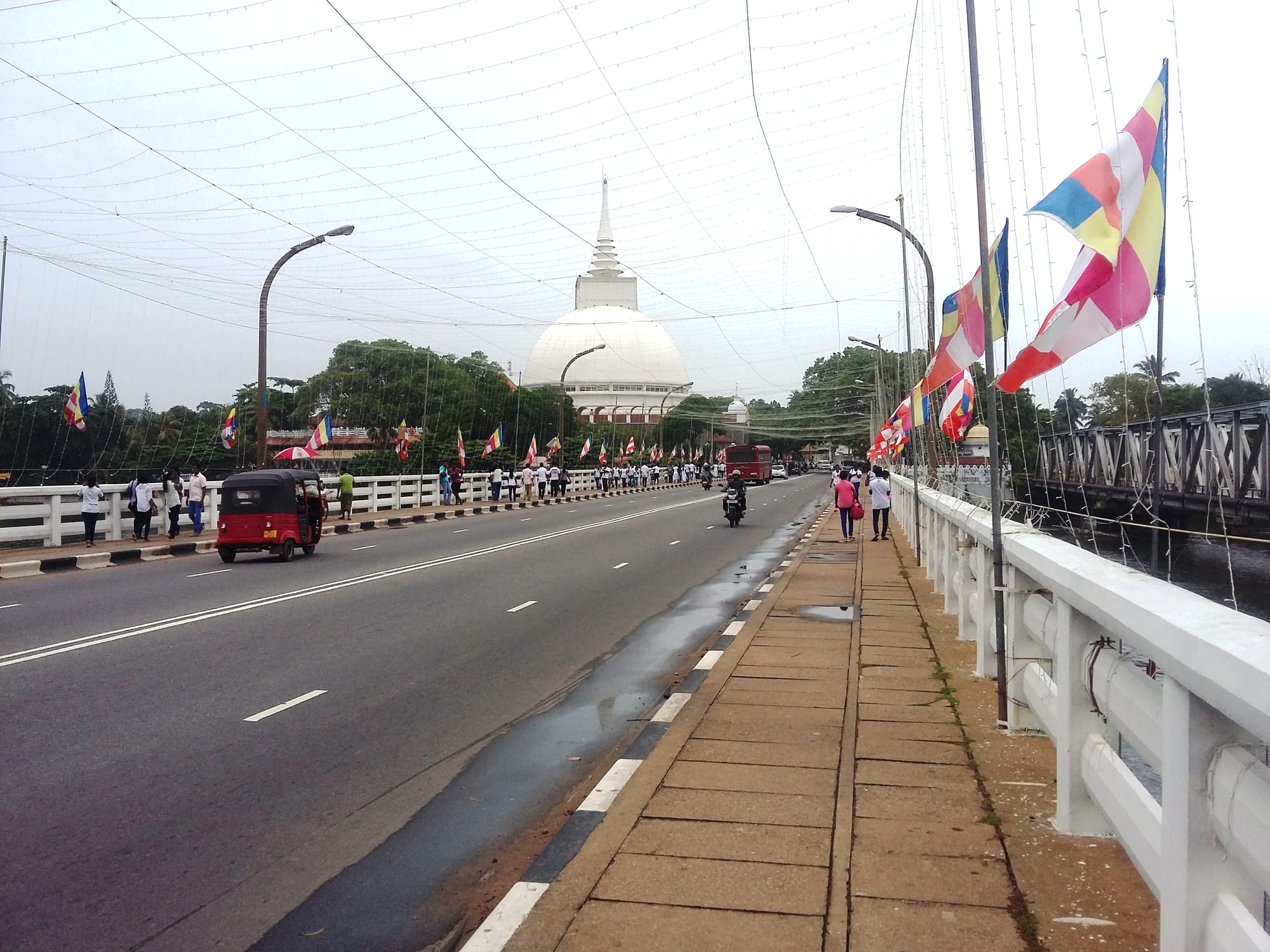
The two halves of the town are easy to walk within, and the bridge, the stupa and the bodhi tree are all together at the river mouth. The main road is narrow, fast and noisy, with poor pavements in places, so walking between the beach hotels and the town centre is less pleasant than it looks on a map; most people use a tuk-tuk.
🛡️ Safety
The town is quiet and crime against visitors is rare, beyond occasional overcharging and touts around the temple and the beach hotels. The main hazards are the sea, with strong currents and undertow especially during the monsoon and no lifeguards on most of the beach, and the traffic on the coast road. The Kalu Ganga floods in heavy rain, and the district has seen serious floods in bad years.
Take local advice before swimming, keep clear of the river after heavy rain upstream, and treat the main road with caution. Check current official travel advice before travelling.
🌦️ Climate
Hot and humid all year in the island's wet zone, with temperatures varying little between months and rainfall doing all the work of the seasons. Sea breezes make the coast more bearable than inland.
- Summer
- May to September: the southwest monsoon, around 27–31°C, with frequent heavy showers and a rough sea
- Winter
- December to March: drier and sunnier, around 24–31°C, the best months for swimming
🤝 Local Customs
The stupa and bodhi tree are an active place of worship, not a monument: shoes and hats come off at the entrance, shoulders and knees are covered, and white clothing is usual for worshippers. Drivers passing on the bridge drop coins at the roadside shrine for a safe journey. Photographs taken with the back turned to a Buddha image cause serious offence.
Alcohol is not sold in shops on poya (full moon) days, and beachwear should be kept to the beach and hotel grounds.
💳 Common Payment Methods
The currency is the Sri Lankan rupee. Hotels and larger restaurants take cards; the market, tuk-tuks, buses and small eating houses do not. ATMs are available in the town centre, and it is worth carrying cash for anything outside the resorts.