💰 Budget
Paramaribo is moderately priced, and simple meals at warungs, roti shops and market stalls are cheap. Rooms in the historic centre and trips into the interior are the main costs: lodges and river or air transfers are usually sold as packages from the capital.
- Daily Budget Midrange
- USD 110–250 (hotel, restaurant meals, taxis, an organised trip out of the city)
- Daily Budget Shoestring
- USD 40–70 (guesthouse room, warungs and market food, minibuses)
The historic centre, the Waterkant, the Garden of Palms and the Central Market cost nothing to explore; keep some US dollars or euros as well as local cash.
📅 Best Time to Visit
September to November is the driest part of the year in Paramaribo, and February to April is another drier spell. The heaviest rain falls from about April to July, usually as afternoon downpours rather than all-day rain, and a shorter wet season comes around December and January.
⏳ Suggested Number of Days
Two or three days cover the compact historic centre and the main neighbourhoods. Allow a week or more to add the plantations across the river and a stay in the rainforest, which depends on boat or flight connections and is usually booked as a multi-day package.
- First Visit
- 2–3 days
- With Surroundings
- 5–7 days
🚆 Transportation
Buses are privately run and leave when full rather than to a timetable, and the central bus station is near the Waterkant. Taxis and hire cars are widely used, and Suriname drives on the left. Bicycles are a practical way round the flat city. Boat taxis cross the Suriname River to Meerzorg from near the Central Market, and the Jules Wijdenbosch Bridge carries road traffic east.
Shade and rain both matter on a bicycle: afternoon downpours arrive quickly, and drivers on empty roads can be fast.
🛬 Airport & Station Connections
Johan Adolf Pengel International Airport, also called Zanderij, is 45 km south of the city; buses take about an hour, and taxis wait outside. Zorg en Hoop Airport inside the city handles local flights. Overland, minibuses and shared taxis run along the coast road from Albina on the French Guiana border, and from Guyana a ferry crosses the Corantijn in the far west.
🚶 Walkability
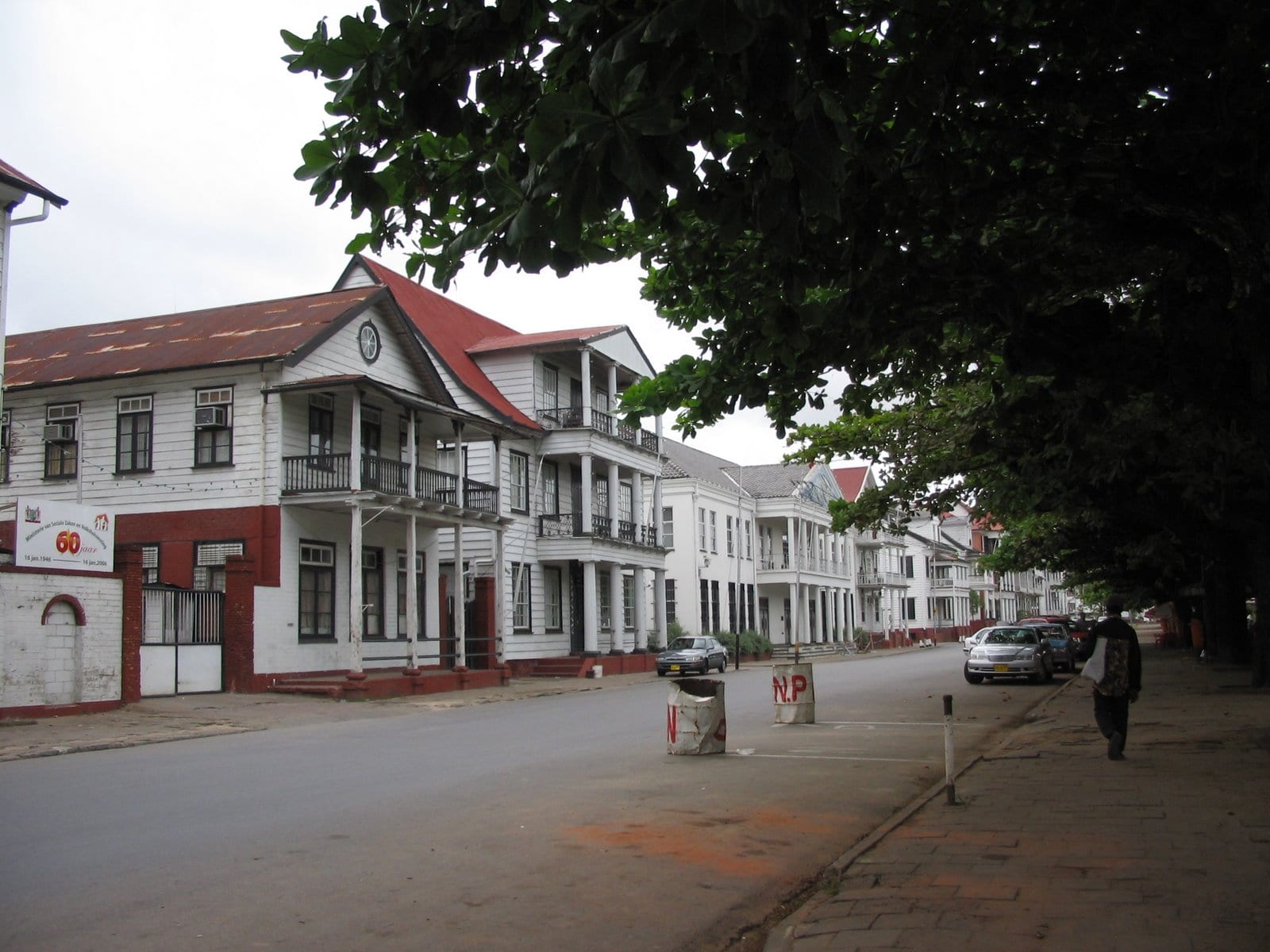
The historic centre is compact and flat, and the fort, the palace, the Garden of Palms, the cathedral, the mosque and synagogue and the market are all within walking distance. Heat and humidity make walking hard at midday, and the outer resorts are spread out and need a bus, taxi or bicycle.
🛡️ Safety
Suriname is relatively safe, with most crime being opportunistic theft. Central Paramaribo needs normal city caution, especially after dark. The Garden of Palms is pleasant by day but poorly lit at night and best avoided after sundown except on holidays.
Avoid quiet streets of the centre and the Garden of Palms at night, keep valuables out of sight, and use a taxi after dark. Check current official travel advice before travelling.
🌦️ Climate
A tropical rainforest climate, hot and humid all year, with average highs of about 30°C and lows of about 24°C and around 2,100 mm of rain a year. No month is truly dry, but some are much wetter than others.
- Summer
- Wettest from about April to July, with highs around 30°C and heavy tropical showers mainly in the afternoon.
- Winter
- Driest from September to November; a shorter rainy season comes around December and January, and highs stay around 30°C, lows around 24°C.
🤝 Local Customs
Dutch is the main language of most households, and Sranan Tongo is heard everywhere; English is widely understood. Churches, mosques, temples and the synagogue are working places of worship, so modest dress is expected inside. Many market vendors, especially Maroon traders, strongly object to being photographed.
Ask before photographing people, above all at the markets; dress modestly for places of worship; visitors may attend a Hindu cremation at Weg naar Zee, but should do so quietly and respectfully.
💳 Common Payment Methods
The currency is the Surinamese dollar, which has been devalued repeatedly and is prone to inflation. US dollars and euros are widely accepted and useful to carry. Cards work in hotels and larger shops, while markets, warungs and minibuses take cash.