💰 Budget
Gothenburg is an expensive city by international standards, as is all of Sweden. Rooms are the largest cost and fill up when big events such as the Gothia Cup, Way Out West or the Book Fair are on. Many of the parks, the open zoo in Slottsskogen and Haga's streets cost nothing, and the archipelago ferries are part of the ordinary public transport network.
- Daily Budget Midrange
- USD 170–330 (central hotel, seafood dinners, museum and Liseberg entry, trams and ferries)
- Daily Budget Shoestring
- USD 75–115 (hostel bed, market-hall lunches and fika, a public transport ticket)
Lunchtime set meals are the cheapest way to eat well; check whether a big event is on before booking a room.
📅 Best Time to Visit
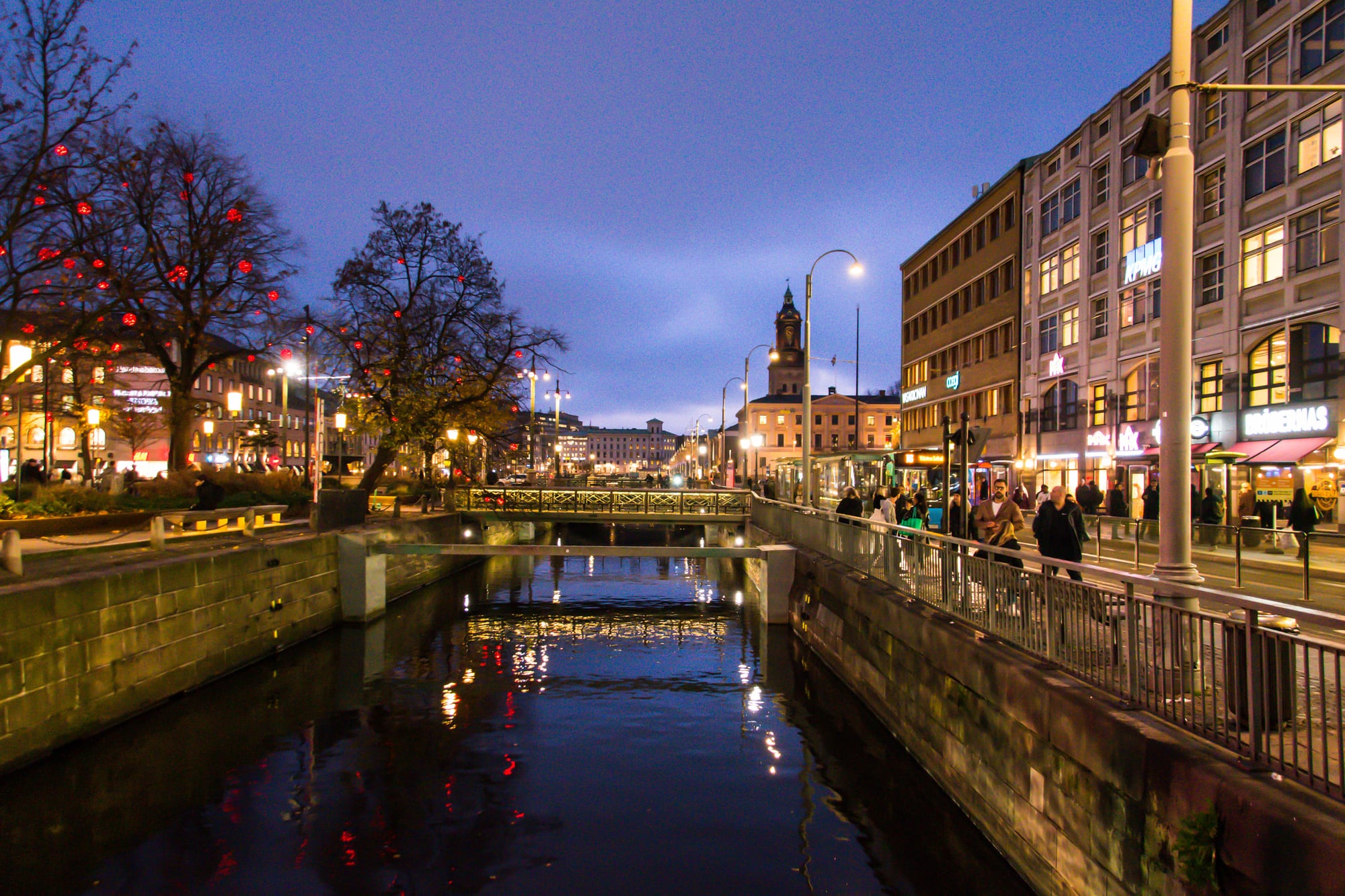
May to September has the most comfortable weather. From Midsummer to the end of July many residents leave the city and some venues close, while the Gothia Cup and Way Out West fill rooms. Late January brings the film festival, and from late November the Christmas season lights up the centre, Haga and Liseberg; winter is otherwise dark, damp and windy.
⏳ Suggested Number of Days
Two or three days cover the centre, the museums and an island trip. Four or five allow a slower pace in the archipelago and visits further up the Bohuslän coast or inland. Big event weeks and short winter daylight both call for a little more time.
- First Visit
- 2–3 days
- With Surroundings
- 4–5 days
🚆 Transportation
Västtrafik runs the trams, buses and ferries. The tram network, with over 80 km of double track, is the largest in Scandinavia and covers most of the city; nearly every line passes Brunnsparken, a short walk from the Central Station. Inside the centre trams are fairly quick, but crossing the whole city can take up to an hour. Ferries cross the Göta älv and run from Saltholmen to the southern archipelago islands.
Single tickets can be bought in the Västtrafik app or, in the central zone, by tapping a contactless card on the reader; have the journey planned before reaching the stop, as most tram stops have no maps.
🛬 Airport & Station Connections
Göteborg Landvetter Airport, Sweden's second-largest, is about 20 km east-southeast of the city, and Flygbussarna airport coaches reach the centre in 20–30 minutes. Trains from the Central Station run across Sweden and to Oslo and Copenhagen (via Malmö), and Stena Line ferries sail to Frederikshavn in Denmark and Kiel in Germany.
🚶 Walkability
The centre is compact: the old town within the canals, Haga, Linnéstaden and Avenyn are all close together, and Avenyn itself is about a kilometre long. Liseberg, Universeum and the Museum of World Culture are a short walk or tram ride beyond Götaplatsen. Hills such as Skansen Kronan's and Masthugget's mean some steep steps, and Hisingen and the archipelago need a ferry or tram.
🛡️ Safety
Sweden is a very safe country for visitors. Crime rates in Gothenburg are low by international standards, and most crime against visitors is opportunistic: pickpocketing (pickpockets gather in the summer months), bicycle theft, and car theft and vandalism. Unlicensed taxis touting in the centre at night are considered unsafe.
Watch bags in crowds, leave nothing in a parked car, and use a licensed taxi with its fare shown on a yellow window sticker. Check current official travel advice before travelling.
🌦️ Climate
An oceanic climate, milder than Stockholm's thanks to the Gulf Stream, with regular but generally moderate rain through the year. Snow mainly falls from December to March and is not guaranteed. Midsummer days have about 18 hours of daylight; late December has about six and a half.
- Summer
- warm and pleasant — average highs of 20–22°C and lows of 12–15°C, with 25–30°C on many days
- Winter
- cold and windy — around -1 to 4°C, seldom below -20°C
🤝 Local Customs
Tipping is not customary: a bill may be rounded up for good service, and 5–10 per cent is left only for exceptional service. Gothenburgers have a reputation for puns and wordplay — the name of the city's half marathon is one. Queueing is orderly, and some high-end nightclubs have a dress code.
The minimum age is 18 in bars and 20 at Systembolaget, the state shop that is the only place to buy strong drink; identification is often asked for.
💳 Common Payment Methods
The currency is the Swedish krona (kr). Sweden is one of the world's most cashless countries: payment by credit and debit card is very common, as is the Swedish payment app Swish, and businesses that do not accept cash at all are common, as are machines that take cards only. Cash machines are widely known as Bankomat.