💰 Budget
Ystad is cheaper than Malmö or Lund for most of the year, but rooms on the south coast fill and prices rise in July. The old town, the churches from outside, the beach and Ale's Stones cost nothing; a car or regional buses are the main extra for trips along the coast.
- Daily Budget Midrange
- USD 150–280 (hotel or B&B, restaurant dinners, museum tickets, a hire car for Österlen)
- Daily Budget Shoestring
- USD 65–100 (hostel or campsite, self-catering, smoked-fish lunches, regional trains and buses)
Ale's Stones can be reached by car or by bus from Ystad, with a 700-metre walk up the hill from the car park.
📅 Best Time to Visit
May to September. The rapeseed fields around the town flower in early May for a couple of weeks, and June to August is the season for the beach, the coastal cycle trail and eating outdoors on the squares. Autumn and winter are quiet, grey and windy, with the old town to itself.
⏳ Suggested Number of Days
The town itself needs a day or two. Ystad is a common base for the south coast and Österlen, and three to five days leave time for the coast and countryside; a car or a bicycle makes the difference outside the town.
- First Visit
- 1–2 days
- With Surroundings
- 3–5 days
🚆 Transportation
Everything in the town is within walking distance, and the town has cycle paths. Local Pågatåg trains run west to Malmö and east to Simrishamn, and regional buses reach Sjöbo, Simrishamn, Trelleborg and Skurup. The Sydkustleden cycle route along the south coast passes through the town.
Many Swedish cyclists ride without helmets, so ask for one when renting a bicycle.
🛬 Airport & Station Connections
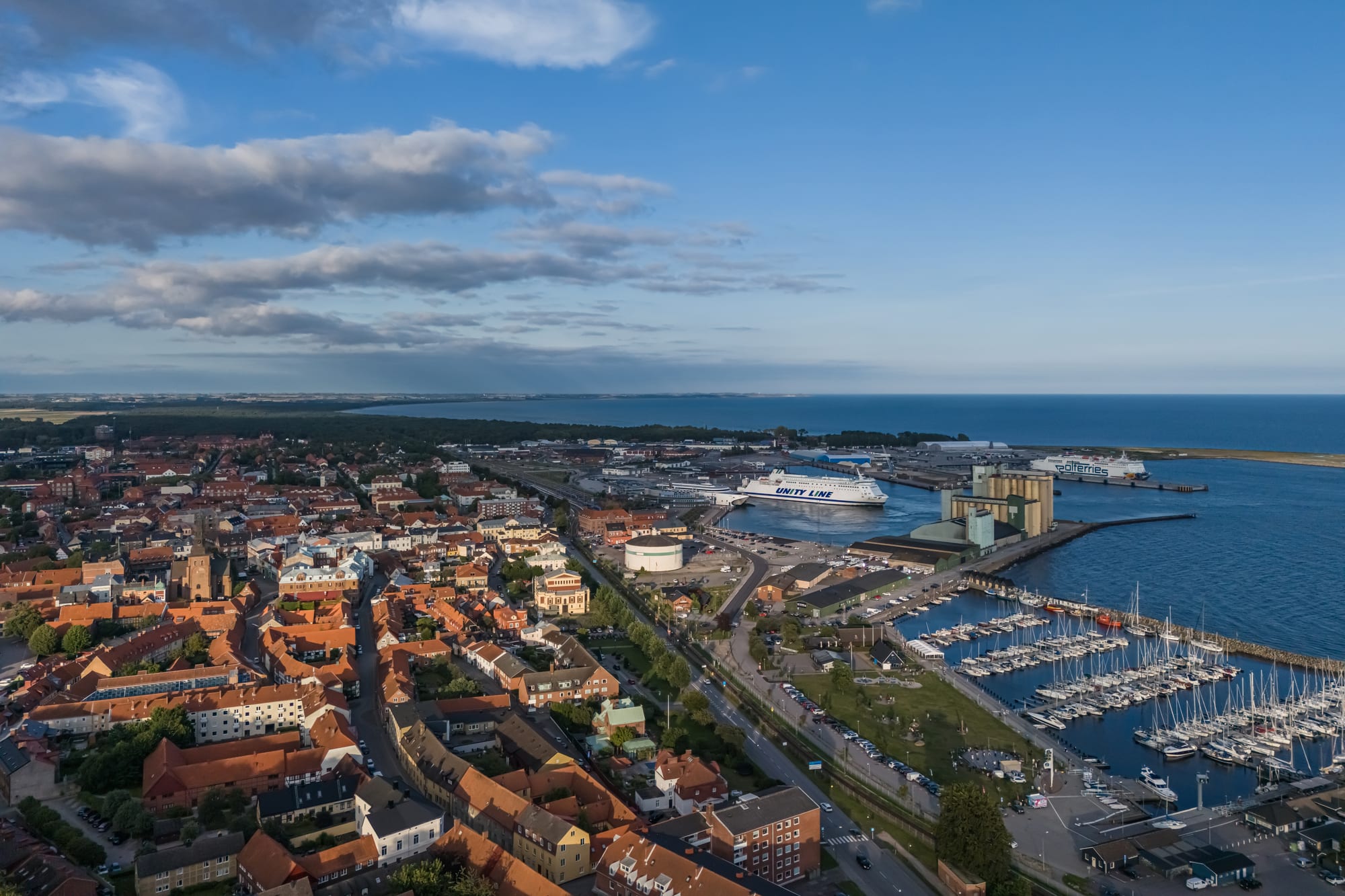
Malmö Airport is about half an hour away by car, and Copenhagen Airport is reached in one to one and a half hours by car, train or bus, with direct buses running to Copenhagen and its airport. From elsewhere in Sweden, travellers take a train to Malmö and change to the local train to Ystad. Ferries arrive from Rønne on Bornholm, from Świnoujście in Poland and from Sassnitz in Germany.
🚶 Walkability
Very good. Everything in the town is easily reached on foot, the old town has pleasant pedestrian streets, the station and ferry port sit at its foot, and a gravel trail runs along the top of the beach east of the town.
🛡️ Safety
Sweden is a very safe country for visitors. Ystad is a quiet small town, and the main practical point is to stay out of the farmers' fields.
Stay out of the rapeseed and crop fields, which farmers have fenced against visitors walking in for photographs. Check current official travel advice before travelling.
🌦️ Climate
Like the rest of far southern Sweden, the coast has an oceanic climate, mild for its latitude because of the nearby sea. In Lund, inland to the west, snow falls sparingly and seldom lies for long.
- Summer
- in Lund, inland to the west, average summer highs are around 23°C and lows around 14°C
- Winter
- in Lund, winter temperatures usually stay between -1 and 3°C
🤝 Local Customs
Ystad is proud of its Wallander connection: Henning Mankell set many of his novels here, guided Wallander tours run in several languages, and the fictional inspector lived on Mariagatan. Farmland surrounds the town, and farmers expect visitors to stay out of the fields. Wine, spirits and strong beer are sold only in the state Systembolaget shops.
Menus and signs in smaller places may be in Swedish only; a translation app helps.
💳 Common Payment Methods
The currency is the Swedish krona. Sweden is one of the world's most cashless countries: card payments are very common, as is the Swish phone app (which needs a Swedish bank account), and businesses that do not take cash at all are common too. Contactless phone payments work wherever the reader shows the contactless icon, and a PIN for the card is needed.