💰 Budget
Bagamoyo is cheap. Guesthouses in town cost little, beach hotels north of the centre are mid-range, and food is inexpensive. The costs that add up are transport from Dar es Salaam, a guide for the old town and the entrance fees at the mission museum and the Kaole ruins.
- Daily Budget Midrange
- USD 95–230 (beach hotel, restaurant meals, taxis, a guided walk of the historic town)
- Daily Budget Shoestring
- USD 30–60 (guesthouse, local food, dala-dalas and walking)
A guided walk of the old town is worth its small cost for the context; the beach, the dhow builders and the town's ruins cost nothing to see.
📅 Best Time to Visit
June to October is the driest and most comfortable stretch, with clear skies and easier walking on the sandy lanes. December to March is hot and humid but good for the beach. April and May bring the long rains, when tracks turn to mud and some beach hotels are quiet.
⏳ Suggested Number of Days
The historic town and the mission fit comfortably into a day, and many people come from Dar es Salaam and return the same evening. Two or three days allow the ruins south of town, the beach and a trip further up the coast.
- First Visit
- 1 day
- With Surroundings
- 2–3 days
🚆 Transportation
The town is small enough to cross on foot, and bajaji three-wheelers and motorcycle taxis cover the rest for very little. Dala-dala minibuses run to Dar es Salaam and along the coast road, and the beach hotels north of town arrange transfers. There is no railway.
Agree the fare with a bajaji or motorcycle taxi before setting off, and allow extra time on the Dar es Salaam road, where traffic is heavy at the city end.
🛬 Airport & Station Connections
Bagamoyo lies about 75 km north of Dar es Salaam on a tarmac road, usually around two hours by dala-dala or bus from the city's northern terminals and less by car outside the peaks. The nearest airport is Julius Nyerere International in Dar es Salaam. Local boats also work the coast, though most visitors arrive by road.
🚶 Walkability
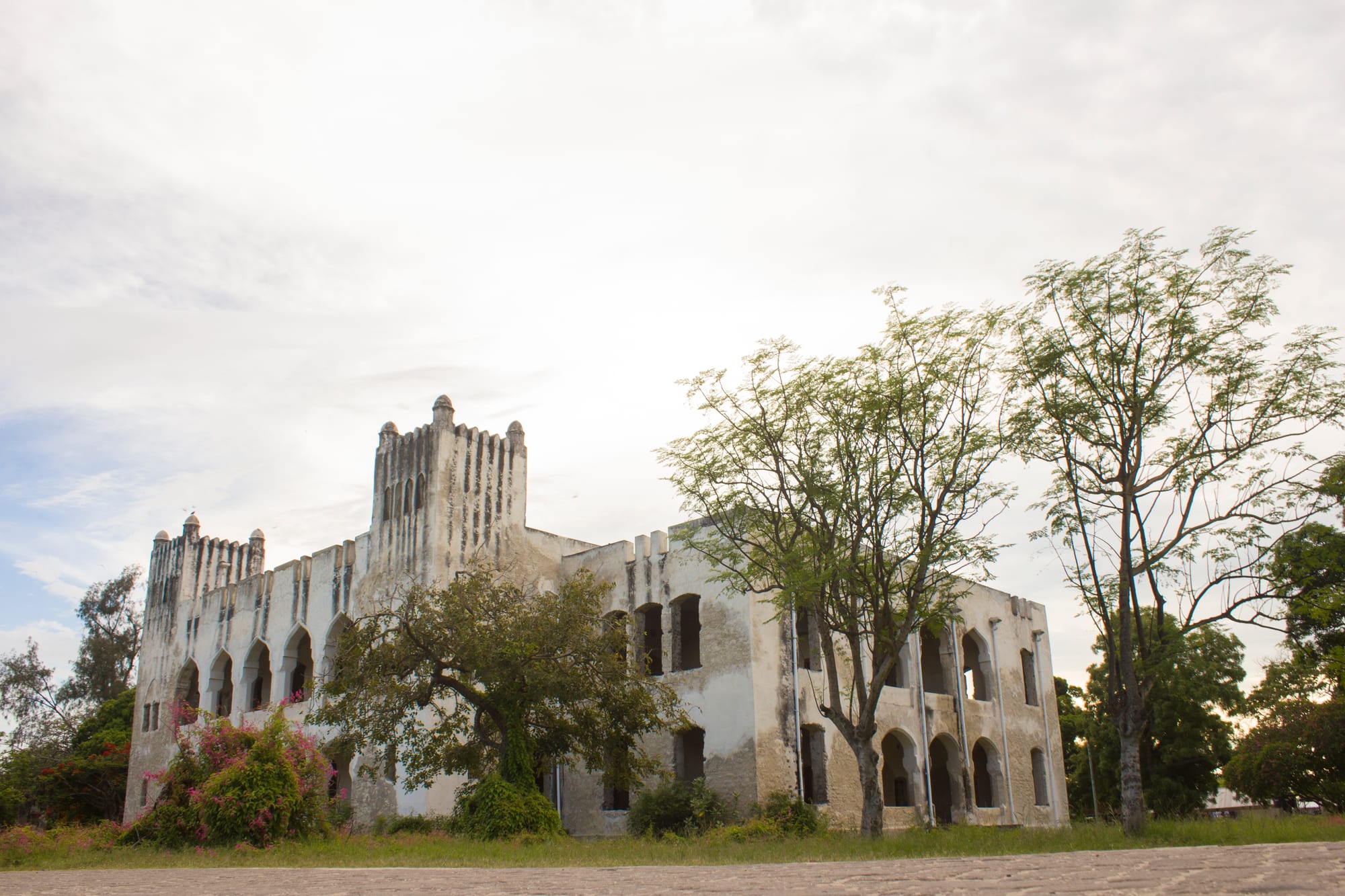
Very walkable. The historic town, the customs house, the boma and the beach are within a few hundred metres of each other, and the mission is a short walk or ride north. Lanes are sand rather than pavement, there is little shade in the middle of the day, and the Kaole ruins are far enough south to be worth a ride.
🛡️ Safety
The town is quiet and crime against visitors is uncommon, though the usual coastal cautions apply: empty beaches after dark are best avoided, and valuables are better left in the hotel. Some of the ruined buildings are unstable, with loose masonry and open floors. Malaria is present, and the sun and humidity are stronger than they feel by the sea.
Take registered taxis or ride-hailing cars after dark, carry little of value, avoid demonstrations and walk beaches only in company and in daylight. Stay out of unsupported ruins and use mosquito precautions. Check current official travel advice before travelling.
🌦️ Climate
Hot and humid all year, tempered by the sea breeze. The long rains fall from about March to May, heaviest in April, and shorter rains come around November and December.
- Summer
- December to March is the hottest and most humid period, generally around 30–33°C by day
- Winter
- June to September is drier and a little cooler, around 26–29°C by day
🤝 Local Customs
This is a conservative Muslim coastal town. Modest dress is expected away from the beach hotels, with shoulders and knees covered in the old town and near mosques. Greetings come first — shikamoo to elders, answered marahaba — and business follows afterwards. During Ramadan, eating and drinking in public in daylight is avoided.
Ask before photographing people, fishermen or their boats, and expect a small charge where photography is part of a guide's livelihood. Use the right hand for giving and receiving, and remove shoes before entering a mosque or a home.
💳 Common Payment Methods
The currency is the Tanzanian shilling, and cash rules here. A few ATMs and bank branches serve the town, but machines can be empty at weekends, and only the larger hotels take cards. Mobile money is widely used by residents, and it is sensible to arrive with enough shillings from Dar es Salaam.