💰 Budget
Dar es Salaam is inexpensive by international standards and cheaper than the safari north. Street food, dala-dala minibuses and the rapid-transit buses cost very little; the main expenses are hotels on the Msasani peninsula, taxis or ride-hailing across a very spread-out city, and the ferry or flight to Zanzibar.
- Daily Budget Midrange
- USD 95–230 (mid-range hotel, restaurant meals, taxis or ride-hailing, a museum or an island boat trip)
- Daily Budget Shoestring
- USD 40–70 (guesthouse, street food, dala-dalas and the rapid-transit buses)
Eat at local stalls and use the rapid-transit buses on Morogoro Road; the museums, markets and beaches cost little, and island boat trips are cheaper shared with others.
📅 Best Time to Visit
June to October is the most comfortable stretch, drier and a little cooler, and the best time for boats to the islands. December to March is hot and humid but still suits the beaches. The long rains from March to May bring heavy downpours and street flooding in low-lying areas.
⏳ Suggested Number of Days
Two days cover the museums, the old waterfront and the markets. Four allow an island or beach day and a trip up the coast. Traffic is the main factor: crossing the city can take an hour or more, so fewer things fit into a day than the map suggests.
- First Visit
- 2 days
- With Surroundings
- 4 days
🚆 Transportation
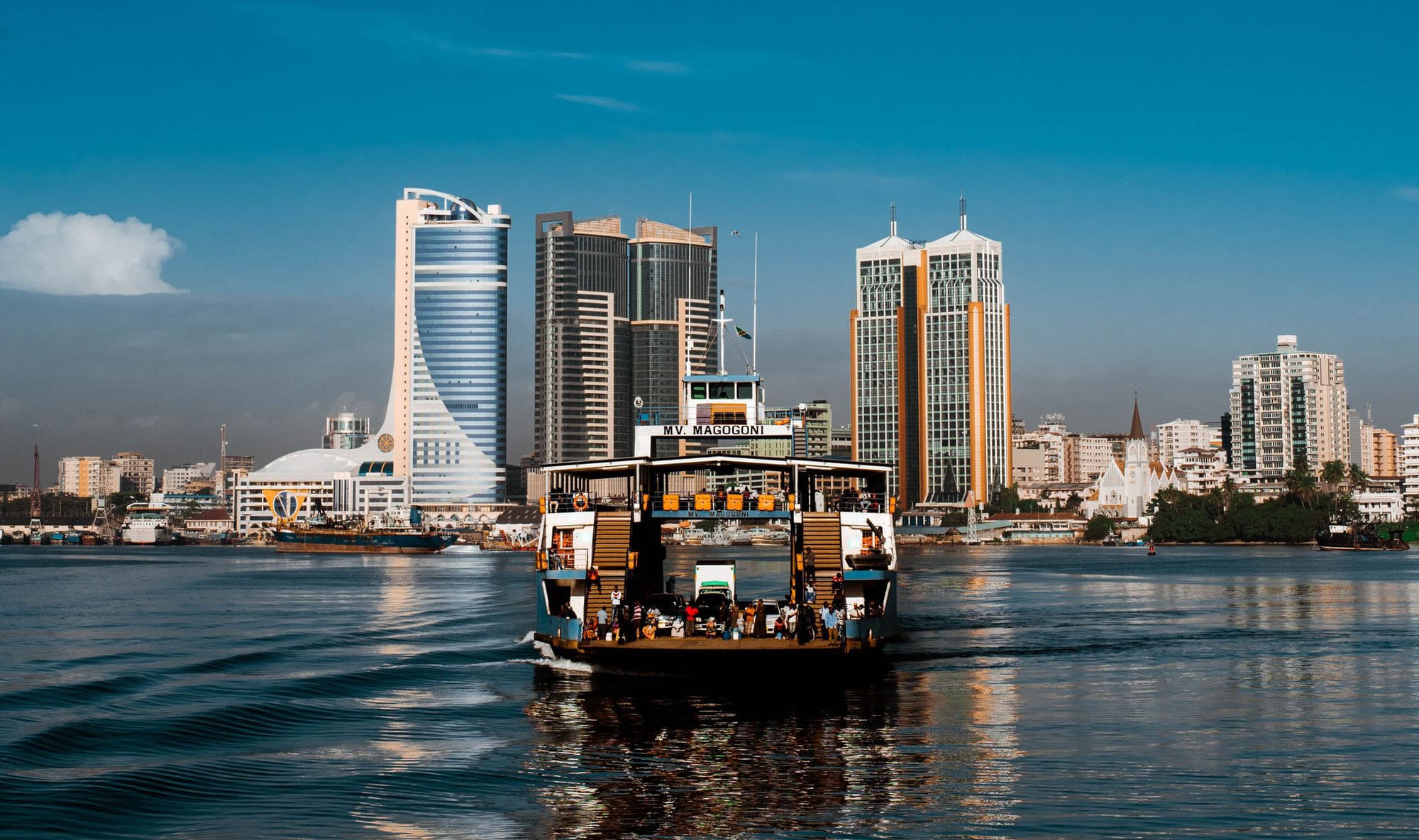
The city is large and low-rise, and most journeys are made by dala-dala minibus, bajaji three-wheeler, motorcycle taxi or ride-hailing car. The DART rapid-transit buses run on dedicated lanes along the main western corridors and avoid much of the congestion. Ferries cross the harbour mouth to Kigamboni, and fast catamarans leave the city-centre terminal for Zanzibar. The standard-gauge railway to Dodoma began carrying passengers in 2024.
Allow well over an hour for cross-city trips in the morning and evening peaks, and agree a fare or use a metered ride-hailing app rather than negotiating at the roadside.
🛬 Airport & Station Connections
Julius Nyerere International Airport lies about 12 km west of the centre, half an hour away without traffic and much longer with it, and handles flights from Europe, the Gulf, Africa and the Tanzanian domestic network. Long-distance buses use terminals on the western edge of the city, the railway runs inland to Dodoma, and ferries connect the harbour with Zanzibar.
🚶 Walkability
The old centre around Kivukoni, Sokoine Drive and the museums is flat and walkable, and the seafront roads on the Msasani peninsula are pleasant in the early morning and evening. Elsewhere distances are long, pavements are broken or missing, traffic is heavy and the heat is draining, so walking between districts is uncommon.
🛡️ Safety
Street crime is the main risk: bag-snatching from passing motorcycles, pickpocketing in Kariakoo and at bus stands, and muggings on quiet beaches and in empty streets after dark. Traffic is dangerous for pedestrians. The city was the centre of the protests and the security crackdown around the October 2025 election, and political gatherings are best avoided.
Take registered taxis or ride-hailing cars after dark, carry little of value, avoid demonstrations and walk beaches only in company and in daylight. Malaria is present in the city, so take precautions against mosquito bites. Check current official travel advice before travelling.
🌦️ Climate
Hot and humid all year, cooled by the sea breeze. The long rains fall from about March to May, with the heaviest downpours in April, and shorter rains come around November and December.
- Summer
- December to March is the hottest and most humid time, usually around 30–33°C by day
- Winter
- June to September is a little cooler and drier, around 26–29°C by day with pleasant evenings
🤝 Local Customs
Greetings come before business: shikamoo to an elder, answered marahaba, and habari or mambo among peers. Dress is modest away from hotel pools and beaches, and shoulders and knees are covered in Muslim neighbourhoods such as Kariakoo and around mosques. Alcohol is sold freely but is not drunk in conservative areas, and during Ramadan eating in public in daylight is avoided.
Ask before photographing people, and avoid photographing government buildings, the port, airports, bridges and police. Tipping is not obligatory but small amounts are appreciated, and a service charge is often added in restaurants. Use the right hand for giving, receiving and eating.
💳 Common Payment Methods
The currency is the Tanzanian shilling. Cards work in hotels, supermarkets and larger restaurants, but cash is needed for markets, dala-dalas and small shops. ATMs are plentiful in the centre and on the peninsula. US dollars are accepted for tours and some hotels, though notes must be recent and undamaged, and mobile-money transfers are used for everyday payments by most residents.