💰 Budget
Kanchanaburi is inexpensive by Thai standards. Simple raft rooms and guesthouses on the river cost very little, and riverside resorts remain moderate; food in the old town is cheap. The real expenses are transport and entry fees for the parks, since Erawan, Hellfire Pass and Sai Yok are well outside the town and need a hired car, motorbike or tour, and prices rise at weekends when Bangkok visitors arrive.
- Daily Budget Midrange
- USD 65–150 (river resort, restaurant meals, a hired car or driver for the waterfalls and Hellfire Pass)
- Daily Budget Shoestring
- USD 25–45 (raft or guesthouse room, market food, local buses and a hired bicycle)
Travel midweek for cheaper rooms, and share a driver or minivan for the parks, which is far cheaper than hiring one alone.
📅 Best Time to Visit
November to February is dry and comfortable, with cool mornings on the river. March to May is very hot inland, often above 35°C, and the rains from about May to October leave the waterfalls at their strongest but the trails slippery. The bridge festival falls at the end of November.
⏳ Suggested Number of Days
Two days suit the town itself. Three or four allow the waterfalls, the memorial sites out along the old line and a stretch of the surviving railway as well. Long drives into the province are what stretch a stay.
- First Visit
- 2 days
- With Surroundings
- 3–4 days
🚆 Transportation
The town is strung along the river and easy to cover by hired bicycle, motorbike or songthaew; motorbike taxis and tuk-tuks fill the gaps. Trains on the surviving railway run from Kanchanaburi over the bridge to Nam Tok, a slow and scenic ride. Buses and minivans link the town with Bangkok, Nakhon Pathom and Ratchaburi. The national parks are 60 to 100 kilometres away and need a car, a motorbike or a tour.
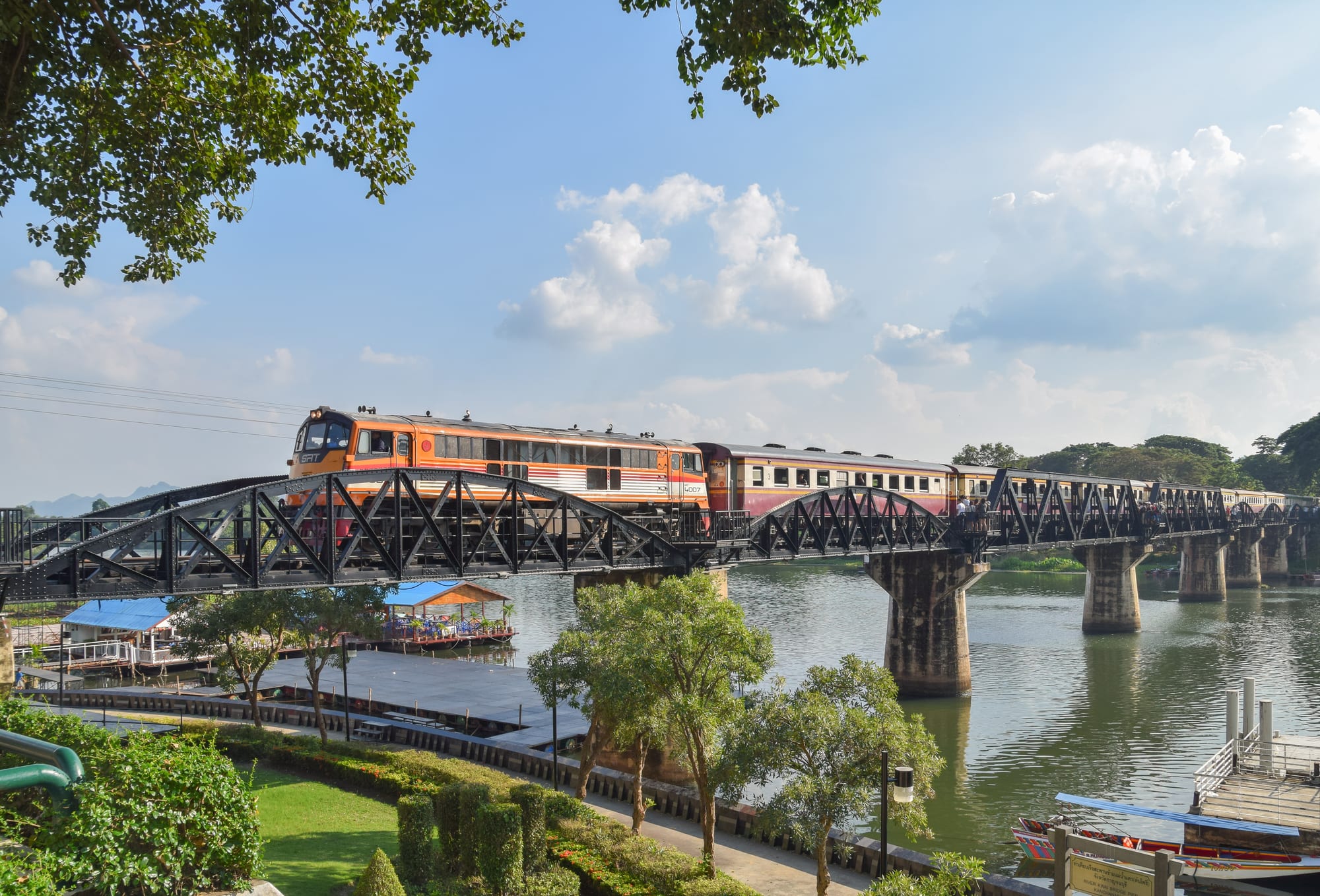
The train to Nam Tok crosses the bridge and the Wang Pho viaduct; services are few, so check departure times locally before setting out.
🛬 Airport & Station Connections
Kanchanaburi is about 130 kilometres west of Bangkok, two to three hours by minivan or bus from the Southern terminal or Mo Chit, and a similar time by car. Trains from Bangkok's Thonburi station take rather longer and arrive at the town station near the war cemetery. The nearest airport is Bangkok's Suvarnabhumi, roughly three to four hours away by road.
🚶 Walkability
The old town, the main war cemetery and the railway centre stand within a comfortable walk of one another, and the guesthouse strip runs along the river. The bridge is a few kilometres north of the centre, too far for a pleasant walk in the heat, and the roads between have little shade. Most visitors hire a bicycle or a motorbike for the day.
🛡️ Safety
Kanchanaburi is a safe town with little crime affecting visitors. The main risks are road accidents on rented motorbikes, drowning and slips at waterfalls, and strong currents where the rivers meet. Remote areas of the province along the Myanmar border are affected by conflict and smuggling across the frontier, and elephant and wildlife attractions vary greatly in the standards they keep.
Wear a helmet, do not swim in the rivers where currents are strong, wear shoes with grip at the falls, and follow park advice on border areas. Check current official travel advice before travelling.
🌦️ Climate
Tropical and drier than much of Thailand because the Tenasserim Hills take the edge off the monsoon, but hotter inland. Three seasons: cool and dry from November to February, very hot from March to May, and wet from about May to October.
- Summer
- hot and dry from March to May, often 35–38°C in the afternoon, with the first storms in May
- Winter
- dry and warm from November to February, about 18–32°C, with cool nights near the hills
🤝 Local Customs
The war cemeteries and Hellfire Pass are places of remembrance: quiet behaviour, modest dress and restraint with photographs are expected. In temples, shoulders and knees are covered, shoes come off, and women do not touch monks. A wai replaces a handshake, heads are not touched and feet are not pointed at people or images. Respect for the monarchy is protected by law. Tipping is not expected.
Dress modestly at the cemeteries and temples, keep voices low at memorial sites, and ask before photographing people at work or at prayer.
💳 Common Payment Methods
The currency is the Thai baht. Cash is standard in markets, songthaews and small restaurants, and ATMs are common along the main roads and near the guesthouse strip. Cards work at hotels, resorts, supermarkets and larger restaurants. Thai QR-code payment is widespread but usually needs a Thai bank account, and the national parks charge entry in cash.