History
People have lived in the western valleys since prehistoric times; Ban Kao in Kanchanaburi is a Neolithic burial site, and Khu Bua in Ratchaburi was a town of the Mon Dvaravati culture. Later the Khmer built the walled temple town of Mueang Sing on the Khwae Noi. For Ayutthaya, the west was a frontier: the Three Pagodas Pass at the head of Kanchanaburi was the route by which Burmese armies invaded, and the province was fortified to watch it.
The coast rose with the Chakri kings. King Mongkut built the hilltop palace of Phra Nakhon Khiri at Phetchaburi, finished in 1860, and after the railway reached the south in the early 20th century Hua Hin became the court's seaside retreat; King Prajadhipok built the Klai Kangwon palace there in the 1920s and was staying in Hua Hin when the revolution of 1932 ended absolute monarchy. King Vajiravudh built the teak Mrigadayavan palace on the beach at Cha-am.
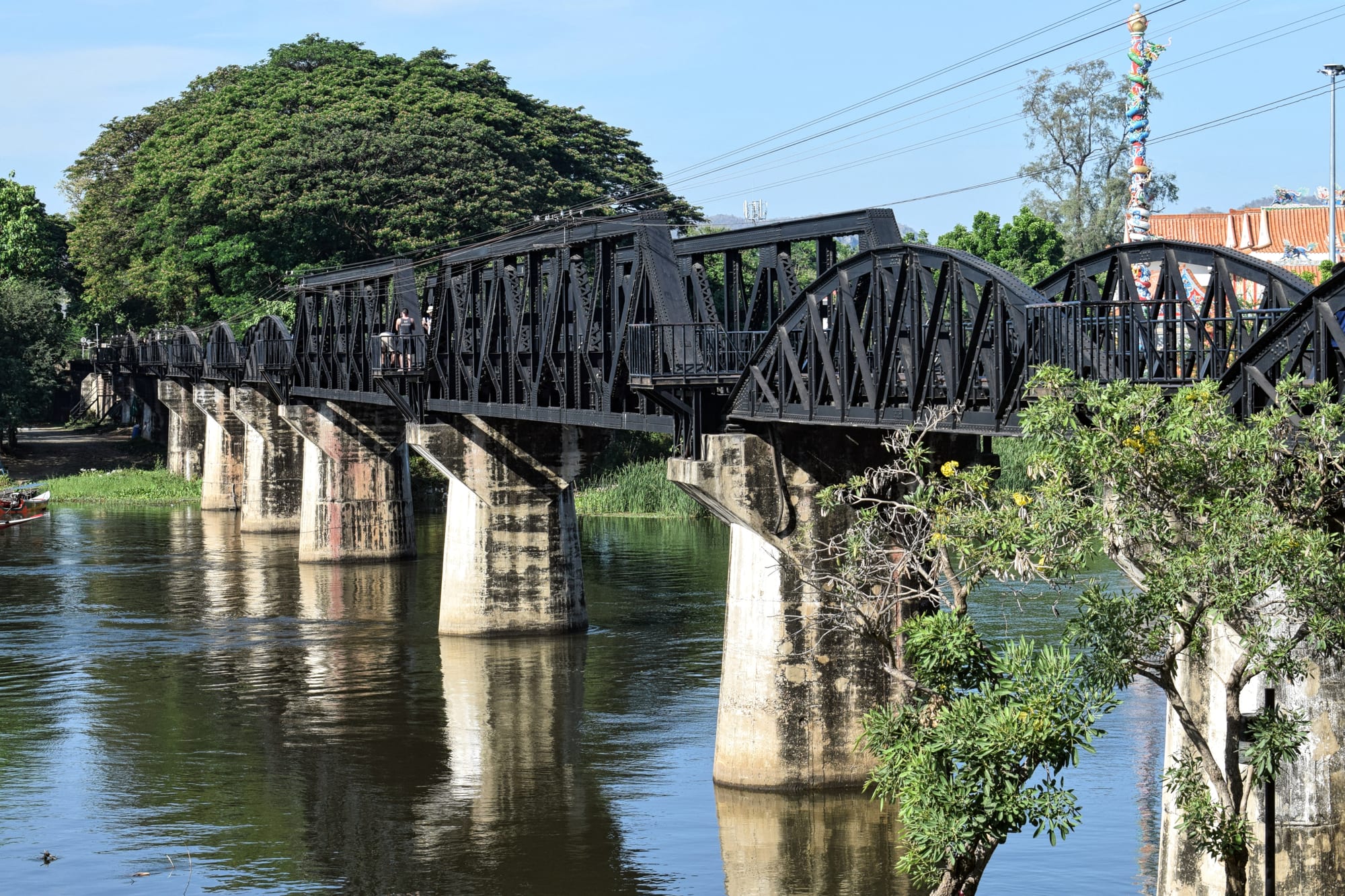
The Second World War left the region's best-known history. On 8 December 1941 Japanese forces landed along the Gulf coast, meeting brief Thai resistance at Prachuap Khiri Khan, and in 1942–43 Japan built the Thailand–Burma Railway through Kanchanaburi using Allied prisoners of war and far larger numbers of Asian labourers; many tens of thousands died of disease, hunger and abuse. The river where the main bridge stood was renamed Khwae Yai in the 1960s, after the 1957 film had made it famous. Since the war, dams on the Khwae rivers and royal residence at Hua Hin have shaped the region.