💰 Budget
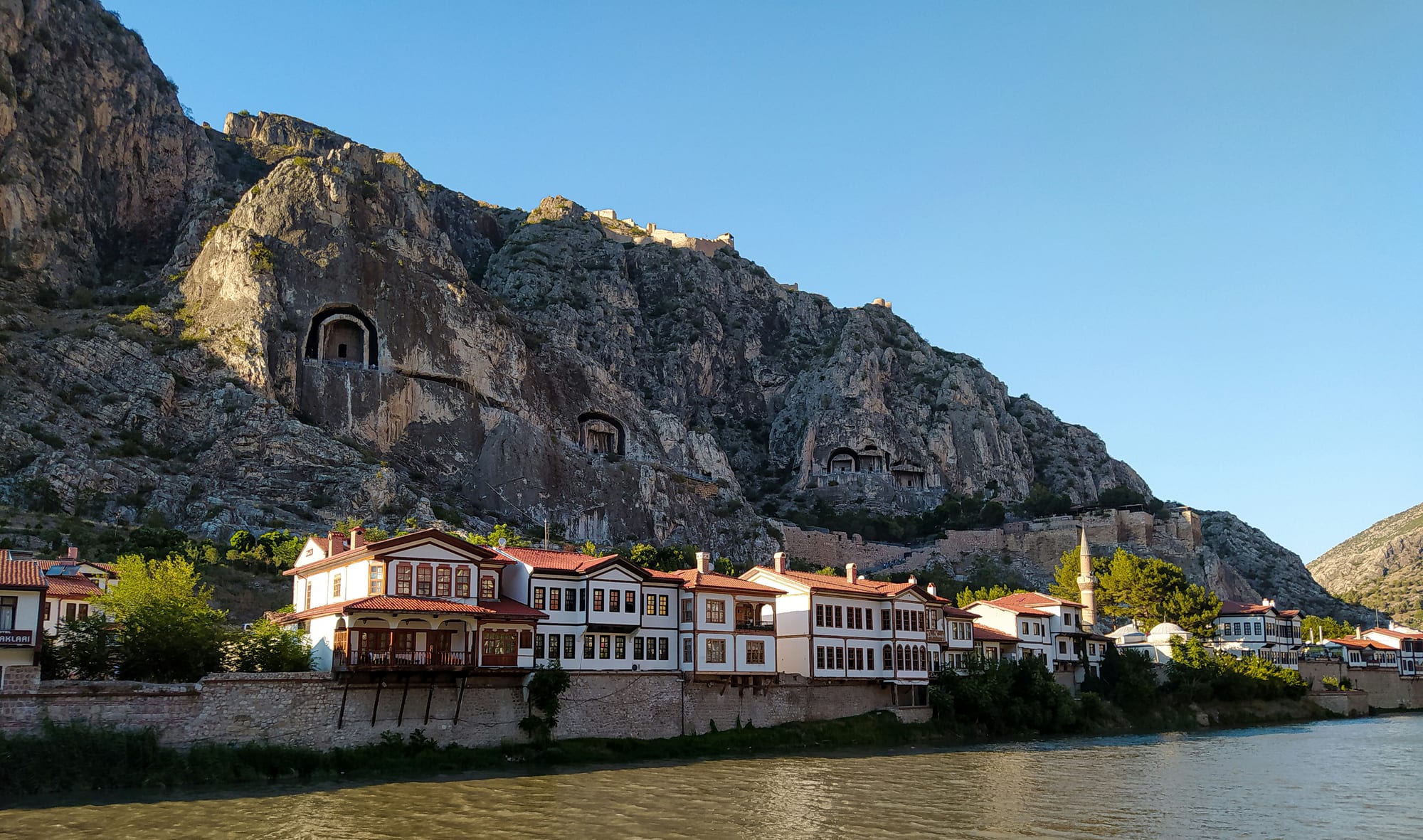
Amasya is inexpensive. The one place costs rise is a room in a restored riverside house, which is dearer than an ordinary town hotel and worth it for the setting. Meals, museum entries and local transport all cost little, and the town is small enough that taxis are rarely needed.
- Daily Budget Midrange
- USD 80–160 (a room in a restored konak, restaurant dinners, a hire car for the valley)
- Daily Budget Shoestring
- USD 25–45 (simple hotel or pension, lokanta meals, buses)
Riverside rooms fill up on summer weekends and around the June commemorations; the tombs, the castle road and the promenade are free.
📅 Best Time to Visit
May, June, September and October, when the valley is green or turning and the days are warm without the heat of midsummer. September and October also bring the apple harvest. July and August are hot in the gorge, although evenings by the river are pleasant. Winter is cold, with snow on the surrounding hills and short days.
⏳ Suggested Number of Days
One full day covers the town, and an overnight stay is worth it for the lit tombs and the river after dark. Three days allow the valley, the forest lakes and a neighbouring town. Steep climbs and summer heat both slow the pace.
- First Visit
- 1–2 days
- With Surroundings
- 3 days
🚆 Transportation
Everything in the centre is within walking distance, with bridges linking the two banks. City minibuses run out to the newer districts and up towards the castle, and taxis are easy to find. A car helps for the lakes, the villages and the orchards in the wider valley, though parking in the narrow centre is limited.
The castle road is steep and winding; many visitors take a taxi up and walk back down through the tomb terraces.
🛬 Airport & Station Connections
Amasya has an Ottoman-era railway station on the line between Samsun and Sivas, with slow but scenic services. Buses connect the town with Samsun in about two hours and with Ankara in around five. The nearest airport is at Merzifon, about 40 kilometres away, with flights to Istanbul; Samsun's airport is larger and about two and a half hours by road.
🚶 Walkability
The centre is very walkable: the riverside promenade, the bazaar and the mosques are all within about a kilometre, and the two banks are joined by several bridges. Away from the river the ground rises steeply, and the climb to the tombs and the castle is hard work in summer heat. Pavements in the old lanes are uneven.
🛡️ Safety
Amasya is a quiet town with little crime, and the usual small-town precautions are enough. The hazards are physical: unfenced drops on the cliff terraces and castle walls, steep and slippery steps, and traffic on narrow streets. The Yeşilırmak has flooded in the past after heavy rain, and the region lies in an earthquake zone.
Take care on the tomb terraces and castle edges, especially in wind or rain, and wear shoes with grip for the stepped lanes. Check current official travel advice before travelling.
🌦️ Climate
A continental climate softened a little by the sheltered river valley, with hot summers, cold winters and most rain in spring and autumn. The gorge holds heat in July and August, and morning mist over the river is common in the cooler months.
- Summer
- hot and mostly dry, often 28–33°C by day, cooler beside the water in the evening
- Winter
- cold, usually 2–8°C by day, with frost, occasional snow and grey spells
🤝 Local Customs
Amasya is a religious and conservative town, with a long tradition of learning around its medreses, and modest dress is expected, particularly near mosques. Many of the riverside houses are family homes as well as sights: courtyards and doorways are private. Tea is offered constantly and refusing outright is awkward; shoes come off indoors and in mosques.
Cover shoulders and knees at mosques, women covering their hair; ask before photographing people, and keep quiet in the mosque courtyards during prayers.
💳 Common Payment Methods
The currency is the Turkish lira. Cards are taken in hotels, restaurants and larger shops, and ATMs are easy to find on the south bank. Cash is needed for minibuses, market stalls, small tea houses and village shops in the surrounding valley.