💰 Budget
Ankara is inexpensive by capital-city standards and cheaper than Istanbul or the coast. Lokanta lunches, metro fares and museum tickets all cost little; business hotels in Kızılay and Çankaya are the main expense, and rates rise around national ceremonies and large conferences. Prices in Turkey move quickly with inflation, so figures are best treated as ranges.
- Daily Budget Midrange
- USD 90–180 (mid-range hotel, restaurant dinners, museum tickets, taxis)
- Daily Budget Shoestring
- USD 30–55 (hostel bed or simple hotel, lokanta meals, metro and buses)
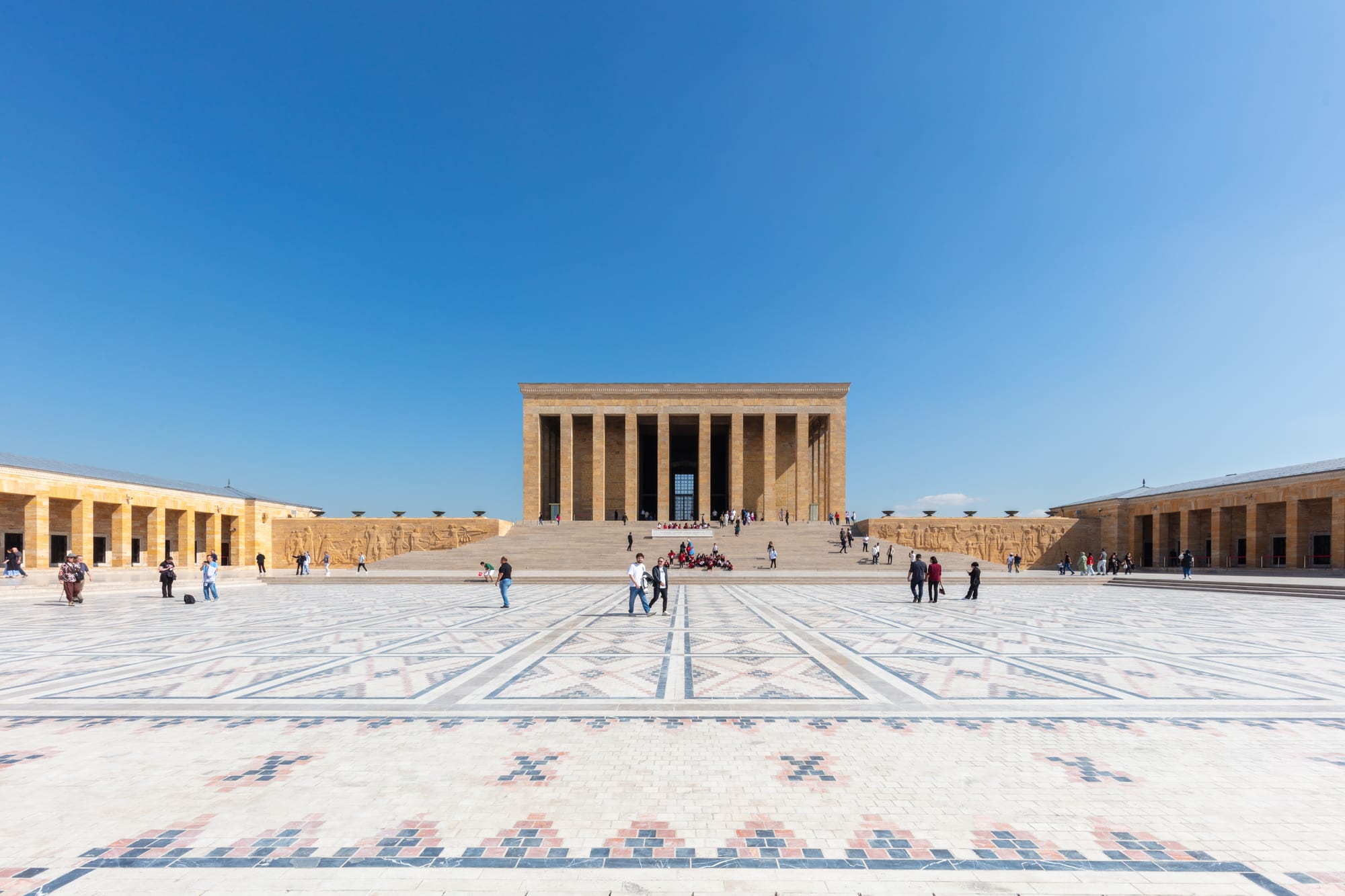
Museum entry is covered by the national museum card sold to visitors, and most of the city's set pieces — Anıtkabir, the citadel, Hamamönü, the parks — cost nothing.
📅 Best Time to Visit
April to June and September to October, when the plateau is mild and clear. Midsummer is hot and dusty but dry, with cool evenings. Winter is cold, with snow and, in still weather, poor air quality; hotel rates are lowest then. Late October brings Republic Day crowds and a festive mood.
⏳ Suggested Number of Days
One to two days covers the central museums and monuments. Add a day or two for the archaeological sites, towns and lakes within reach of the city, and more if Ankara is used as a base for the wider plateau.
- First Visit
- 1–2 days
- With Surroundings
- 3–4 days
🚆 Transportation
Two metro lines and a light-rail line cross the city and meet at Kızılay, reaching Ulus, the intercity bus station, Anıtkabir's neighbourhood and the northern and western suburbs. A dense network of municipal and private buses and shared minibuses covers everything else, and a card bought at kiosks pays for all of them. Taxis are metered and plentiful.
Traffic on the radial avenues is heavy at rush hour; the metro is usually faster between Ulus, Kızılay and Çankaya.
🛬 Airport & Station Connections
Esenboğa Airport lies about 30 kilometres north-east of the centre, with domestic flights and a smaller number of international routes; airport buses and taxis take roughly 45 minutes. High-speed trains link Ankara with Istanbul, Eskişehir, Konya and Sivas from the station west of Ulus, and the huge AŞTİ bus terminal has coaches to every part of the country.
🚶 Walkability
Individual districts walk well — Ulus and its museums, the bazaar slope up to the citadel, Kızılay's side streets, Tunalı Hilmi — but they are far apart and separated by wide avenues and steep ground. Anıtkabir is a hill on its own. Most visits combine short walks with the metro or taxis, and pavements can be icy in winter.
🛡️ Safety
Ankara is generally safe for visitors, with the usual big-city pickpocketing around crowded squares, markets and bus stations. As the seat of government it sees frequent demonstrations, and it has suffered bomb attacks in past years, so it is sensible to keep away from protests and from gatherings near ministries and public buildings.
Avoid demonstrations and crowds around government buildings, use metered taxis or an app, and take care crossing the wide avenues. Check current official travel advice before travelling.
🌦️ Climate
A dry continental climate at around 900 metres, with a wide gap between day and night temperatures, sunshine for much of the year and most rain falling in spring and late autumn.
- Summer
- hot and dry — July and August days are usually around 30–32°C, with nights falling into the teens
- Winter
- cold — January days are around 4°C, nights fall below 0°C, and snow lies several times each winter
🤝 Local Customs
Ankara is a formal, official city: dress is smarter than on the coast, and politeness matters. Shoes come off in homes and mosques, and visitors to mosques cover their shoulders and legs, women their hair. Tea is offered constantly and refusing it outright is unfriendly. Atatürk's memory is treated with great respect, above all at Anıtkabir, where quiet behaviour is expected; every 10 November the country stops for a minute at 9.05 in the morning.
Tipping is around 5–10 per cent in restaurants and rounding up in taxis; alcohol is served openly but not near mosques, and photographing military, police or government buildings is not allowed.
💳 Common Payment Methods
The currency is the Turkish lira. Cards and contactless payment are taken in hotels, shops and most restaurants, and ATMs are everywhere. Small cash sums are useful for markets, minibuses and tea gardens, and public transport needs a rechargeable card rather than coins.