💰 Budget
Tenby is busiest and dearest in the summer holidays, when rooms fill and prices rise; outside the season it is noticeably cheaper. B&Bs are plentiful, and the beaches, walls and coast path cost nothing.
- Daily Budget Midrange
- USD 170–320 (B&B or guest house, restaurant dinners, museum and boat tickets, local trains)
- Daily Budget Shoestring
- USD 65–115 (hostel at nearby Manorbier or a campsite, fish and chips and pub meals, trains and buses)
Book rooms early for July and August; out of season the town is quieter and easier on the budget.
📅 Best Time to Visit
May to September for the beaches, the boats to Caldey and the coast path, with July and August the busiest months. Spring and early autumn are quieter and still good for walking, and the music and arts festivals keep the town lively out of season.
⏳ Suggested Number of Days
The town, its walls and beaches take a day or two. Three to five days allow for the island, the coast path and the castles and beaches of south Pembrokeshire; boat trips depend on tides and weather, so spare time helps.
- First Visit
- 1–2 days
- With Surroundings
- 3–5 days
🚆 Transportation
The walled town and beaches are all within walking distance, and cars are banned from the historic centre in the summer months. Tenby station is on the Pembroke Dock branch of the West Wales Line, with trains west to Pembroke and east to Whitland, Carmarthen and Swansea. Buses run along the coast to Saundersfoot.
Most built-up roads in Wales have a 20 mph limit; in summer, park outside the centre and walk in.
🛬 Airport & Station Connections
Most visitors arrive by car or train. Tenby station has Transport for Wales trains via Whitland, where the branch joins the West Wales Line from Carmarthen and Swansea, with connections from Cardiff and England. By road, the town is reached through Carmarthenshire on the A477 and A478.
🚶 Walkability
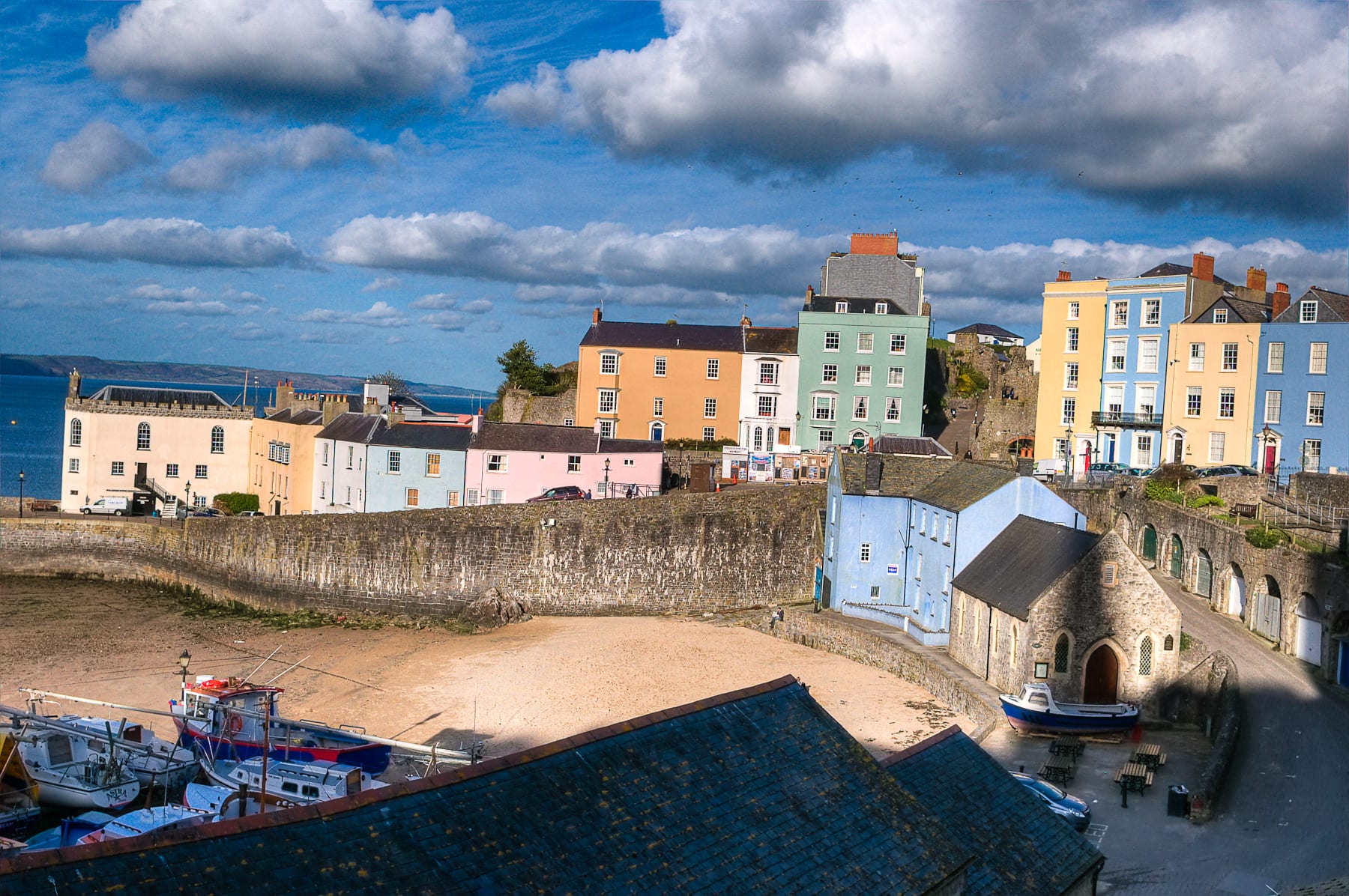
Excellent. The walled town is small and largely car-free in summer, and the harbour, the three beaches and Castle Hill are a few minutes apart, though steps and steep paths lead down to the sands. The coast path leaves straight from the town.
🛡️ Safety
The UK is generally safe, with the main risks being pickpocketing and phone theft in crowded parts of London and other cities, occasional late-night antisocial behaviour, and drink-related trouble around nightlife. In Tenby the main hazards are the sea: tides rise quickly around the beaches and St Catherine's Island, and the coast path runs along cliff edges.
Check tide times before walking out to St Catherine's Island or around headlands, and swim where beaches are patrolled. Check current official travel advice before travelling.
🌦️ Climate
A mild maritime climate. The south-western coast is the sunniest part of Wales, averaging over 1,700 hours of sunshine a year, and Tenby is its sunniest town.
- Summer
- warm and often sunny at low elevations in Wales, with average maximum temperatures of about 19–22°C
- Winter
- fairly wet across Wales, with temperatures at low levels usually staying above freezing (0°C)
🤝 Local Customs
The town's Welsh name is Dinbych-y-pysgod, the 'fortlet of the fish'. South Pembrokeshire has long been known as 'Little England beyond Wales', an area English rather than Welsh in language and culture for many centuries. Tipping is not a strong custom in Britain; something extra for good service is welcome but not expected.
St Mary's Church and Caldey Abbey are places of worship — visit them quietly.
💳 Common Payment Methods
The currency is the pound sterling. Many shops accept foreign credit and debit cards, and cash machines are very widely available in Britain; some businesses no longer accept cash.